AI Visibility Is Becoming a Signal Quality Game
/ 6 min read

Summary
A practical view on AI Visibility Is Becoming a Signal Quality Game, focused on the signal to inspect, the risk to avoid, and the decision it should change.
For two decades, the goal of SEO has been simple: get to the top of the page. We've lived in a world where ranking position was the primary proxy for visibility. If you were in the top three results, you won. If you weren't, you were invisible.
But that relationship is breaking. The traditional SERP is changing from a list of links to a synthesized answer. When an AI generated response appears at the top of the search results, the old rules of "ranking" don't apply in the same way. Being highly ranked in the traditional sense no longer guarantees you'll be cited as a source.
In fact, recent data shows a sharp decline in the overlap between traditional top 10 rankings and AI citations. Ahrefs found that while 76% of pages cited in AI Overviews used to overlap with the traditional top 10, that number has dropped to just 38%. This is a shift from optimizing for a position on a page, to optimizing for inclusion in a synthesized answer.
How Visibility Works in AI Search: 4 Key Signals
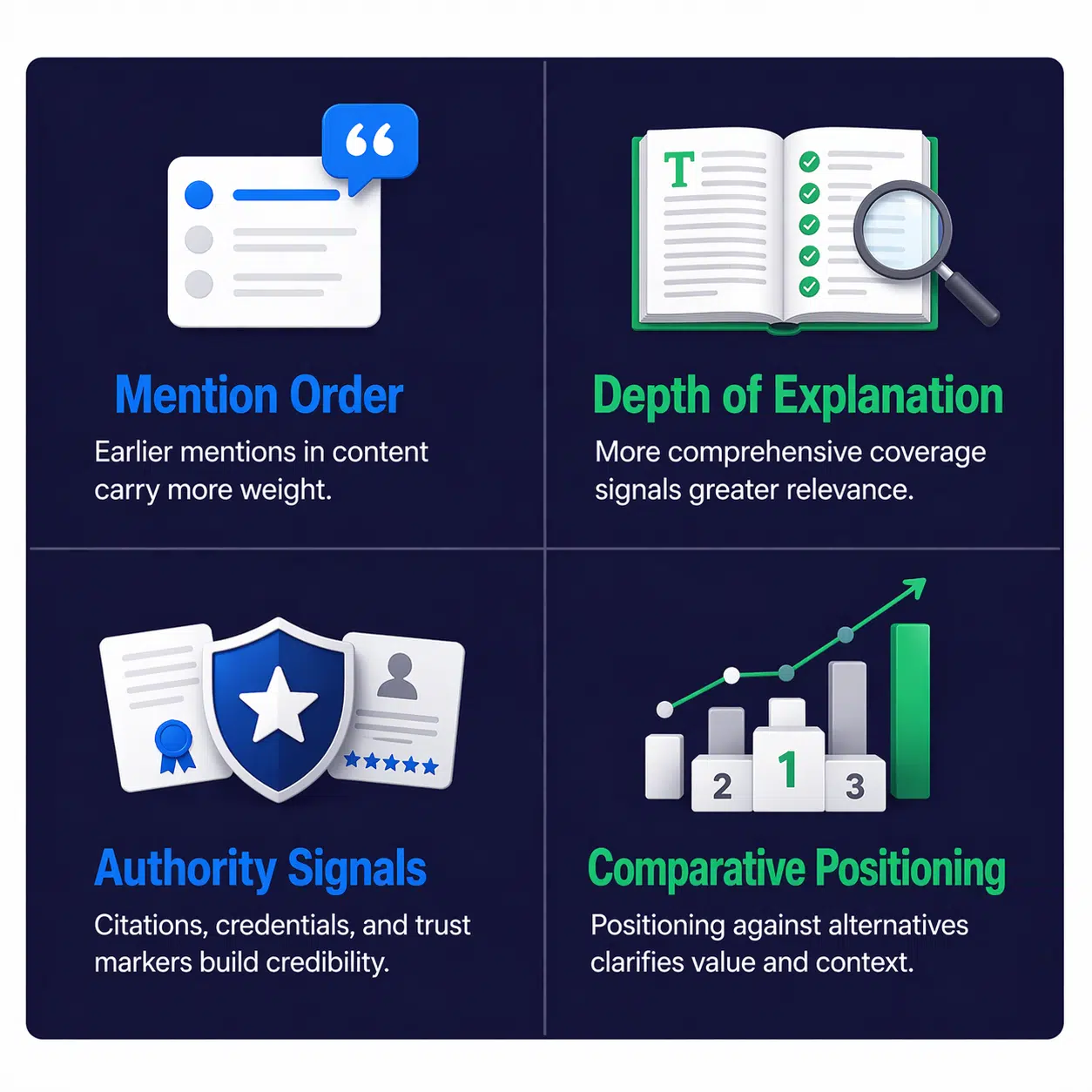
Visibility in the AI era is no longer about a single number (your rank). It's about a set of signals that determine how, and if, the AI model chooses to mention your brand. There are four primary patterns that define this visibility: This connects with AI visibility when the same signal needs a clearer operating decision. A useful companion note is search visibility, because it looks at a nearby part of the same system.
1. Mention Order
The order in which an AI lists recommendations is incredibly influential. Research suggests that up to 74% of users choose the first option the AI recommends. This indicates a massive amount of trust in the AI's curation. While some users override this order based on existing brand recognition, the majority of users are likely to follow the AI's shortlist.
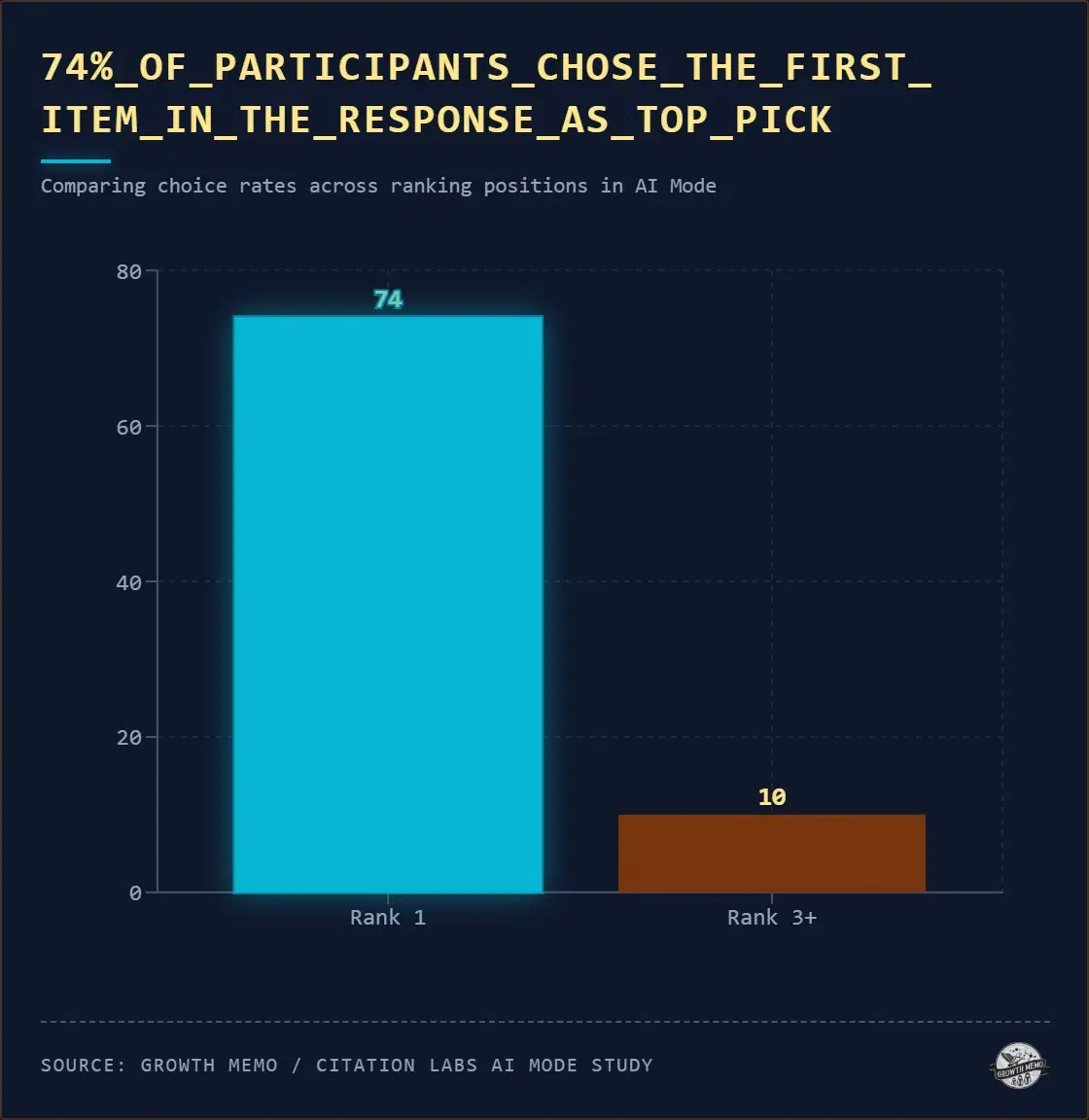
However, this order is not static. Analysis shows that running the same query three times can result in different sources and orders. It's a volatile signal, but one that creates a significant advantage for those who appear first.
2. Depth of Explanation
Not every mention is equal. Some brands are simply listed as a name, while others get a detailed paragraph explaining their specific strengths and use cases. This depth is a a direct reflection of how much citation worthy data the AI has about you.
Detailed descriptions are typically reserved for category leaders. For example, Samsung in consumer electronics often receives more complete descriptions than challenger brands, which may only be mentioned for a single differentiator.
One practical takeaway here is that complete, long form content is more likely to be cited. Data shows that pages over 20,000 characters are cited significantly more often than those under 500 characters. If the AI has thin data about your brand, it will give you a thin mention.
3. Authority Signals
AI systems don't just cite you; they frame your reputation. The tone and language used to describe your brand can between the difference between being seen as a "leader" or a "niche player."
Here is how AI typically categorizes brands:
Leaders: Described with confident phrasing like "the industry standard" or "widely recognized.". Challengers: Described as a "growing alternative" or "gaining traction.". Niche Players: Mentioned in a more neutral or limited context.
Once an AI system establishes you as a leader, that perception tends to be stable. The difference between being told that a brand "also offers project management features" and being called "one of the top three project management platforms" is a powerful authority signal. The same pattern also shows up in Brand Authority Is Outgrowing Topical Coverage, where the practical question is how the signal becomes visible.
4. Comparative Positioning
In traditional SEO, you compete for Position 1. In AI search, you compete to own a specific niche in the AI's mental model of your category. Instead of "better" or "worst," the AI positions you as "better for X" versus "better for Y."
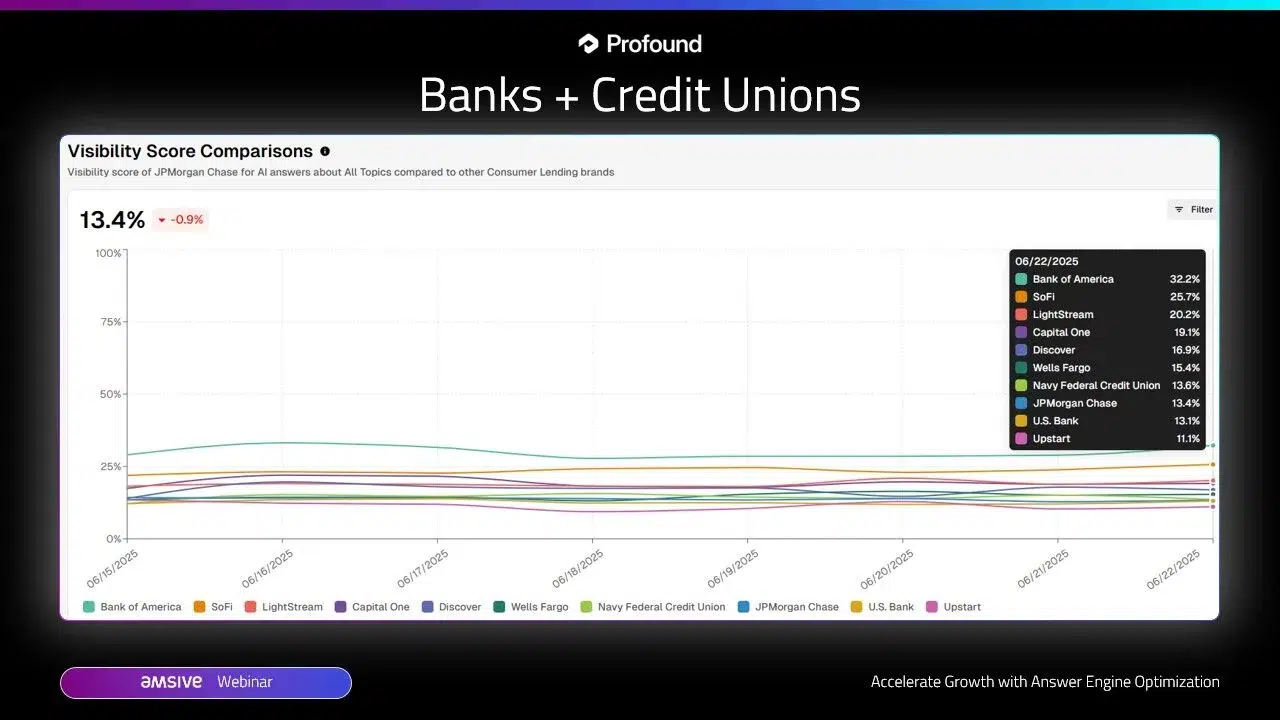
For instance, in the banking sector, visibility is split between different players who dominate specific segments. Users often self select based on this framing, if the AI says a brand is "best for startups," the user will gravitate toward that brand even if the other options technically serve both segments.
The Gap Between Traditional Rank and AI Visibility
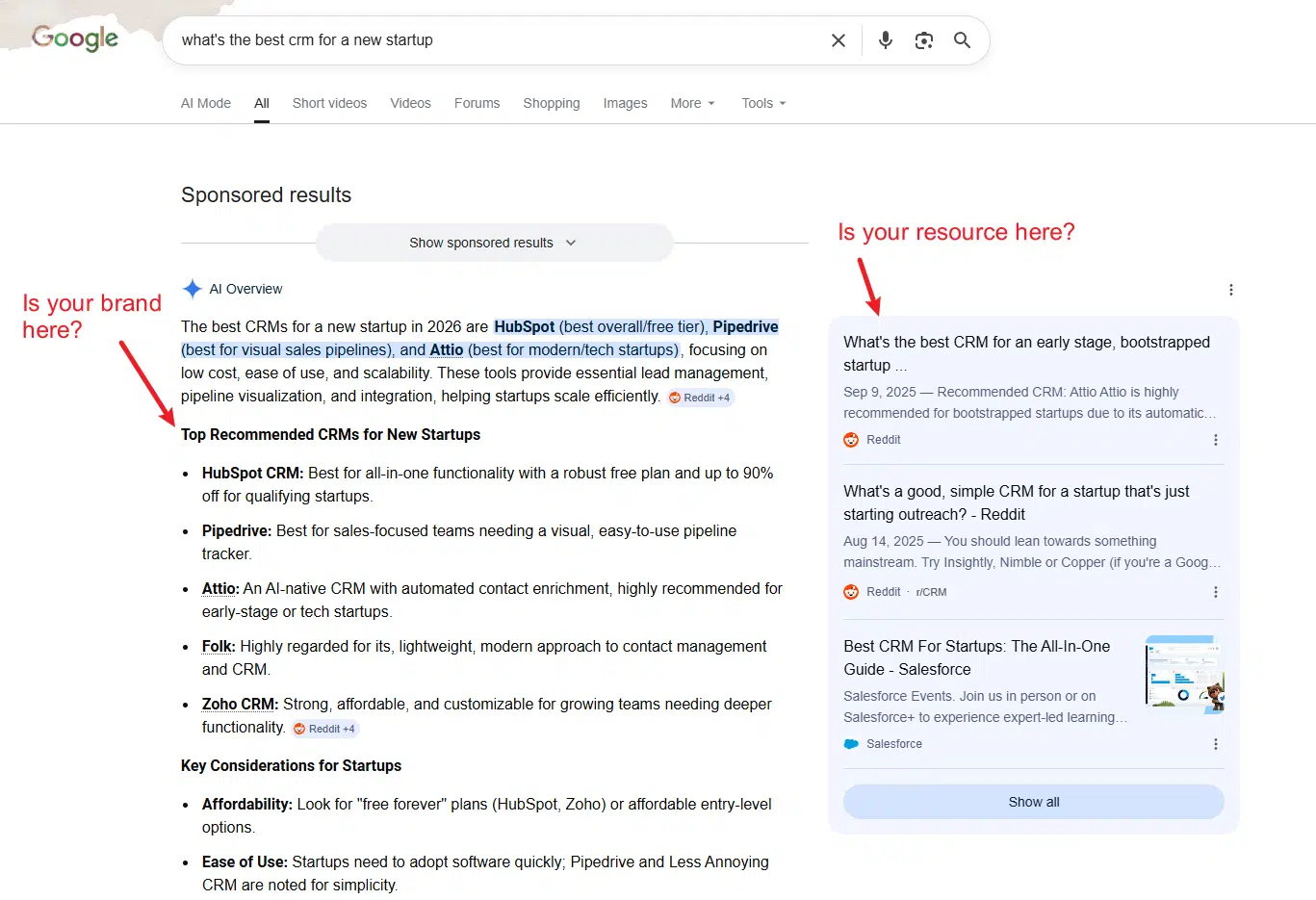
Why has the overlap between traditional rankings and AI citations dropped so far? The reason is "query fan out." When an AI Overview triggers, the system doesn't just look at the top 10 results for the user's query. Instead, it breaks the user's question into multiple sub queries and pulls relevant passages from across its entire index to synthesize a response.
Citing a source that ranks #1 for a specific head term, but pulling from a page that ranks for a long tail keyword, specific integration, or a specific use case, the AI can skip the top ranked pages entirely. This makes traditional ranking positions even less predictive of whether you'll be seen.
Where the AI Traffic Actually Goes
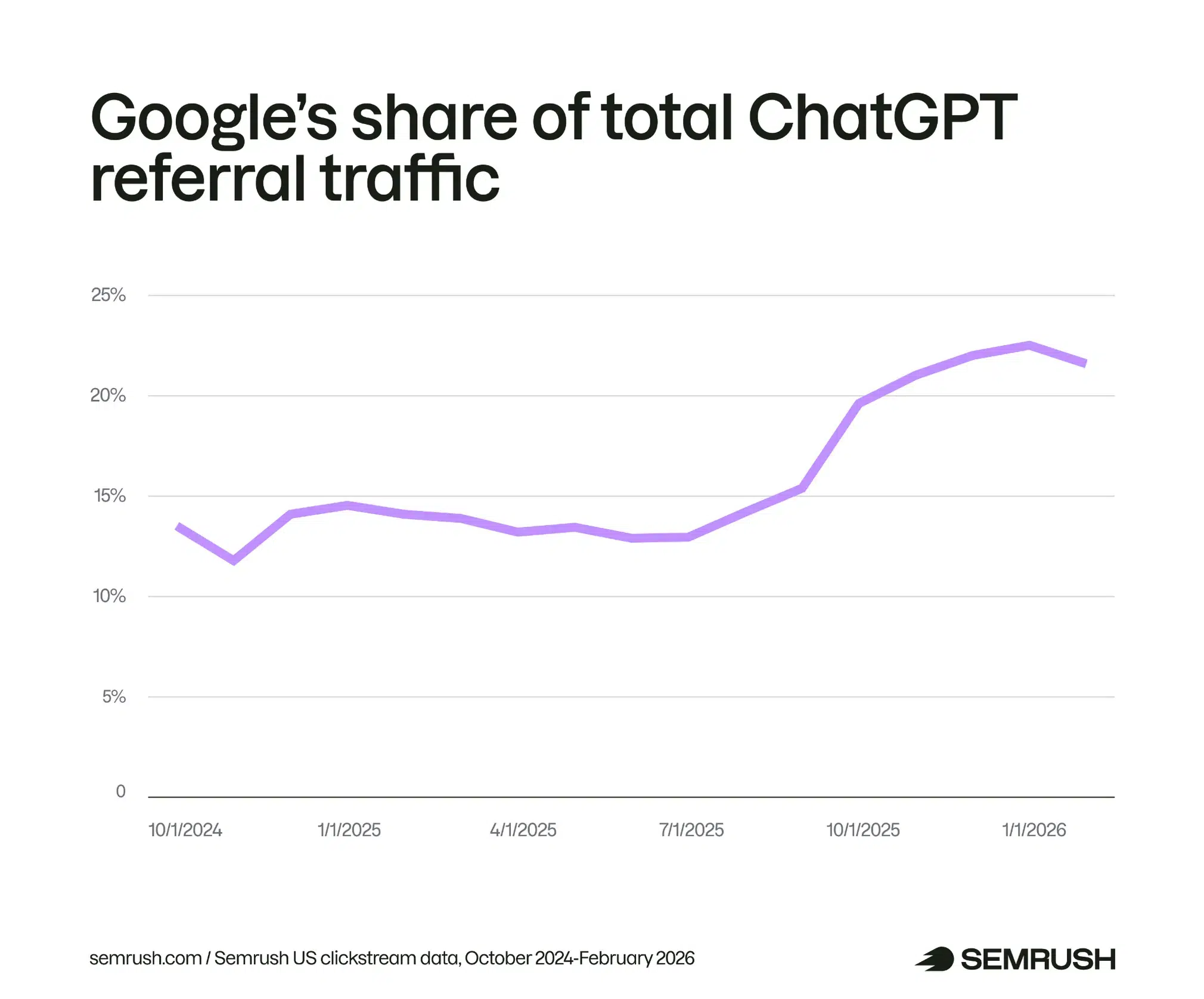
Interestingly, the shift to AI search doesn't mean the traditional search engine is dead. In fact, data shows that over 20% of ChatGPT referral traffic actually goes back to Google. Users often use AI to get a quick answer, then head to Google to verify the facts or research the brands they just discovered.
p>Another shift is the language of the query. We are seeing a move away from keyword based search toward highly specific, conversational prompts. Instead of searching for "best project management software," a user might ask an AI, "I manage a 12 person remote engineering team and we're missing sprint deadlines. What should I change about our weekly standups?"
Measuring Your AI Visibility
If position doesn't matter in the same way it does, we need new metrics. Citation frequency is the new primary metric. You should be tracking how often your brand is mentioned when AI systems answer questions in your category.
Key metrics to track:
Brand Mention Rate: The percentage of times your brand is mentioned in 100 answers. A score above 70% indicates strong performance. Recommendation Rate: For B2B and high consideration purchases, being recommended is more valuable than just being mentioned. Sentiment and Context: How is the AI describing you? Are you the "premium" option or the "cheap" option? Citation Position: Where in the list of recommendations does your brand appear?
The Infrastructure You Need for the AI Era
Traditional rank trackers can't capture these signals. To succeed in 2026, you need a parallel tracking system. While traditional SEO metrics still matter for the blue links, you need tools that specifically monitor citations across platforms like ChatGPT, Perplexity, and Google AI Overviews.
These tools help you identify if you're being cited, how you're described, and how you'sre being positioned relative to your competitors. They don't replace traditional SEO, but they supplement it.
A New Model of Visibility
The obsession with ranking #1 is not going to disappear, but it is no longer the sufficient. Measuring success solely through rankings is a mistake. AI answer engines now act as gatekeepers. Visibility now depends on how often you are included, how you are described, and and how you are positioned in the AI's mental model of your category.
Comments
Comments are reviewed before they are published. Links are not allowed inside comments.