Community Signals Are AI’s Largest Third party Source
/ 6 min read

Summary
The data comes from an analysis I ran for G2 in February 2026. Source: ~35,000 citation URLs captured in Profound. Coverage: US. The practical question is what this changes for SEO, content quality, and AI search visibility.
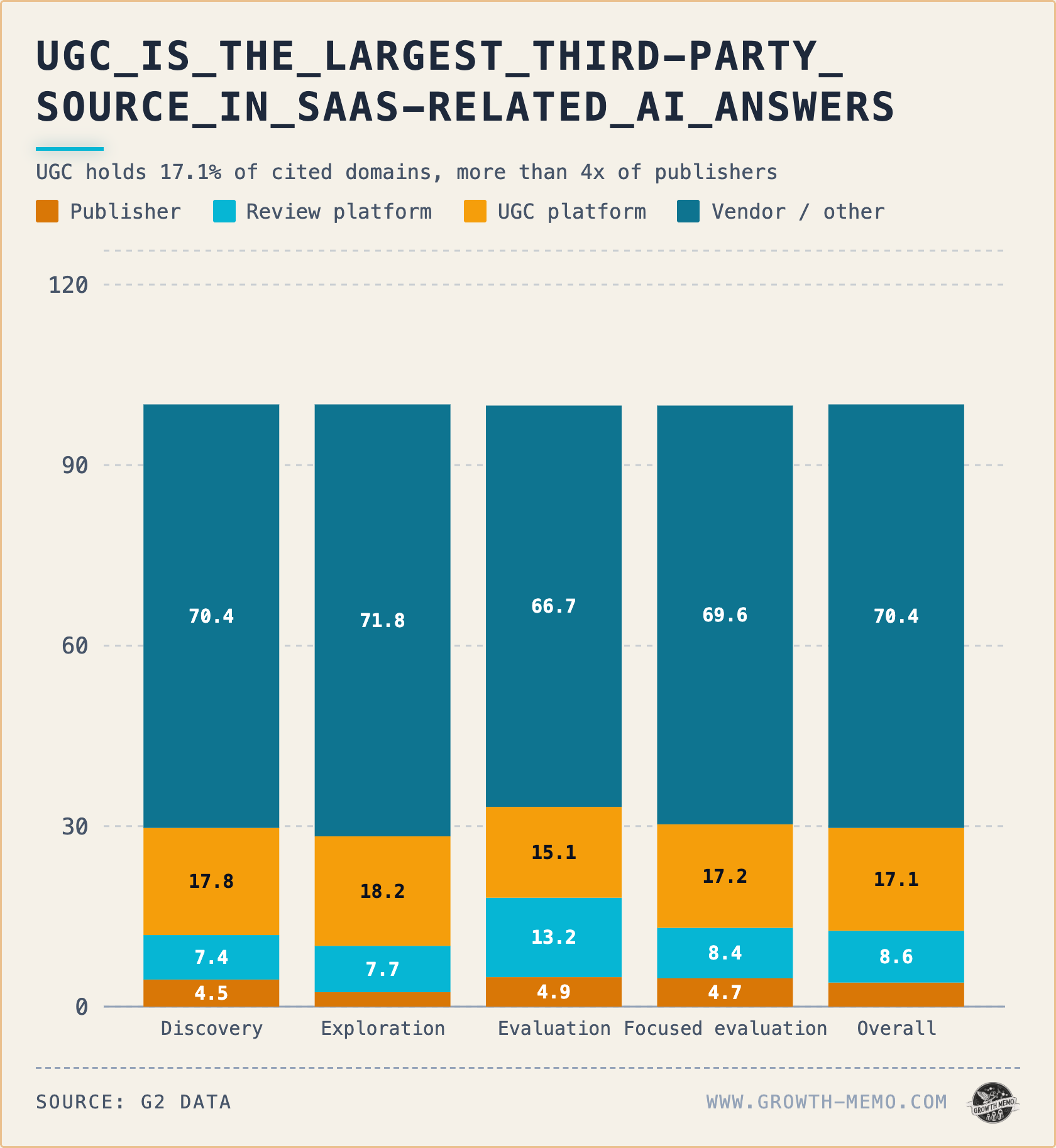
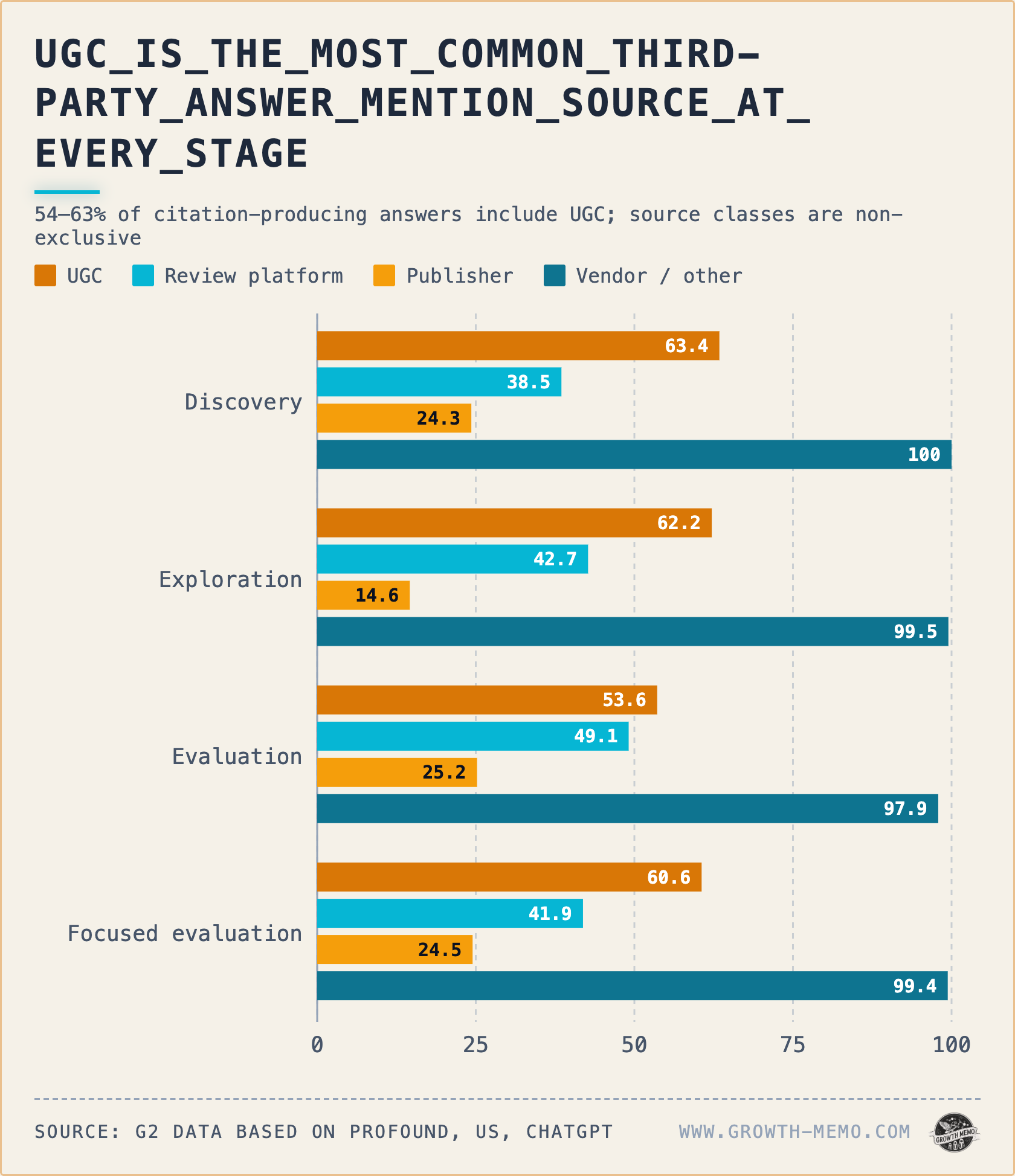
Across a sample of 35,000 ChatGPT citations, user generated content (UGC) platforms hold more of the cited domain share for SaaS related prompts than review sites and publishers combined. They hold it at the top of the journey, at the bottom, and at every point between.
There is no stage where they're skipped. So how do you build authority in a source you don't control?
Method and limitations
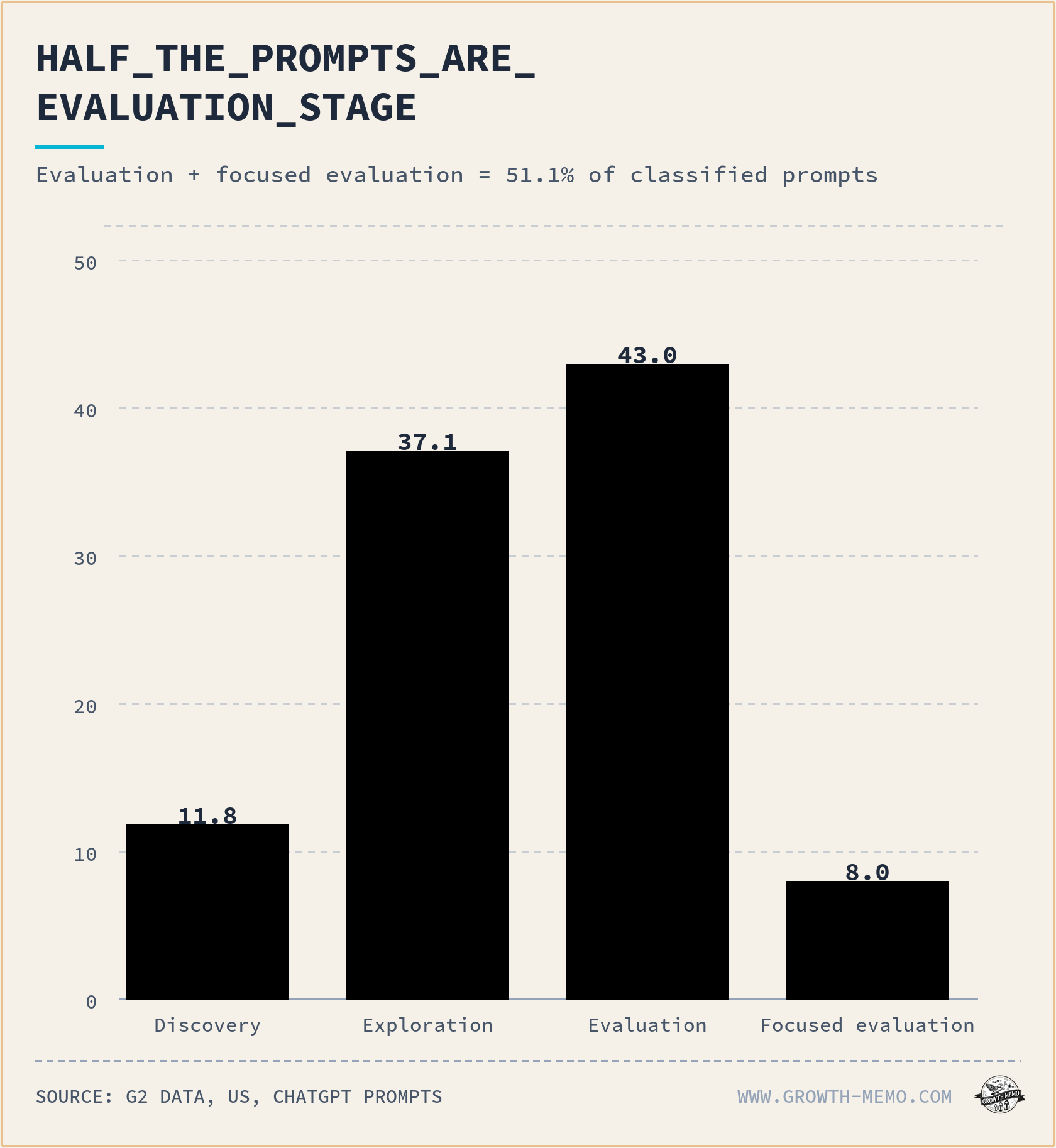
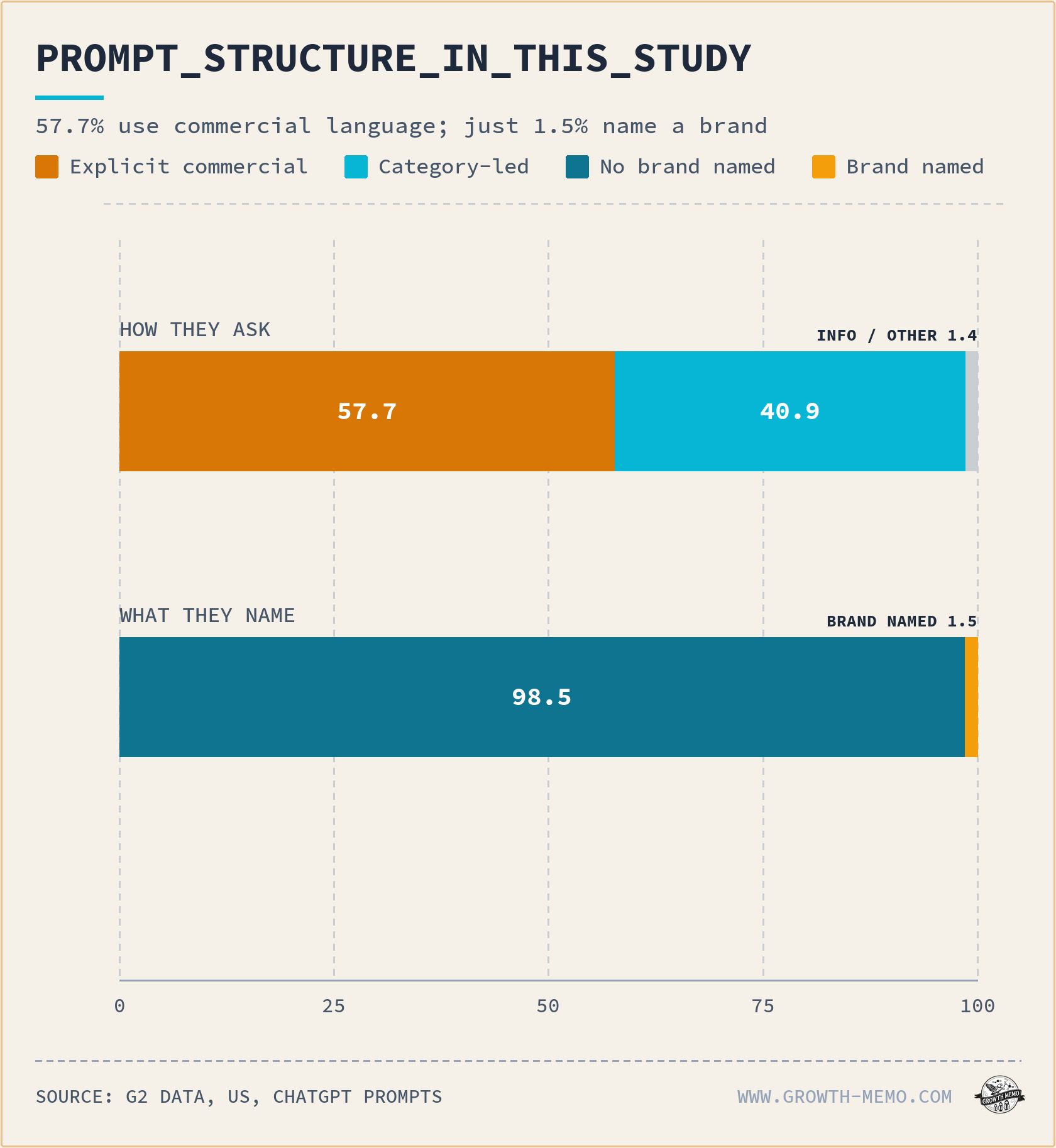
The data comes from an analysis I ran for G2 in February 2026. Source: ~35,000 citation URLs captured in Profound. Coverage: US only, ChatGPT only, month of December 2025. Each SaaS vendor related prompt was classified into one journey. For search teams, the important part is not the headline movement by itself. It is whether the shift changes which communities, forums, video surfaces, or publisher pages now satisfy the query better than the old ranking pattern.
The reporting question is whether this signal changes a decision. If it only creates another number in a dashboard, it adds noise. If it helps separate profile activity, website visits, calls, bookings, and direction requests, it can make local performance easier to understand.
1. UGC is the largest third party source class in SaaS related AI answers
Strip out the vendor domains included in this analysis, and look at what is left: UGC platforms hold 17.1% of cited domains more than 4x publishers at 4.0%. Sit with the ratio for a second, because most authority building budgets. The practical question is what this changes in the system: the page structure, the evidence presented, the measurement habit, or the way the topic is connected to related work.
The risk is usually hidden in the execution layer. A page can look fine to a human and still fail for an automated visitor if the form, call to action, rendering path, or confirmation step is not accessible enough for the agent to complete the task.
2. Review sites move with purchase intent. UGC doesn't.
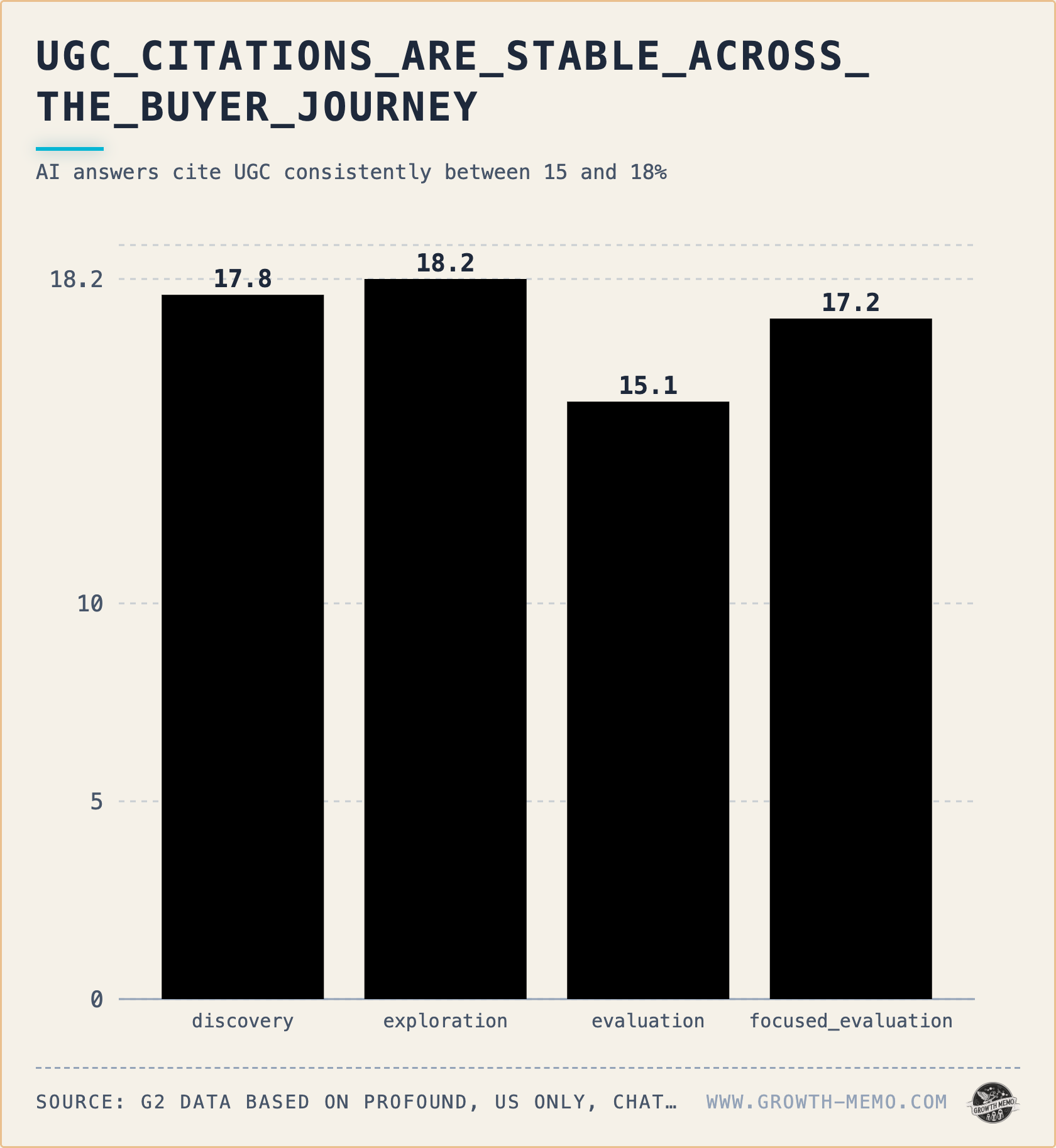
Read the table by column instead of by row and a second pattern shows up. UGC dips slightly in the Evaluation journey step, passing its share over to publishers and review platforms. (Confirming that, yes, investment in Digital PR and. The search implication is whether the section improves the evidence around the page, not simply whether it adds more wording. Clear entities, crawlable structure, internal links, and useful context are what make the topic easier to evaluate.
3. Platform concentration isn't platform stability
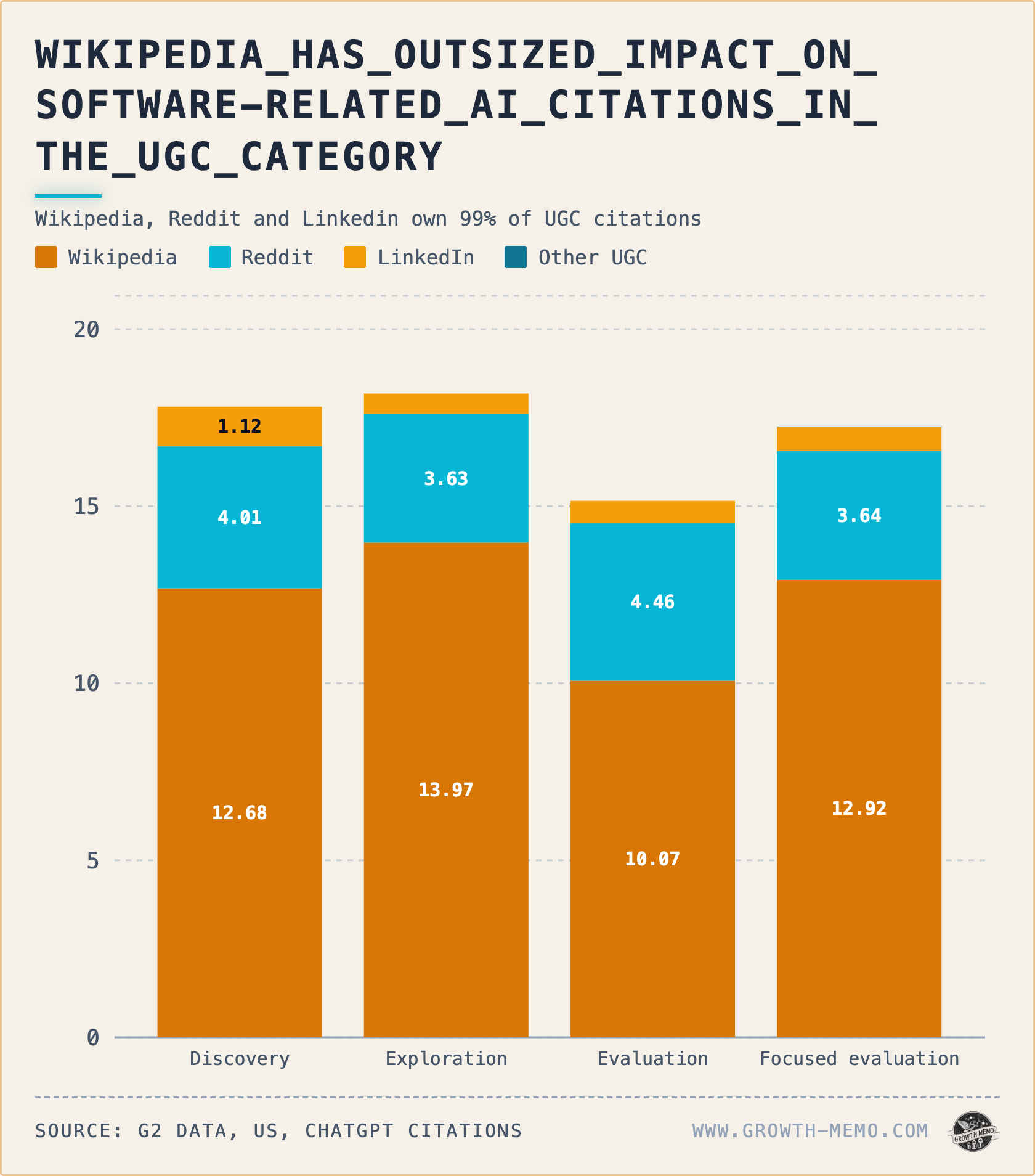
A floor that holds at 17% doesn't mean the platforms underneath it hold. Break the UGC bucket into its parts: Wikipedia, Reddit, and LinkedIn account for 99% of UGC citations in this sample. Everything else splits the remaining 1%. For search teams, the important part is not the headline movement by itself. It is whether the shift changes which communities, forums, video surfaces, or publisher pages now satisfy the query better than the old ranking pattern. The same pattern also shows up in Which Brands Are Vanishing from AI Search?, where the practical question is how the signal becomes visible.
4. How to produce community signals on purpose
None of this is an argument for buying reviews or astroturfing threads. That's a short term tactic that can hurt your brand in the long term. But there is an argument here for showing up where the answers are already being assembled. The practical read is that brand signals need to be consistent enough for both people and AI systems to form a stable view of the company, its expertise, and its trust signals. This connects with What AI Says About Your Locations when the same signal needs a clearer operating decision. A useful companion note is Local Signals AI Now Reads, because it looks at a nearby part of the same system.
The practical value is in connecting the idea to an observable signal. That means deciding what should be checked, what would prove the issue is real, and where the team should make the smallest useful improvement first.
Find which UGC platforms your category feeds
Run your highest intent prompts and record which UGC domains appear, mostly across citations. In some categories, it will be Reddit and YouTube. In others, it's a Discord, a Stack Exchange, or a single trade forum. The bucket is 17% on. For search teams, the important part is not the headline movement by itself. It is whether the shift changes which communities, forums, video surfaces, or publisher pages now satisfy the query better than the old ranking pattern.
The operational question is whether the public business data is complete enough to support the query. Hours, categories, services, reviews, photos, and page content need to reinforce each other so Google can understand the business in a specific situation, not only as a generic listing.
Highlight people in the places that matter to your audience, not just the brand account
In Topics matter for third party signals, we reported that a named author with a byline appears to outperform the same content under a brand, and LinkedIn's own testing pointed the same way. A community treats a person as a. The practical read is that brand signals need to be consistent enough for both people and AI systems to form a stable view of the company, its expertise, and its trust signals.
Answer the questions your support queue already sees on repeat
Ticket logs, sales call transcripts, and in app search queries hold the exact phrasing buyers use. Why proprietary data is your most defensible asset made this case for owned content. It applies even harder in community, where a question. The search implication is whether the section improves the evidence around the page, not simply whether it adds more wording. Clear entities, crawlable structure, internal links, and useful context are what make the topic easier to evaluate.
The useful check is whether this improves the system behind search performance, not only the words on the page. Internal links, crawlable content, clear entities, current evidence, and a sensible page structure all help the recommendation become easier to trust.
Make your customers' words retrievable on your own pages
Pull real third party review quotes, with links to the source, into the top of your highest cited pages. The science of how AI pays attention found 44.2% of citations come from the first 30% of a page. Whether the presence of positive. The practical read is that brand signals need to be consistent enough for both people and AI systems to form a stable view of the company, its expertise, and its trust signals.
Measure the aggregate, rebalance the mix
Track UGC sourced citations as 1 number, and platform composition as a second. The first tells you whether the floor is holding, and the second tells you where to move next quarter. The practical question is what this changes in the system: the page structure, the evidence presented, the measurement habit, or the way the topic is connected to related work.
What the visibility signal actually changes
What the visibility signal actually changes: community Signals Are AI’s Largest Third party Source: the Practical Angle should be treated as a visibility signal, not a standalone headline. Introduction Across a sample of 35,000 ChatGPT citations, user generated content (UGC) platforms hold more of the cited domain share for SaaS related prompts than review sites and publishers combined. They hold it at the top of the journey, at the bottom, and.
What the visibility signal actually changes: the practical question is whether the page, brand evidence, and surrounding content make the answer easier to trust. If that support is weak, search systems can still understand the topic but fail to connect it confidently to the brand.
What the visibility signal actually changes: that is why the response should begin with an audit of the evidence already on the site before creating a new asset. The fastest improvement is often a clearer page, a better internal link, or a stronger explanation of why the brand belongs in the answer.
Comments
Comments are reviewed before they are published. Links are not allowed inside comments.