How AI Is Merging Paid and Organic Visibility
/ 6 min read

Summary
Google's SERP was a finite surface: 10 organic blue links, a few ad slots, and a knowledge panel on the right. The user landed,. The practical question is what this changes for SEO, content quality, and AI search visibility.
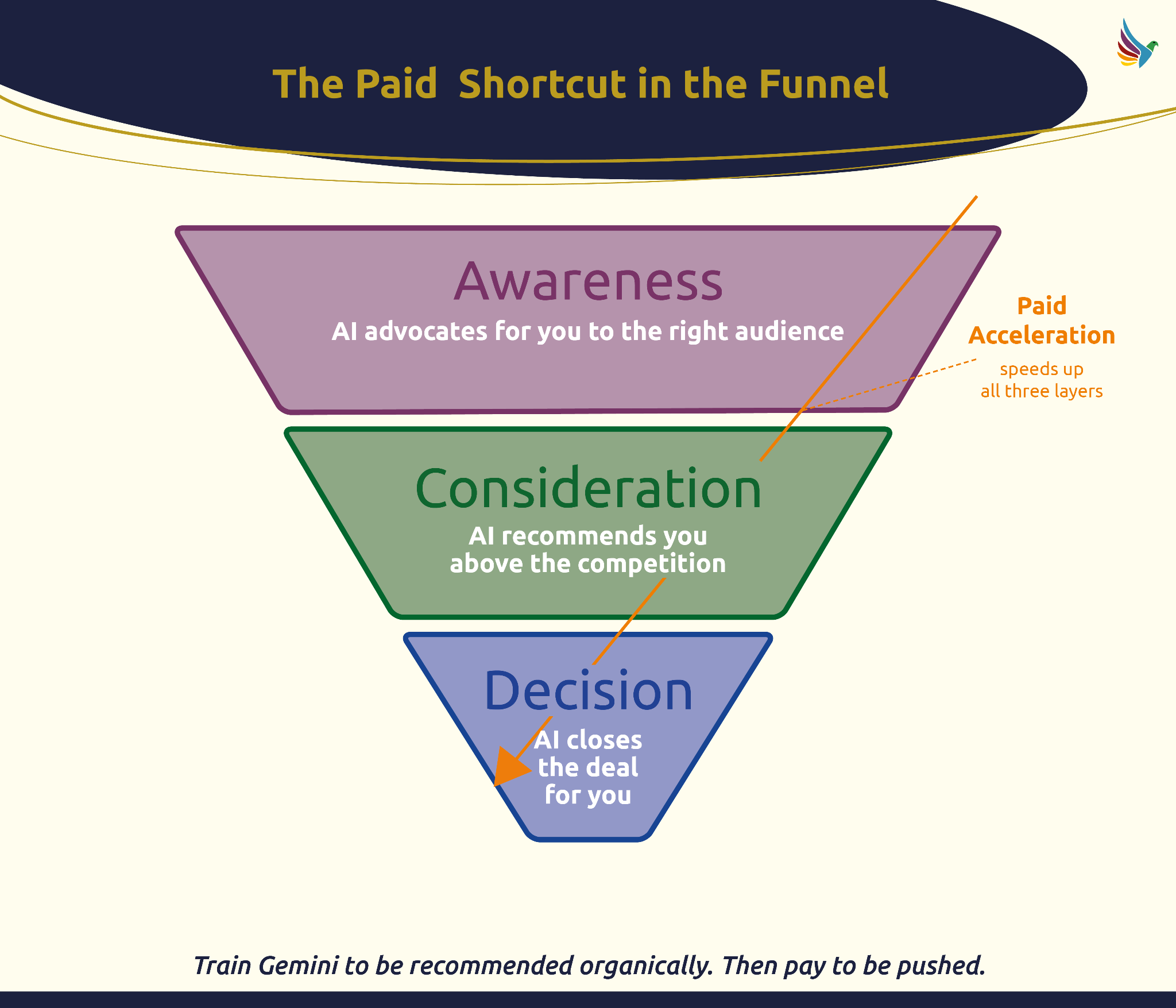
The idea that AI is killing advertising misses the bigger shift. As AI expands across search, assistants, productivity tools, and transactions, advertising is moving with it.
Ad density may be changing within AI experiences, but advertising opportunities are expanding across a growing number of surfaces. At the same time, paid and organic are becoming harder to separate.
The old model: Paid and organic on one finite SERP
Google's SERP was a finite surface: 10 organic blue links, a few ad slots, and a knowledge panel on the right. The user landed, scanned, and clicked. Paid and organic teams operated on separate budgets, separate tools, and separate. Local visibility depends on whether the details across pages, profiles, categories, reviews, photos, and service descriptions reinforce the same answer for a specific location based query. This connects with AI Overviews Contradict Paid Search Ads? when the same signal needs a clearer operating decision.
The reporting question is whether this signal changes a decision. If it only creates another number in a dashboard, it adds noise. If it helps separate profile activity, website visits, calls, bookings, and direction requests, it can make local performance easier to understand.
The new model: Gemini sits inside every surface, and it carries ads with it
Gemini now sits inside every layer of the Google ecosystem: Discovery (Search, Maps, YouTube, Lens, News, Discover, and Shopping), productivity (Gmail, Docs, Drive, Photos, and Calendar). Distribution (Android, Chrome, Google Play, Pixel,. The practical read is that brand signals need to be consistent enough for both people and AI systems to form a stable view of the company, its expertise, and its trust signals.
The operational question is whether the public business data is complete enough to support the query. Hours, categories, services, reviews, photos, and page content need to reinforce each other so Google can understand the business in a specific situation, not only as a generic listing.
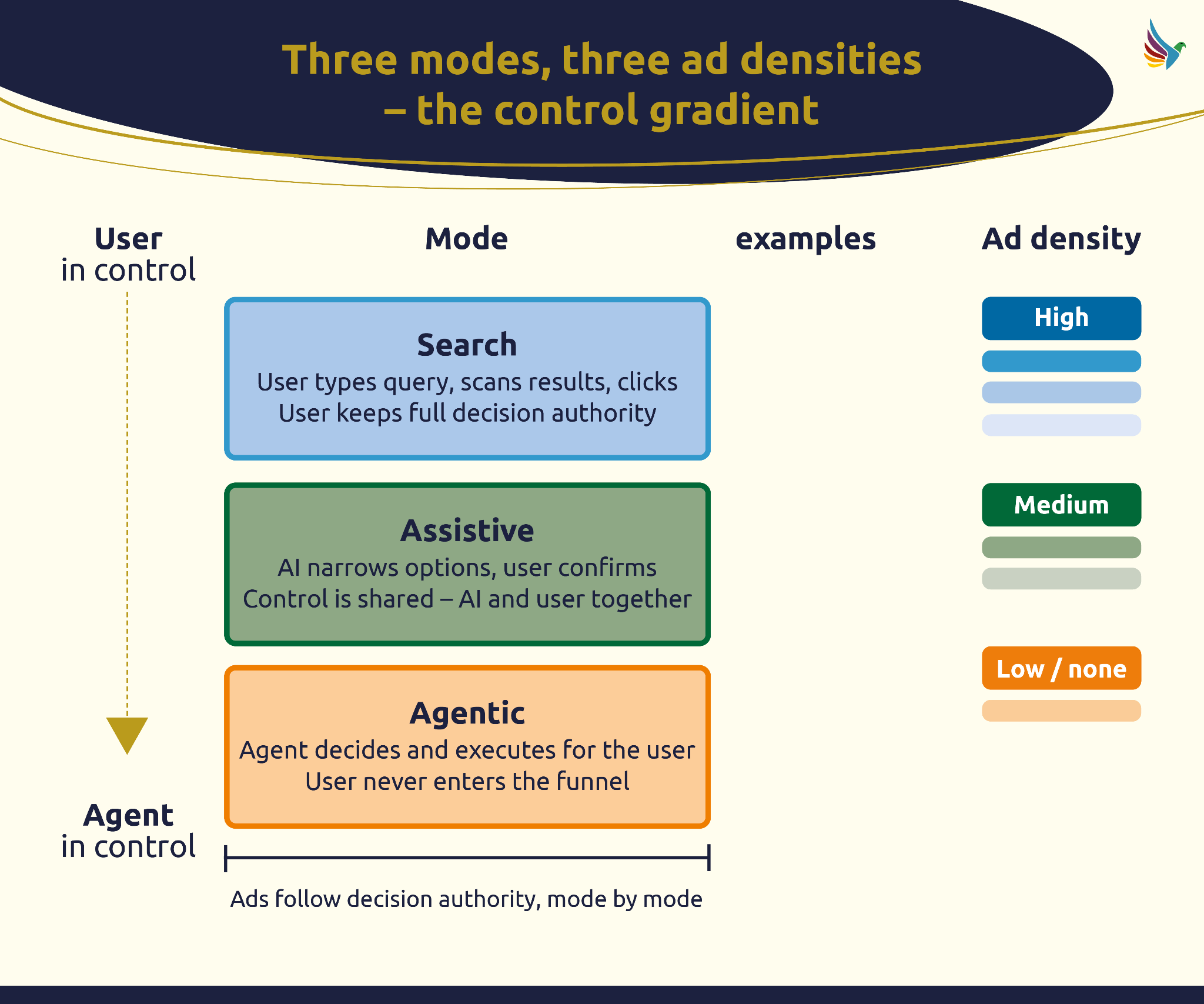
Ad density follows the delegation the user has made to the machine
The dominant narrative in 2026 is that ads are dying because AI is replacing search, and ads inside AI are a problem nobody has fully solved yet. That's partially correct: Ad density per session drops as AI takes more control, and nobody -. The search implication is whether the section improves the evidence around the page, not simply whether it adds more wording. Clear entities, crawlable structure, internal links, and useful context are what make the topic easier to evaluate.
The useful check is whether this improves the system behind search performance, not only the words on the page. Internal links, crawlable content, clear entities, current evidence, and a sensible page structure all help the recommendation become easier to trust.
The freemium system still works, but the ad is becoming part of the surface
The monetization model that works at consumer internet scale is simple: pay with money, or pay with attention. YouTube is Google's clearest example, and proof that it works: free with ads, paid without, and the vast majority of users have. The practical question is what this changes in the system: the page structure, the evidence presented, the measurement habit, or the way the topic is connected to related work.
The practical value is in connecting the idea to an observable signal. That means deciding what should be checked, what would prove the issue is real, and where the team should make the smallest useful improvement first.
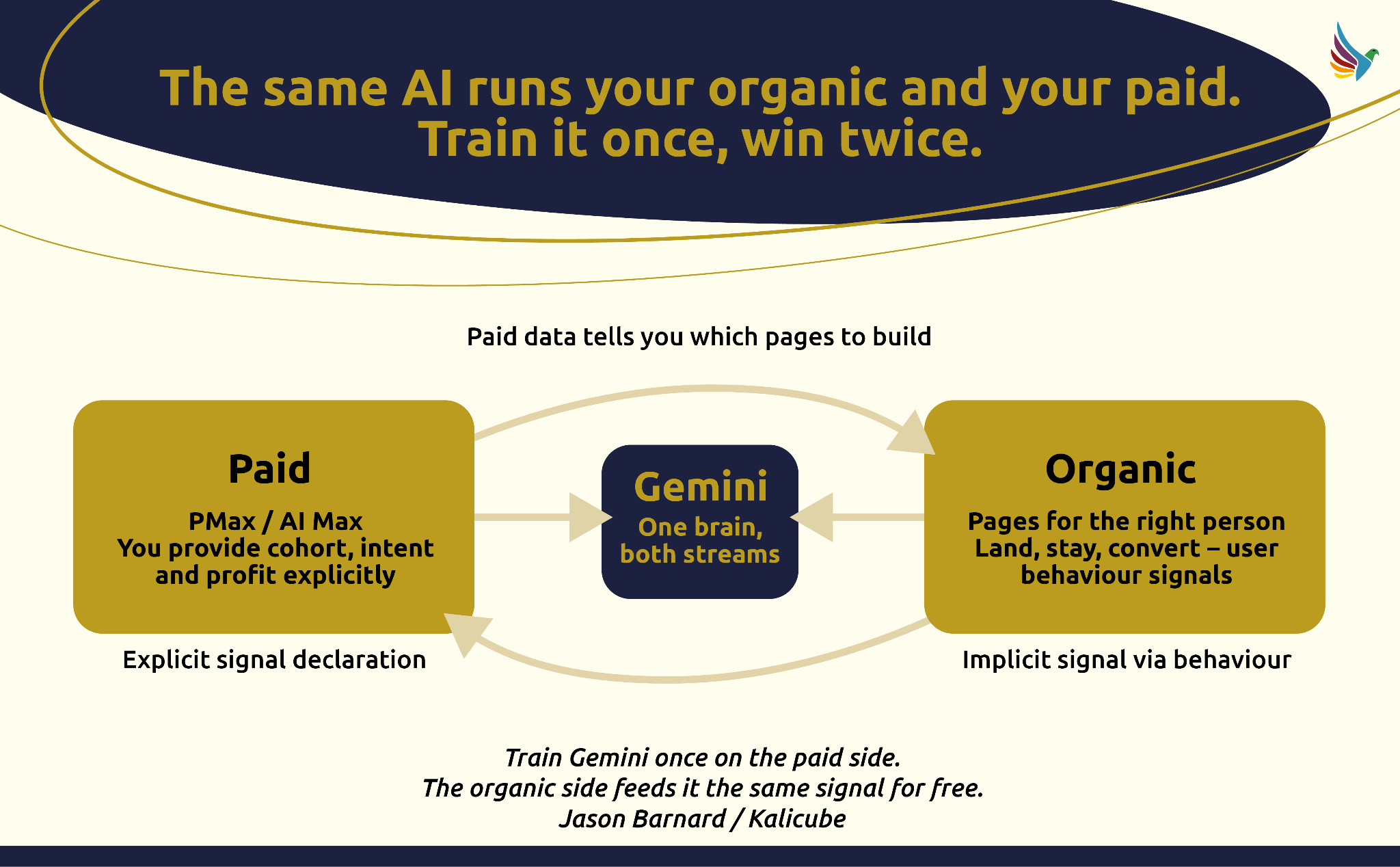
Cohort, intent, and profit drive both paid and organic
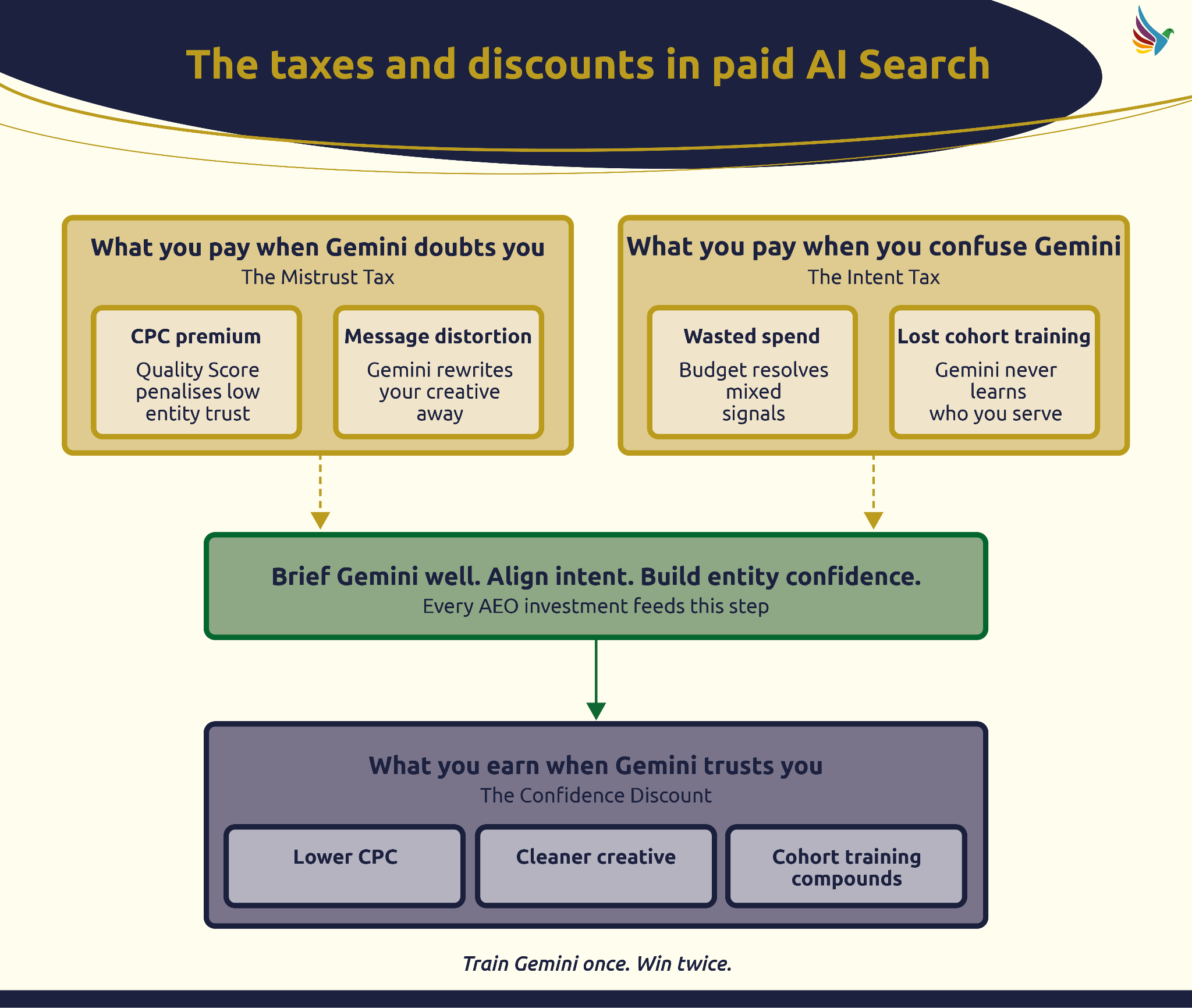
PMax, AI Max, AI Overviews, AI Mode, Gemini is driving all of them. The AI optimizing your paid campaigns is the same AI evaluating your organic content, reading the same user, in the same moment, with the same intent. In paid, you. The search implication is whether the section improves the evidence around the page, not simply whether it adds more wording. Clear entities, crawlable structure, internal links, and useful context are what make the topic easier to evaluate.
Use paid to find the combinations that work, build organic pages around them
In a correctly structured PMax or AI Max campaign, you declare cohort, intent, and profit margin explicitly: this audience, this goal, this margin, in the same campaign. You don't mix a luxury hotel and a budget guesthouse in the same ad. The practical read is that brand signals need to be consistent enough for both people and AI systems to form a stable view of the company, its expertise, and its trust signals.
When Gemini isn't convinced about you, you pay on both sides simultaneously
The three revenue taxes, the doubt tax, the ghost tax, and the invisibility tax, operate on the organic side. Because the engine powering your organic results is the same one powering your paid placements, you pay all three on both sides. The practical read is that brand signals need to be consistent enough for both people and AI systems to form a stable view of the company, its expertise, and its trust signals.
Google has a structural advantage that Microsoft and OpenAI can't match
Google has all the cards: the model, the surfaces, and the ads platform, all owned and tuned together in absolute harmony. Microsoft has the surfaces but lacks the LLM to drive them at the same level. OpenAI has the model and launched a. The practical read is that brand signals need to be consistent enough for both people and AI systems to form a stable view of the company, its expertise, and its trust signals.
The old model: Paid and organic on one finite SERP in practice
Introduction The idea that AI is killing advertising misses the bigger shift. As AI expands across search, assistants, productivity tools, and transactions, advertising is moving with it. Ad density may be changing within AI experiences,. The practical read is that brand signals need to be consistent enough for both people and AI systems to form a stable view of the company, its expertise, and its trust signals.
What the visibility signal actually changes
What the visibility signal actually changes: how AI Is Merging Paid and Organic Visibility: the Practical Angle should be treated as a visibility signal, not a standalone headline. Introduction The idea that AI is killing advertising misses the bigger shift. As AI expands across search, assistants, productivity tools, and transactions, advertising is moving with it. Ad density may be changing within AI experiences, but advertising. A useful companion note is 7 Ways to Build Visibility, because it looks at a nearby part of the same system. The same pattern also shows up in Working Framework, where the practical question is how the signal becomes visible.
What the visibility signal actually changes: the practical question is whether the page, brand evidence, and surrounding content make the answer easier to trust. If that support is weak, search systems can still understand the topic but fail to connect it confidently to the brand.
What the visibility signal actually changes: that is why the response should begin with an audit of the evidence already on the site before creating a new asset. The fastest improvement is often a clearer page, a better internal link, or a stronger explanation of why the brand belongs in the answer.
Where the evidence needs to be tested
Where the evidence needs to be tested: a single study or ranking observation should not become a strategy by itself. It should become a diagnostic prompt: which source is being trusted, which query pattern is affected, and which part of the site would make that trust easier to earn?
Where the evidence needs to be tested: that keeps the response grounded. The goal is to improve the evidence chain around the topic rather than publish another summary that repeats what every other page already says.
Where the evidence needs to be tested: the important distinction is between a useful signal and a fashionable talking point. A useful signal changes the brief, the page structure, the linking plan, or the measurement view.
Comments
Comments are reviewed before they are published. Links are not allowed inside comments.