A Practical Way to Add Google’s Preferred Sources Button to Your Website
/ 6 min read

Summary
Preferred Sources affects what an individual Google user sees after selecting your publication. It does not improve your site's. The practical question is what this changes for SEO, content quality, and AI search visibility.

Google's new Preferred Sources embed removes one action from the process of adding a publication as a Preferred Source. With the embed, a reader adds the site and returns to the article. A useful companion note is to Choose Your Next Move, because it looks at a nearby part of the same system.
A deeplink sends the reader to Google's source preferences tool, where the site still has to be selected and confirmed. This simple guide shows how to add the button to your website and provides WordPress widget code you can use.
What Google's Preferred Sources Feature Does
Preferred Sources affects what an individual Google user sees after selecting your publication. It does not improve your site's rankings for everyone or guarantee that your articles will appear in Top Stories. According to Google's. The search implication is whether the section improves the evidence around the page, not simply whether it adds more wording. Clear entities, crawlable structure, internal links, and useful context are what make the topic easier to evaluate.
The useful check is whether this improves the system behind search performance, not only the words on the page. Internal links, crawlable content, clear entities, current evidence, and a sensible page structure all help the recommendation become easier to trust.
Check Eligibility Before You Add The Button
First, search for your publication in Google's source preferences tool. If it does not appear there, adding the button will not solve the eligibility issue. Google supports domains and subdomains, but not subdirectories. These are valid. The search implication is whether the section improves the evidence around the page, not simply whether it adds more wording. Clear entities, crawlable structure, internal links, and useful context are what make the topic easier to evaluate.
Add The Standard Preferred Sources Button
Google recommends its standard JavaScript implementation because it is localized automatically and returns the reader to the page where they started. Local visibility depends on whether the details across pages, profiles, categories, reviews, photos, and service descriptions reinforce the same answer for a specific location based query.
The operational question is whether the public business data is complete enough to support the query. Hours, categories, services, reviews, photos, and page content need to reinforce each other so Google can understand the business in a specific situation, not only as a generic listing.
Standard Button Vs. Deeplink: What I Observed
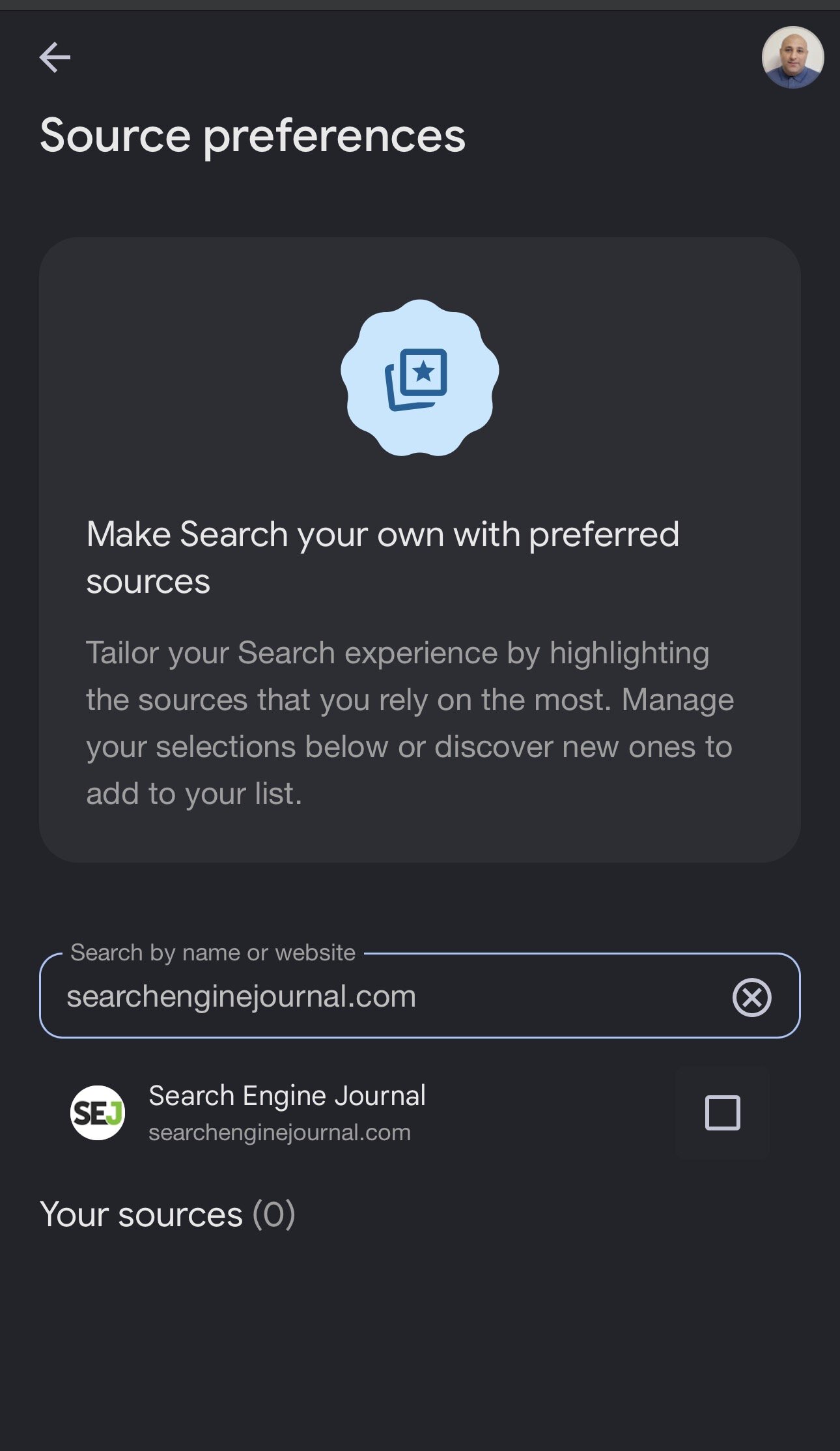
I tested both routes on mobile. With the embedded button, Google opens a publication specific confirmation page. The source is already identified, the reader taps Add, and Google returns them to the article. After the initial click on. The search implication is whether the section improves the evidence around the page, not simply whether it adds more wording. Clear entities, crawlable structure, internal links, and useful context are what make the topic easier to evaluate.

Choose A Light Or Dark Theme
The light theme is the default. For a dark background, add the data theme attribute:. The practical question is what this changes in the system: the page structure, the evidence presented, the measurement habit, or the way the topic is connected to related work.
The practical value is in connecting the idea to an observable signal. That means deciding what should be checked, what would prove the issue is real, and where the team should make the smallest useful improvement first.
Override The Language Only When Necessary
The button uses the reader's browser language by default. If a page requires a specific supported language, add data lang:. The strategic issue is whether automated visitors can understand, trust, and complete the same journey a human visitor can. Agent readiness is partly technical, but it is also about clear tasks, accessible flows, and reliable evidence.
Use The Deeplink When You Cannot Add JavaScript
The deeplink is an ordinary link, so you can add it through any CMS or HTML editor. It works without JavaScript. You can add it as an ordinary link: The same URL can be used in page content, email, social posts, or promotions. The search implication is whether the section improves the evidence around the page, not simply whether it adds more wording. Clear entities, crawlable structure, internal links, and useful context are what make the topic easier to evaluate.
Add The Button To WordPress
This example creates a WordPress widget that can be added to any widget area, such as an article sidebar or footer. The widget settings let an editor select Google's Light or Dark color theme and align the button left, center, or right. The practical question is what this changes in the system: the page structure, the evidence presented, the measurement habit, or the way the topic is connected to related work.
Track Preferred Sources Button Clicks In GA4
The widget uses one delegated click listener because Google renders the badge after the page loads. It records a click that starts the Preferred Sources flow; it does not confirm that the reader completed the selection in Google. If a. The measurement question is whether this signal changes a decision, not whether it adds another number to a dashboard. Useful reporting connects visibility, engagement, and business outcomes without pretending every AI influenced journey will produce a clean click path. This connects with New Discovery Problem when the same signal needs a clearer operating decision.
The reporting question is whether this signal changes a decision. If it only creates another number in a dashboard, it adds noise. If it helps separate profile activity, website visits, calls, bookings, and direction requests, it can make local performance easier to understand.
In Summary
Preferred Sources is not a direct ranking factor, but it can increase repeat visibility among readers who explicitly choose your publication. That gives publishers a practical way to build a returning audience in Top Stories and, where. The search implication is whether the section improves the evidence around the page, not simply whether it adds more wording. Clear entities, crawlable structure, internal links, and useful context are what make the topic easier to evaluate.
What the visibility signal actually changes
What the visibility signal actually changes: a Practical Way to Add Google’s Preferred Sources Button to Your Website should be treated as a visibility signal, not a standalone headline. Introduction Google's new Preferred Sources embed removes one action from the process of adding a publication as a Preferred Source. With the embed, a reader adds the site and returns to the article. A deeplink sends the reader to Google's source preferences. The same pattern also shows up in Then I Watched Claude Pay It, where the practical question is how the signal becomes visible.
What the visibility signal actually changes: the practical question is whether the page, brand evidence, and surrounding content make the answer easier to trust. If that support is weak, search systems can still understand the topic but fail to connect it confidently to the brand.
What the visibility signal actually changes: that is why the response should begin with an audit of the evidence already on the site before creating a new asset. The fastest improvement is often a clearer page, a better internal link, or a stronger explanation of why the brand belongs in the answer.
Where the evidence needs to be tested
Where the evidence needs to be tested: a single study or ranking observation should not become a strategy by itself. It should become a diagnostic prompt: which source is being trusted, which query pattern is affected, and which part of the site would make that trust easier to earn?
Where the evidence needs to be tested: that keeps the response grounded. The goal is to improve the evidence chain around the topic rather than publish another summary that repeats what every other page already says.
Where the evidence needs to be tested: the important distinction is between a useful signal and a fashionable talking point. A useful signal changes the brief, the page structure, the linking plan, or the measurement view.
Comments
Comments are reviewed before they are published. Links are not allowed inside comments.