A Practical Way to Build an AI powered Content Gap Analysis Workflow
/ 6 min read

Summary
In this workflow, I use Semrush to identify competitive opportunities, Google Search Console to validate where my site is already. The practical question is what this changes for SEO, content quality, and AI search visibility.

You can publish consistently, follow SEO best practices, and still watch competitors outrank you. More often than not, the problem isn't content quality.
Your competitors are answering questions your audience is asking, and you're not in the conversation yet. That's where a content gap analysis comes in.
Bring your SEO data together before you analyze it
In this workflow, I use Semrush to identify competitive opportunities, Google Search Console to validate where my site is already showing signs of authority, and Google Analytics to add business context. Claude then brings those datasets. The measurement question is whether this signal changes a decision, not whether it adds another number to a dashboard. Useful reporting connects visibility, engagement, and business outcomes without pretending every AI influenced journey will produce a clean click path. The same pattern also shows up in 4 Layer AI Ops Playbook, where the practical question is how the signal becomes visible.
The reporting question is whether this signal changes a decision. If it only creates another number in a dashboard, it adds noise. If it helps separate profile activity, website visits, calls, bookings, and direction requests, it can make local performance easier to understand.
Step 1: Choose the right competitors
A content gap analysis is only as good as the competitors you compare yourself against. That sounds obvious, but it's one of the easiest mistakes to make. If you compare your site to Amazon, Reddit, or Wikipedia, you'll end up with. For search teams, the important part is not the headline movement by itself. It is whether the shift changes which communities, forums, video surfaces, or publisher pages now satisfy the query better than the old ranking pattern.
Step 2: Gather and prepare your data
With your competitor list finalized, it's time to collect the data Claude will analyze. Whether you're uploading exports or connecting through MCP, the goal is the same: bring together competitive rankings, your site's search performance,. The search implication is whether the section improves the evidence around the page, not simply whether it adds more wording. Clear entities, crawlable structure, internal links, and useful context are what make the topic easier to evaluate.
The risk is usually hidden in the execution layer. A page can look fine to a human and still fail for an automated visitor if the form, call to action, rendering path, or confirmation step is not accessible enough for the agent to complete the task.
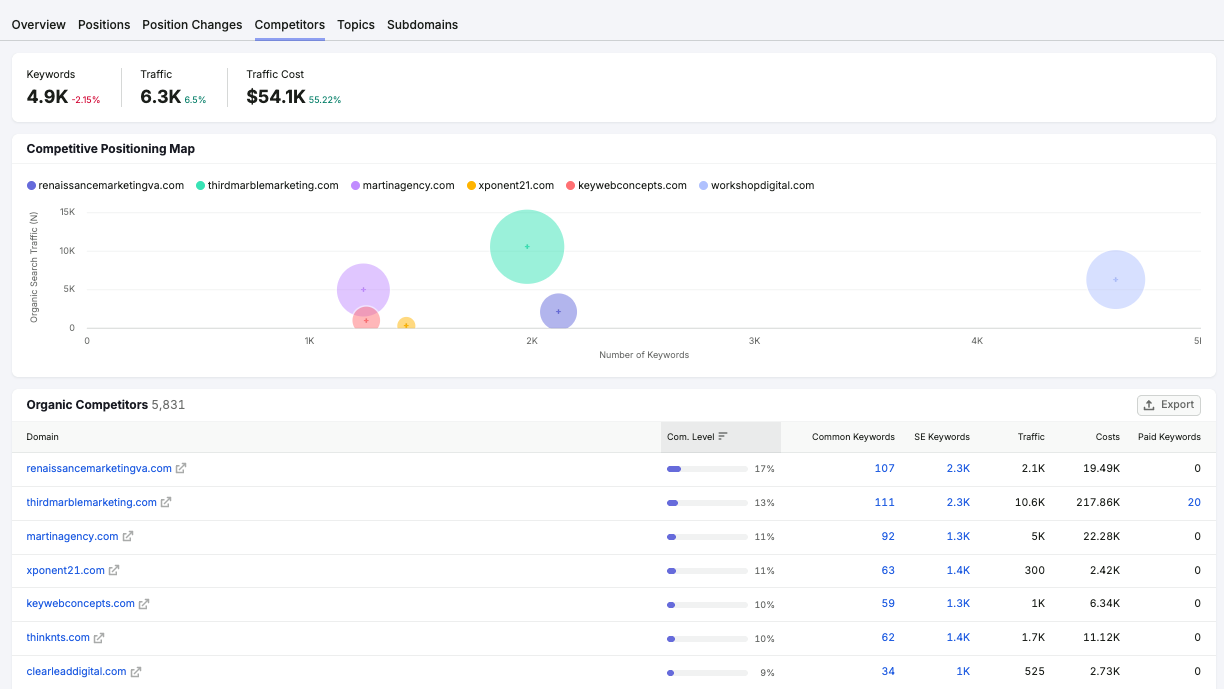
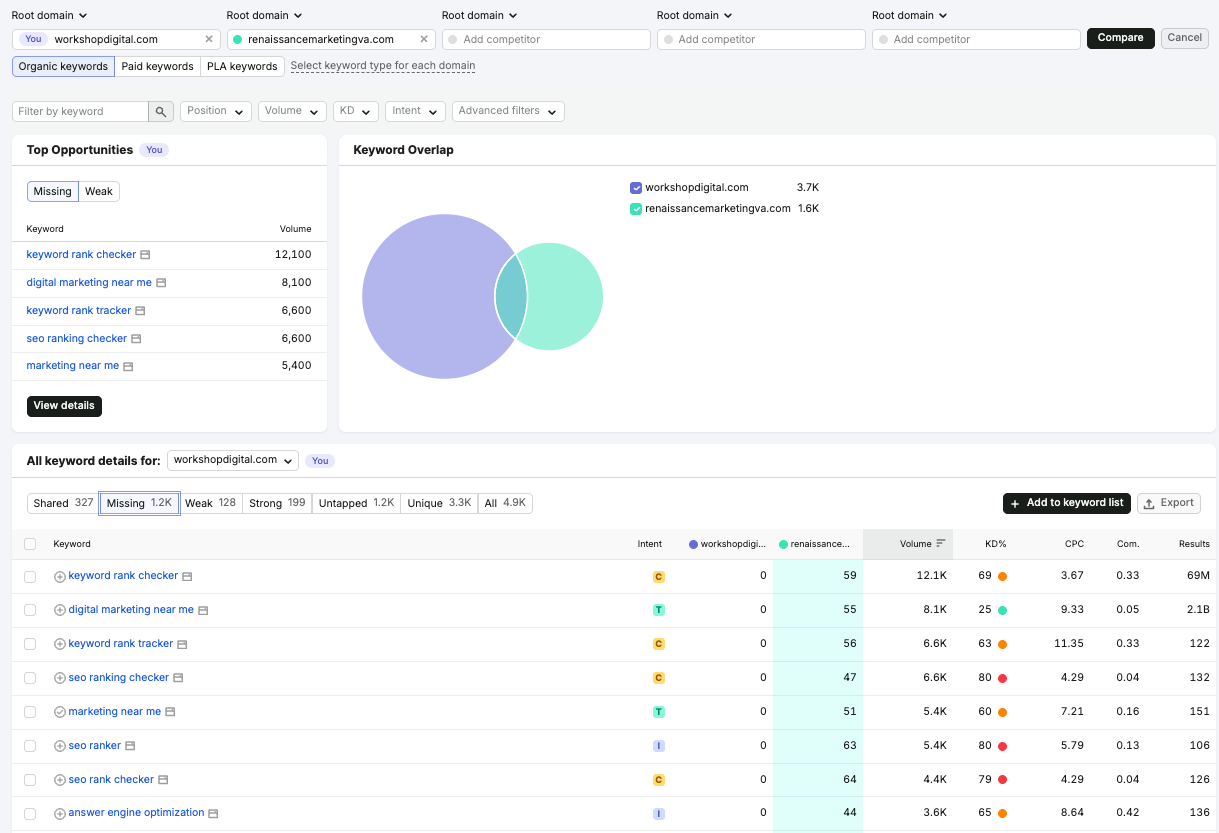
Semrush: Find the gaps
Start with Semrush's Keyword Gap tool using the competitors you selected in Step 1. Pay close attention to three buckets: Competitors rank, you don't. These are your biggest content opportunities and often point to missing topics or. The search implication is whether the section improves the evidence around the page, not simply whether it adds more wording. Clear entities, crawlable structure, internal links, and useful context are what make the topic easier to evaluate. A useful companion note is Finding Client Opportunities in Competitor Feedback, because it looks at a nearby part of the same system.
The useful check is whether this improves the system behind search performance, not only the words on the page. Internal links, crawlable content, clear entities, current evidence, and a sensible page structure all help the recommendation become easier to trust.
Google Search Console: Validate the opportunity
Next, check Google Search Console before assuming every missing keyword deserves a new page. For example, Semrush may show that you don't rank for a particular keyword, but GSC could reveal that you're already receiving impressions for. The search implication is whether the section improves the evidence around the page, not simply whether it adds more wording. Clear entities, crawlable structure, internal links, and useful context are what make the topic easier to evaluate.
Google Analytics: Add business context
Search volume is only part of the story. Engagement metrics help answer an equally important question: If you improve visibility for this topic, is it likely to support your business goals? If a related content hub already drives engaged. The measurement question is whether this signal changes a decision, not whether it adds another number to a dashboard. Useful reporting connects visibility, engagement, and business outcomes without pretending every AI influenced journey will produce a clean click path.
Clean your data before handing it over to Claude
If you're manually downloading the data and uploading it to Claude, I recommend cleaning it first. Claude is excellent at finding patterns, but it can only work with the data you give it. A cleaner dataset leads to cleaner topic clusters. Local visibility depends on whether the details across pages, profiles, categories, reviews, photos, and service descriptions reinforce the same answer for a specific location based query.
Step 3: Ask Claude to find the story in your data
At this point, you should have a clean dataset that combines competitive keyword gaps, Search Console performance, and Google Analytics data. Instead of scrolling through thousands of rows looking for patterns, ask Claude to organize the. The measurement question is whether this signal changes a decision, not whether it adds another number to a dashboard. Useful reporting connects visibility, engagement, and business outcomes without pretending every AI influenced journey will produce a clean click path.
Separate quick wins from long term investments
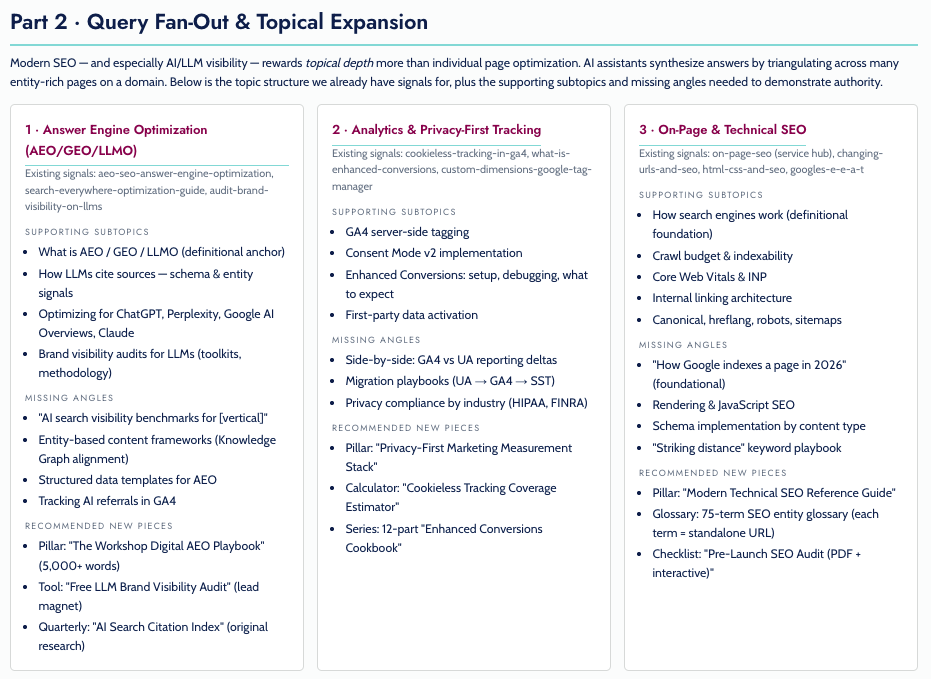
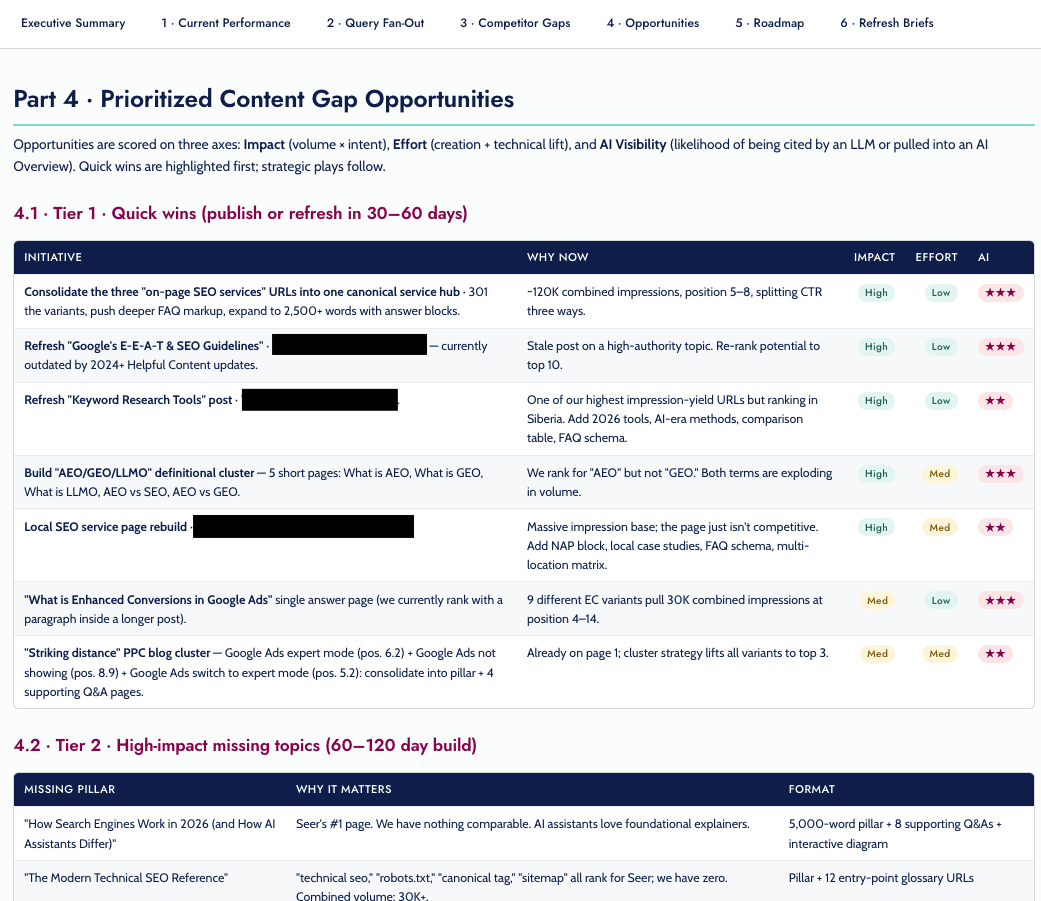
Not every opportunity belongs on the same roadmap. As part of your prompt, ask Claude to classify each cluster into categories such as: Quick wins: Existing pages that can be refreshed, expanded, or better optimized. New content. The search implication is whether the section improves the evidence around the page, not simply whether it adds more wording. Clear entities, crawlable structure, internal links, and useful context are what make the topic easier to evaluate.
Don't skip the human review
Claude can organize information remarkably well, but it doesn't know your business the way you do. Before moving on, ask questions such as: Does this topic support our business goals? Are multiple search intents being combined into one. The search implication is whether the section improves the evidence around the page, not simply whether it adds more wording. Clear entities, crawlable structure, internal links, and useful context are what make the topic easier to evaluate.
What the visibility signal actually changes
What the visibility signal actually changes: a Practical Way to Build an AI powered Content Gap Analysis Workflow should be treated as a visibility signal, not a standalone headline. Introduction You can publish consistently, follow SEO best practices, and still watch competitors outrank you. More often than not, the problem isn't content quality. It's content coverage. Your competitors are answering questions your audience is asking, and. This connects with Practical Way to Win the Gatekeeper’s ‘Yes’ when the same signal needs a clearer operating decision.
What the visibility signal actually changes: the practical question is whether the page, brand evidence, and surrounding content make the answer easier to trust. If that support is weak, search systems can still understand the topic but fail to connect it confidently to the brand.
What the visibility signal actually changes: that is why the response should begin with an audit of the evidence already on the site before creating a new asset. The fastest improvement is often a clearer page, a better internal link, or a stronger explanation of why the brand belongs in the answer.
Where the evidence needs to be tested
Where the evidence needs to be tested: a single study or ranking observation should not become a strategy by itself. It should become a diagnostic prompt: which source is being trusted, which query pattern is affected, and which part of the site would make that trust easier to earn?
Where the evidence needs to be tested: that keeps the response grounded. The goal is to improve the evidence chain around the topic rather than publish another summary that repeats what every other page already says.
Where the evidence needs to be tested: the important distinction is between a useful signal and a fashionable talking point. A useful signal changes the brief, the page structure, the linking plan, or the measurement view.
Comments
Comments are reviewed before they are published. Links are not allowed inside comments.