International SEO for Publishers: How to Succeed Across Borders
/ 7 min read

Summary
Publishers look at sites like theguardian.com and believe that this is the optimal platform to build an international audience. The practical question is what this changes for SEO, content quality, and AI search visibility.

Expanding a publishing brand into new territories is rarely as simple as hitting a "translate" button. When you move beyond your home borders, you aren't just dealing with a different language, but a different set of search behaviors, cultural expectations, and technical hurdles that can either accelerate your growth or quietly kill your visibility. This connects with We Earned 1 when the same signal needs a clearer operating decision. A useful companion note is Publishers and Brands in 2026 and Beyond, because it looks at a nearby part of the same system.
I have spent a significant amount of time consulting on international SEO for publishers, and I have noticed a recurring pattern. Most publishers gravitate toward a specific setup because they see global giants doing it. However, what works for a brand with massive existing equity often fails for everyone else. To succeed, you have to move away from convenience and toward true localization. The same pattern also shows up in Working Framework, where the practical question is how the signal becomes visible.
The Trap of the Generic TLD
Many publishers look at the structure of sites like theguardian.com and conclude that a single generic top level domain (gTLD), such as a.com, is the gold standard for international growth. The logic seems sound: if you have one domain that Google views as generic, you can theoretically target any country in the world from a single hub.
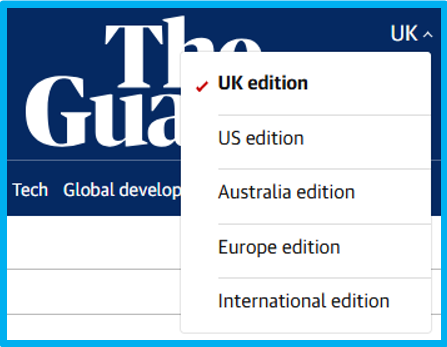
The reality is that this approach only works when you possess immense brand power. For a site to succeed with a single generic domain across multiple borders, it needs massive brand equity, meaning a high volume of direct traffic and brand specific searches in every single territory it intends to target. If people are already searching for your name specifically, the domain structure matters less.
this strategy is generally only viable if the publisher sticks to one language. The Guardian, for instance, publishes in English. While they use subfolders for different regions, the individual articles typically maintain a single canonical URL. The moment you introduce multiple languages into the mix, the generic TLD strategy begins to crumble for most publishers.
Expert Interpretation: The tradeoff here is between administrative simplicity and search visibility. A single.com is easier to manage, but unless you are already a household name globally, you are fighting an uphill battle against local competitors. Before choosing a gTLD, inspect your current brand search volume in the target country. If it is negligible, you are relying entirely on organic discovery, where local signals carry more weight.
Managing Multiple Languages on One Domain
There is a specific scenario where a single domain for multiple languages actually makes sense: when your target audience lives in one country but speaks several languages. Think of the United States with English and Spanish, or Belgium with French and Dutch.
In this context, publishing translated versions of your content on one domain is effective. One of the biggest misconceptions in SEO is that translation creates duplicate content. It does not. Google's own localization documentation clarifies that localized pages are only considered duplicates if the main content remains untranslated.
When you translate an English article into Spanish, it becomes a unique piece of content. Google is generally capable of recognizing the language and ranking the page for the appropriate users without needing complex signposting or hreflang tags. While I still suggest ensuring the HTML 'lang' attribute is correct for the benefit of other search engines, the process is relatively straightforward when the geographic target remains the same.
Expert Interpretation: This approach works because the "local" signal is the country itself, not the language. The decision to use one domain here is a matter of user experience. If your audience is linguistically diverse but geographically concentrated, the overhead of multiple domains is unnecessary. The risk is minimal because you aren't trying to signal "locality" to different global regions.
The Friction of Same Language, Multiple Country Targeting
When you have content in the same language but want to target different countries, the strategy usually shifts toward localization and the use of hreflang tags. The theory is that you can create a UK version and a US version of the same story, and hreflang will tell Google which one to serve to which user.
In practice, this is often a failing strategy for news publishers. First, hreflang tags are hints, not directives. Google does not always follow them. Second, the implementation is notoriously messy, and many sites end up with invalid or incomplete tags that confuse search engines rather than helping them.
For news publishers specifically, there is a more critical issue: the speed of indexing. News content must be indexed almost instantly to be relevant. However, the process of reindexing already indexed articles is significantly slower. If you publish a UK version and then a US version, the lag in how Google processes these relationship tags can lead to the wrong version ranking or the content being ignored in the target region.
Expert Interpretation: This is where many publishers waste months of effort. The tradeoff is trying to maintain "domain authority" on one site versus the precision of local targeting. Because news is time sensitive, the technical fragility of hreflang is a liability you cannot afford. If your revenue depends on the "freshness" of news, relying on hints rather than hard signals is a dangerous gamble.
The Complexity of Multi Language, Multi Country Expansion
When you attempt to target multiple languages across multiple countries, the technical debt piles up quickly. Some publishers try to solve this with a complex web of subfolders or subdomains. While this might work for a very small number of combinations, it quickly becomes unmanageable.
Subfolders can work to a point, and subdomains offer a bit more separation, but each of these "solutions" introduces new potential for conflict. You eventually run into the same hreflang issues mentioned previously, or you find that a specific subfolder structure isn't resonating with the local audience in a specific region.
Every time you add a layer of technical complexity to a single domain to make it "feel" local, you are creating a point of failure. Eventually, the strategy is compromised because the site is trying to be too many things to too many different people, and the search engine struggles to categorize the primary intent of the domain.
Expert Interpretation: The decision here is whether to prioritize the "ego" of a single global brand or the utility of local access. Many publishers fear that splitting their domain will dilute their authority. However, the reality is that a fragmented subfolder strategy often dilutes the user experience and the search signal more than separate domains ever would.
The Case for Country Code TLDs (ccTLDs)
The most strong strategy for long term international success is the use of separate country code top level domains (ccTLDs) for every target market. If you want to grow a genuine audience in France, use a.fr domain. For Italy, use.it.
This approach removes the guesswork. It aligns perfectly with the cultural and editorial norms of the target country and provides the strongest possible signal to search engines about where the content belongs. Success in international publishing is not about translation; it is about localization. This means adopting local lingo, local cultural references, and local domains.
I have seen numerous international projects fail because they chose efficiency over localization. They tried to manage everything from a central office in a different country and used technical shortcuts to mimic a local presence. These compromises always return to haunt the project in the form of stagnant traffic and poor engagement.
While investing in separate ccTLDs increases operational overhead and requires more management, it is the only strategy that avoids the technical compromises of hreflang and subfolders. People in France prefer to read news on.fr sites, and people in Italy prefer.it. By embracing locality entirely, you stop pretending to be a local and actually become one in the eyes of both the user and the search engine.
Expert Interpretation: The primary tradeoff here is operational cost versus probability of success. ccTLDs require more registrations, more monitoring, and a more decentralized editorial approach. However, the decision to use ccTLDs is a decision to commit to the market. If you are not willing to invest in the domain and the local nuance, you are likely not committed enough to the market to succeed in the first place.
Comments
Comments are reviewed before they are published. Links are not allowed inside comments.