Turn Your SEO Process into AI powered Tools
/ 6 min read

Summary
You don't need a computer science degree here, but a basic understanding of how AI works helps explain the benefits of this. The practical question is what this changes for SEO, content quality, and AI search visibility.
Ask ChatGPT or Gemini to "review my on page SEO," and you'll get a perfectly reasonable answer. And almost identical to the answer your competitors get when they ask the same question. A useful companion note is 4 Layer AI Ops Playbook, because it looks at a nearby part of the same system.
That's the problem with AI out of the box. It knows a little about everything and nothing about you, your business, your customers, your market, or the way you do SEO.
Why generic AI gives generic answers
You don't need a computer science degree here, but a basic understanding of how AI works helps explain the benefits of this approach. Large language models are prediction engines. They've been trained on a huge slice of the internet and. The practical read is that brand signals need to be consistent enough for both people and AI systems to form a stable view of the company, its expertise, and its trust signals.
The useful check is whether this improves the system behind search performance, not only the words on the page. Internal links, crawlable content, clear entities, current evidence, and a sensible page structure all help the recommendation become easier to trust.
From generalist to specialist
There are a few ways to add that missing context, in increasing order of effort: Better prompts: Include context in your question: who you are, what the business does, who the customer is, and what good looks like. This works, but you end. The practical question is what this changes in the system: the page structure, the evidence presented, the measurement habit, or the way the topic is connected to related work.
The risk is usually hidden in the execution layer. A page can look fine to a human and still fail for an automated visitor if the form, call to action, rendering path, or confirmation step is not accessible enough for the agent to complete the task.
The platforms: GPTs, Gems, Claude, and Replit
A quick tour of the main options for building simple AI apps: GPTs (ChatGPT): Custom versions of ChatGPT with their own instructions, knowledge files, and capabilities. They're shareable via the GPT Store, which is handy if you want to. The measurement question is whether this signal changes a decision, not whether it adds another number to a dashboard. Useful reporting connects visibility, engagement, and business outcomes without pretending every AI influenced journey will produce a clean click path.

The reporting question is whether this signal changes a decision. If it only creates another number in a dashboard, it adds noise. If it helps separate profile activity, website visits, calls, bookings, and direction requests, it can make local performance easier to understand.
Why not use existing SEO tools?
Standard SEO tools are brilliant at what they do, crawling, rank tracking, and link data. I use them every day. But they share a weakness: They're generic by design, while your business is totally unique (or at least it should be). They. The search implication is whether the section improves the evidence around the page, not simply whether it adds more wording. Clear entities, crawlable structure, internal links, and useful context are what make the topic easier to evaluate.
What should you automate?
A simple rule: Automate repetitive tasks. Good candidates are tasks that are: Repetitive: You do them the same way, over and over. Process driven: You could write the steps down for a junior team member to follow. Data heavy: They involve. The measurement question is whether this signal changes a decision, not whether it adds another number to a dashboard. Useful reporting connects visibility, engagement, and business outcomes without pretending every AI influenced journey will produce a clean click path.
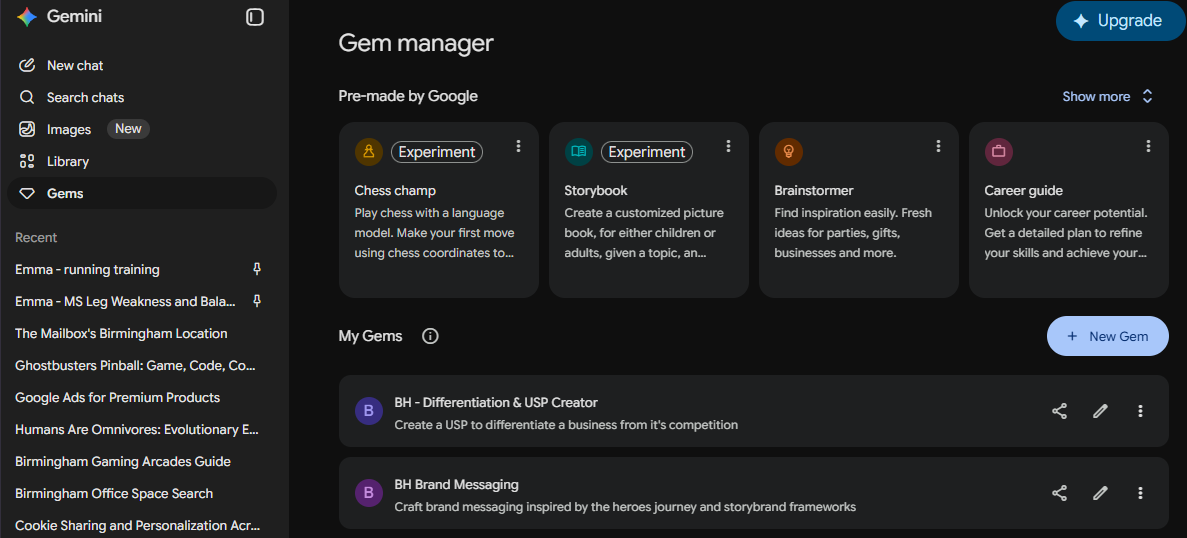
Example: Search Console quick wins Gem
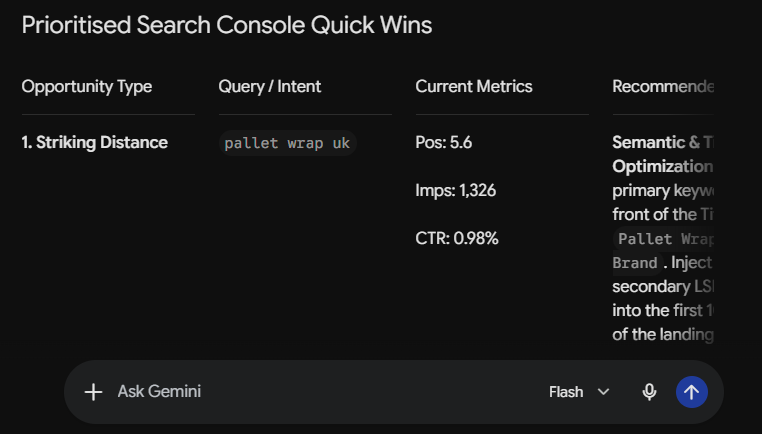
Let's build a simple tool to help you mine Google Search Console for content ideas and easy wins. I wrote " How to unlock easy wins in Google Search Console " two years ago, covering the creaky old human way of doing it. Let's automate it. The search implication is whether the section improves the evidence around the page, not simply whether it adds more wording. Clear entities, crawlable structure, internal links, and useful context are what make the topic easier to evaluate.
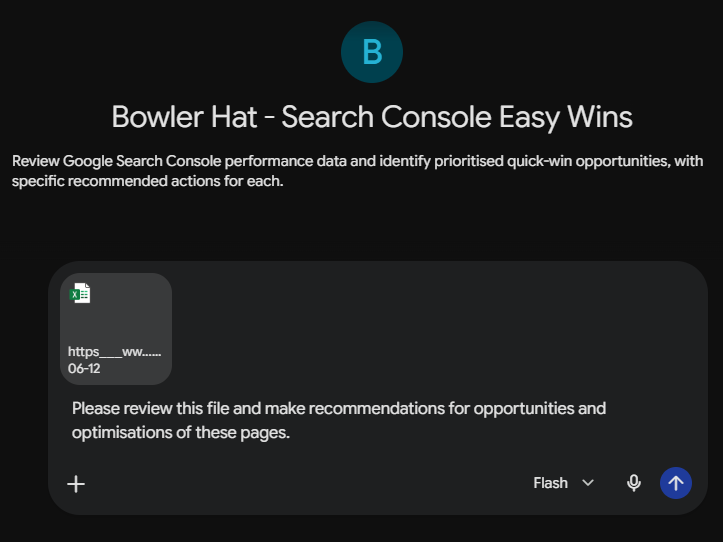
Step 1: Define the job
Write one sentence describing what the tool does: "Review Google Search Console performance data and identify prioritized quick win opportunities, with specific recommended actions for each.". The search implication is whether the section improves the evidence around the page, not simply whether it adds more wording. Clear entities, crawlable structure, internal links, and useful context are what make the topic easier to evaluate.
Step 2: Document your process
This is the important bit, and it's where you have to think about the process. What do you actually do here? What process do you follow? What easy wins and opportunities are you looking for? Striking distance keywords: Queries ranking just. The search implication is whether the section improves the evidence around the page, not simply whether it adds more wording. Clear entities, crawlable structure, internal links, and useful context are what make the topic easier to evaluate.
Step 3: Write the Gem instructions
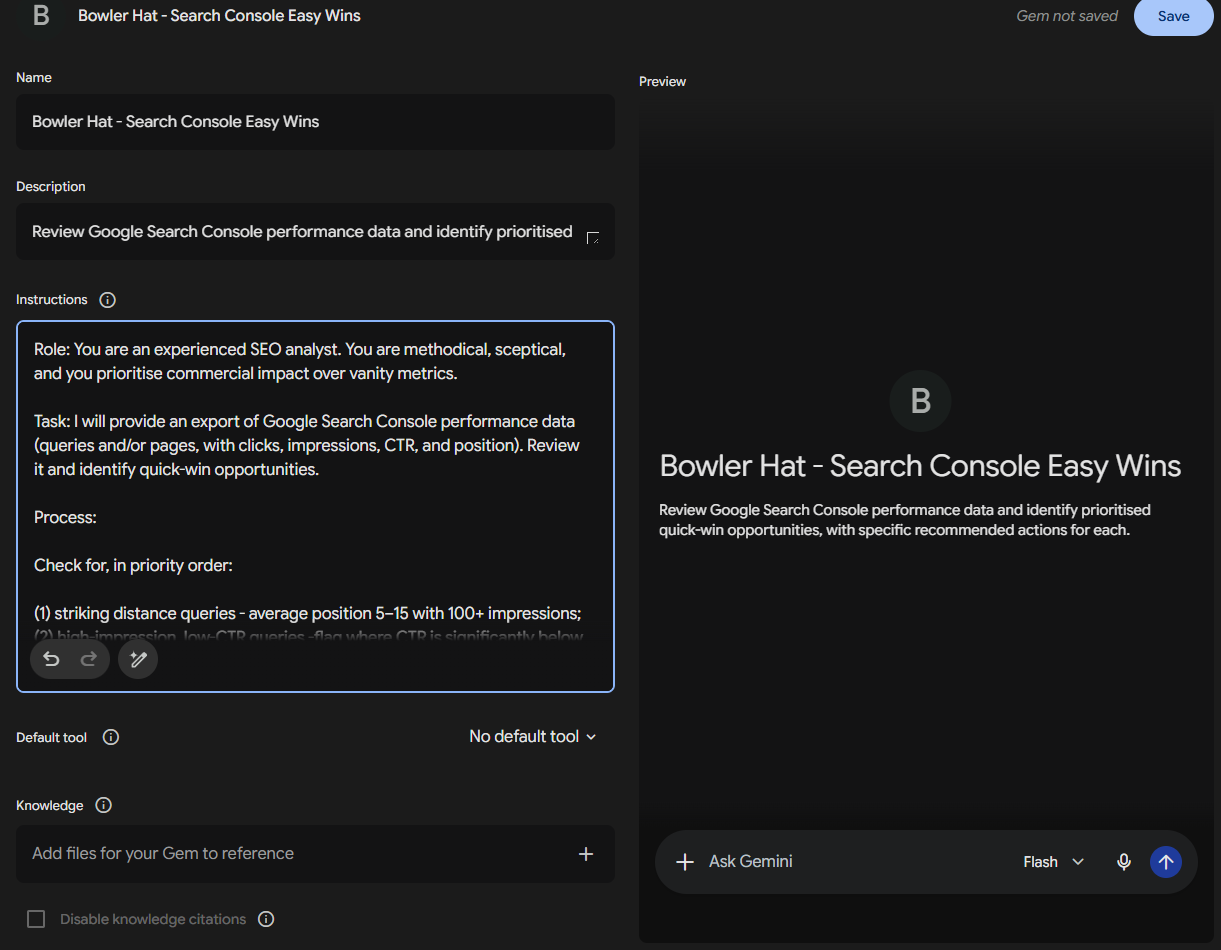
Now open Gemini, create a new Gem, and translate that process into instructions. A solid structure is: Task: What it does with the data it's given. Process: The steps, checks, and thresholds, your documented process from Step 2. Output:. The search implication is whether the section improves the evidence around the page, not simply whether it adds more wording. Clear entities, crawlable structure, internal links, and useful context are what make the topic easier to evaluate.
Step 4: Add knowledge files
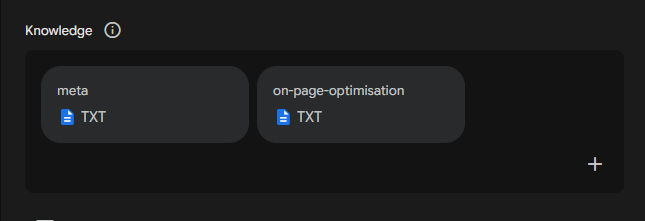
Gems can reference uploaded knowledge files. This is where you fine tune things and add depth without bloating the instructions. Your on page optimization checklist (for when the Gem recommends title or content changes). Your title and. The practical read is that brand signals need to be consistent enough for both people and AI systems to form a stable view of the company, its expertise, and its trust signals.
What the visibility signal actually changes
What the visibility signal actually changes: turn Your SEO Process into AI powered Tools: the Operator's View should be treated as a visibility signal, not a standalone headline. Introduction Ask ChatGPT or Gemini to "review my on page SEO," and you'll get a perfectly reasonable answer. Reasonable. Generic. Boring. Uninspired. And almost identical to the answer your competitors get when they ask the same question. That's the problem. This connects with Rank Math AI Unifies SEO Tools when the same signal needs a clearer operating decision. The same pattern also shows up in AI Slop Backlash, where the practical question is how the signal becomes visible.
What the visibility signal actually changes: the practical question is whether the page, brand evidence, and surrounding content make the answer easier to trust. If that support is weak, search systems can still understand the topic but fail to connect it confidently to the brand.
What the visibility signal actually changes: that is why the response should begin with an audit of the evidence already on the site before creating a new asset. The fastest improvement is often a clearer page, a better internal link, or a stronger explanation of why the brand belongs in the answer.
Where the evidence needs to be tested
Where the evidence needs to be tested: a single study or ranking observation should not become a strategy by itself. It should become a diagnostic prompt: which source is being trusted, which query pattern is affected, and which part of the site would make that trust easier to earn?
Where the evidence needs to be tested: that keeps the response grounded. The goal is to improve the evidence chain around the topic rather than publish another summary that repeats what every other page already says.
Where the evidence needs to be tested: the important distinction is between a useful signal and a fashionable talking point. A useful signal changes the brief, the page structure, the linking plan, or the measurement view.
Comments
Comments are reviewed before they are published. Links are not allowed inside comments.