What Matters in an AI Prompt? Intent or Keywords?
/ 6 min read

Summary
1. How Prompt Wording Impacts AI Brand Visibility 3. Insight 1: Human Prompts Only Look Different On The Surface (Mostly) 4. The practical question is what this changes for SEO, content quality, and AI search visibility.
Which prompts should I prioritize tracking for AI visibility? Does exact wording change which brands AI engines recommend?
Do I need to track every way someone might phrase a prompt in AI search? Marketers often panic about the infinite ways users might phrase questions to AI engines.
In This SEO Guide
1. How Prompt Wording Impacts AI Brand Visibility 3. Insight 1: Human Prompts Only Look Different On The Surface (Mostly) 4. Insight 2: Changes in Wording Only Impacts Brand Mentions Past a Threshold 5. Insight 3: Prompt Style Influences. The practical read is that brand signals need to be consistent enough for both people and AI systems to form a stable view of the company, its expertise, and its trust signals.
The useful check is whether this improves the system behind search performance, not only the words on the page. Internal links, crawlable content, clear entities, current evidence, and a sensible page structure all help the recommendation become easier to trust.
How Prompt Wording Impacts AI Brand Visibility
Variation is limited, not chaotic: users phrase things differently. But over 90% of those variations have very similar meaning. Wording matters less than intent: you don't need to worry about the exact words used. Brand mentions hold. The practical read is that brand signals need to be consistent enough for both people and AI systems to form a stable view of the company, its expertise, and its trust signals.
The practical value is in connecting the idea to an observable signal. That means deciding what should be checked, what would prove the issue is real, and where the team should make the smallest useful improvement first.
Methodology: How We Tested This
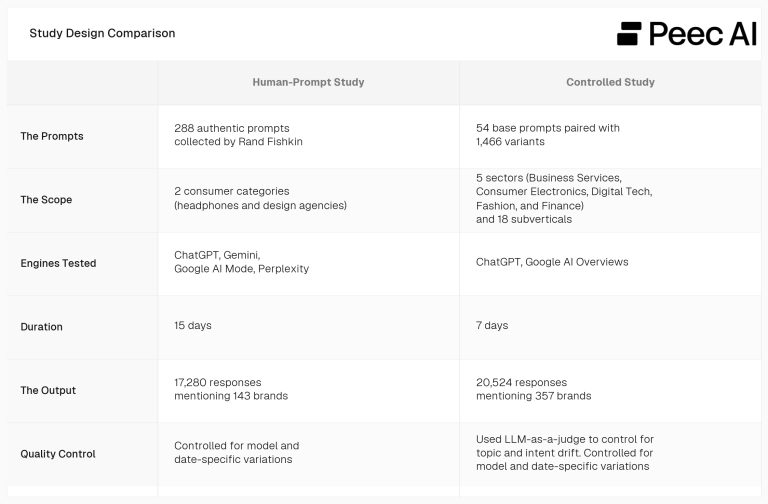
If your tracking tool says you show up for a specific query, does that visibility hold up when a real user types a variation with the exact same intent? To measure this drop off, we ran two parallel studies. Study A: 288 human written. The practical question is what this changes in the system: the page structure, the evidence presented, the measurement habit, or the way the topic is connected to related work.
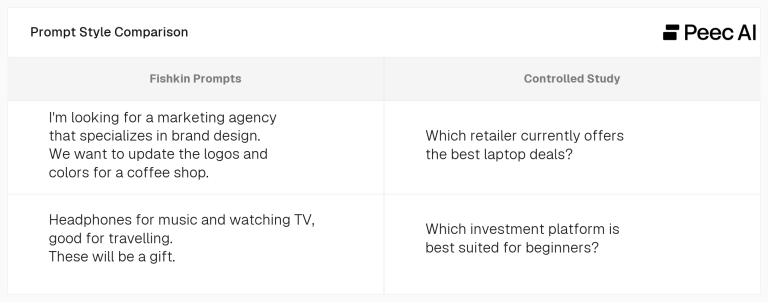
Why Tracking Keywords Misses How People Actually Prompt
In AI search, exact keyword matching only plays a minor role. " CRM software " and "c ustomer relationship management tool " share almost no characters but point at the same goal. To measure this, we converted every prompt into a semantic. The search implication is whether the section improves the evidence around the page, not simply whether it adds more wording. Clear entities, crawlable structure, internal links, and useful context are what make the topic easier to evaluate.
Insight 1: Human Prompts Only Look Different On The Surface (Mostly)
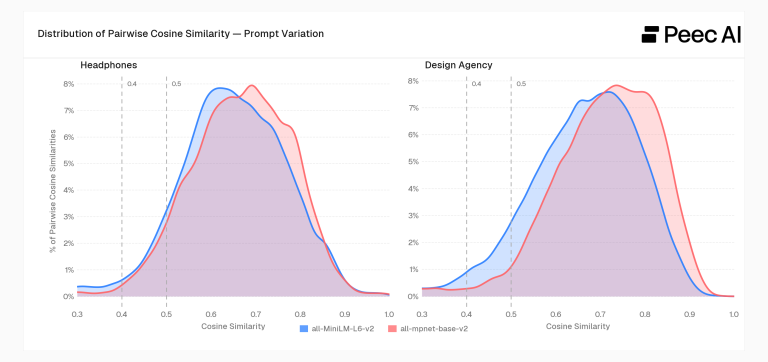
We used two different embedding models on the 288 human written prompts ( all MiniLM L6 v2 and all mpnet base v2 ). Both showed the exact same pattern: most human prompts clustered tightly with high cosine similarity. People use different. The practical question is what this changes in the system: the page structure, the evidence presented, the measurement habit, or the way the topic is connected to related work.
Insight 2: Changes in Wording Only Impacts Brand Mentions Past a Threshold
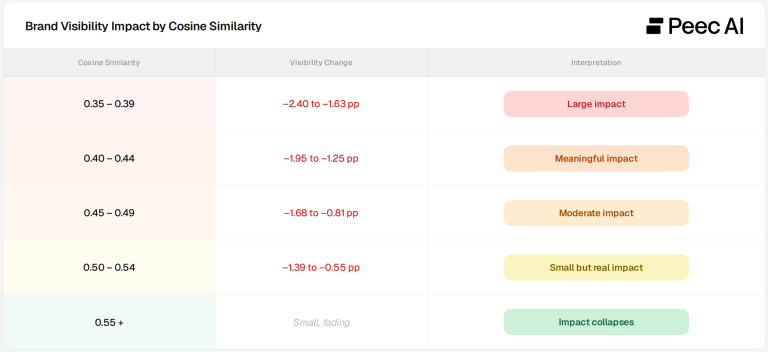
In study A we took all the brands mentioned during all the runs of the base prompt. We then observed how the average visibility of all these prompts changes when changing the prompt in tiny steps. Against a near identical reference group,. The practical read is that brand signals need to be consistent enough for both people and AI systems to form a stable view of the company, its expertise, and its trust signals.
Beware Of The Semantic Blind Spot!
High similarity doesn't equal matching intent. " Car rental Charleston " and " Car rental Charlestown" are 95% similar but serve entirely different commercial goals. If a core qualifier changes, treat it as a new intent. Typical qualifiers. The practical read is that brand signals need to be consistent enough for both people and AI systems to form a stable view of the company, its expertise, and its trust signals.
Insight 3: Prompt Style Influences Brand Visibility
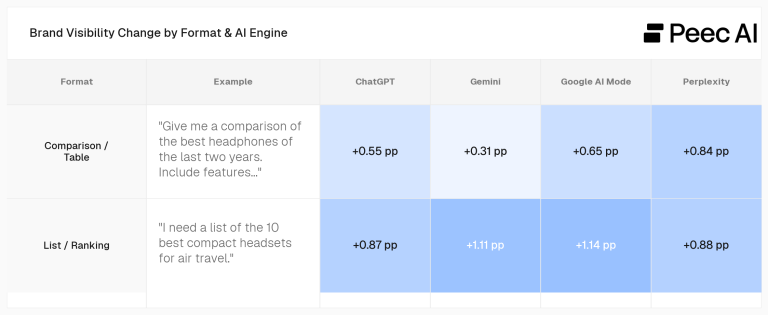
What you prompt is only half the equation. How you prompt, the style, not just the intent, changes what the AI surfaces. Format matters. Asking for a comparison, table, list, or ranking consistently surfaces more brands than open ended. The practical read is that brand signals need to be consistent enough for both people and AI systems to form a stable view of the company, its expertise, and its trust signals.
The risk is usually hidden in the execution layer. A page can look fine to a human and still fail for an automated visitor if the form, call to action, rendering path, or confirmation step is not accessible enough for the agent to complete the task.
Insight 4: Middle Of Funnel Prompts Are Where Wording Actually Decides Winners
Prompt wording doesn't matter equally across the buyer journey (and which prompts you choose to track matters more than their exact phrasing): Top of funnel (Low Sensitivity): Broad category questions like " What is a CRM? " are highly. The practical read is that brand signals need to be consistent enough for both people and AI systems to form a stable view of the company, its expertise, and its trust signals.
Insight 5: Answer Engines Don't Behave The Same Way
While the wording effect's direction is consistent across all engines, the severity differs: Gemini: The effect fades fastest, concentrated in the lowest similarity buckets. Google AI Overviews: Show the most persistent middle of funnel. The practical read is that brand signals need to be consistent enough for both people and AI systems to form a stable view of the company, its expertise, and its trust signals.
What the visibility signal actually changes
What the visibility signal actually changes: what Matters in an AI Prompt? Intent or Keywords?: the Practical Angle should be treated as a visibility signal, not a standalone headline. Introduction Which prompts should I prioritize tracking for AI visibility? Does exact wording change which brands AI engines recommend? Do I need to track every way someone might phrase a prompt in AI search? Marketers often panic about the infinite ways. This connects with AI Search Visibility when the same signal needs a clearer operating decision. A useful companion note is Keyword Research Meets Prompt Research, because it looks at a nearby part of the same system.
What the visibility signal actually changes: the practical question is whether the page, brand evidence, and surrounding content make the answer easier to trust. If that support is weak, search systems can still understand the topic but fail to connect it confidently to the brand. The same pattern also shows up in AI Is Reshaping Search Intent, where the practical question is how the signal becomes visible.
What the visibility signal actually changes: that is why the response should begin with an audit of the evidence already on the site before creating a new asset. The fastest improvement is often a clearer page, a better internal link, or a stronger explanation of why the brand belongs in the answer.
Where the evidence needs to be tested
Where the evidence needs to be tested: a single study or ranking observation should not become a strategy by itself. It should become a diagnostic prompt: which source is being trusted, which query pattern is affected, and which part of the site would make that trust easier to earn?
Where the evidence needs to be tested: that keeps the response grounded. The goal is to improve the evidence chain around the topic rather than publish another summary that repeats what every other page already says.
Where the evidence needs to be tested: the important distinction is between a useful signal and a fashionable talking point. A useful signal changes the brief, the page structure, the linking plan, or the measurement view.
Comments
Comments are reviewed before they are published. Links are not allowed inside comments.