A Working Framework for Places to Find FAQ Content That Improves AI Visibility
/ 8 min read

Summary
To some people, this may seem obvious. But it's also easily overlooked. Before you begin ideating new FAQ content, audit what's. The practical question is what this changes for SEO, content quality, and AI search visibility.
For a long time, FAQ sections were treated as a checkbox for the support team. They lived on static pages, tucked away in the footer, designed to reduce the number of tickets hitting a help desk. But the role of the FAQ has shifted. Now, these questions and answers are the primary fuel for AI Overviews, People Also Ask boxes, and the new wave of AI search engines that prioritize direct, concise answers. This connects with Working Framework when the same signal needs a clearer operating decision. A useful companion note is Working Framework, because it looks at a nearby part of the same system.
The data shows a clear trend. Research from Semrush indicates that over 80 percent of AI Overview queries are informational. Even more telling is that 82 percent of these queries have an average monthly search volume of less than 1,000. This means the traditional obsession with high volume keywords is becoming a liability. AI visibility is now driven by the long tail, the specific, and the conversational. The same pattern also shows up in Working Framework, where the practical question is how the signal becomes visible.
If your FAQ strategy is based on what you think people are asking, you are likely missing the mark. The goal is to find where people are already asking questions naturally. When you align your content with the actual phrasing of your users, you increase the odds of an AI model citing you as the definitive answer.
Mining Google Search Console for Intent
It is easy to overlook the data you already have. Most people use Google Search Console to track their biggest wins, filtering for the queries that bring in the most clicks or impressions. While that is useful for reporting, it is the wrong way to find FAQ opportunities. To find the gaps, you need to filter for intent, not volume.
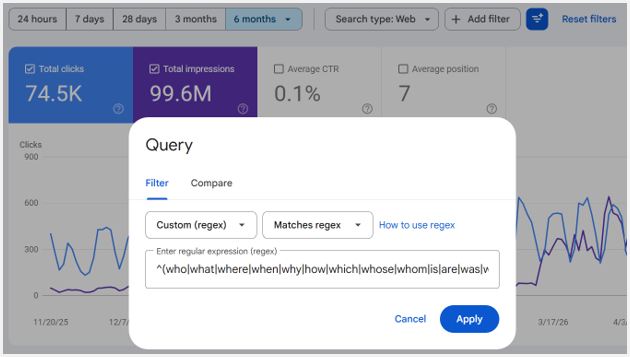
You can use a specific regex filter in GSC to isolate question based patterns. By filtering for terms like who, what, where, when, why, how, which, is, are, do, does, can, and should, you can see exactly which questions are already triggering your pages in search results.
The real opportunity lies in the middle of the pack. Look for queries where you rank between position 4 and position 20, but your click through rate is low. This is the sweet spot. If you are in the top three, you are already winning, and changing the content might disrupt your ranking. If you are on page five, you might not be relevant enough. But those ranking on the bottom of page one or the top of page two are often just one well structured answer away from a top spot or an AI citation.
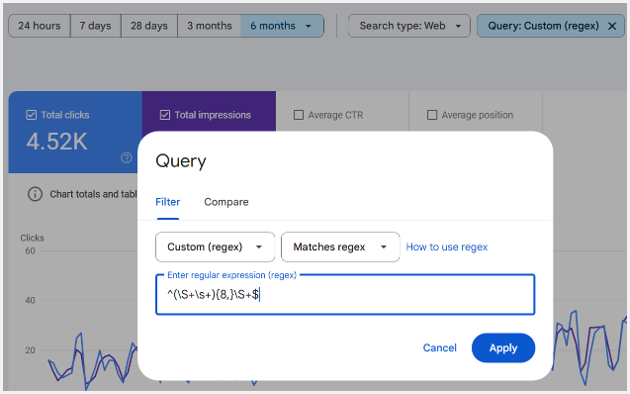
To go deeper, look for long tail queries. Filter for phrases with eight or more words. If that is too restrictive, drop it to five to seven words. These hyper specific queries are exactly what AI models look for when providing a precise answer to a complex user prompt.
Expert Interpretation: This approach matters because it identifies low hanging fruit. The tradeoff is that you are optimizing for lower volume, which can feel counterintuitive to traditional SEOs. The decision you need to make here is whether to create a dedicated FAQ page or integrate these answers into existing high value articles to boost their overall authority.
Decoding the People Also Ask Clusters
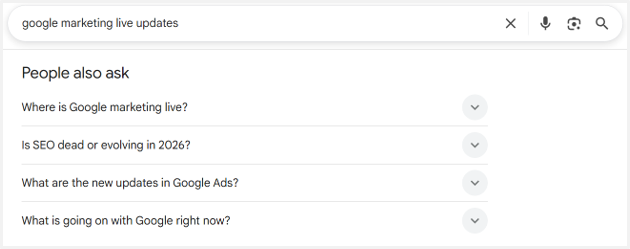
The People Also Ask feature is more than just a SERP element. It is a window into how Google clusters related intents. When a user asks a question, Google suggests follow up questions that represent the natural evolution of that user's curiosity. Mapping these clusters allows you to build a content web rather than a single isolated page.
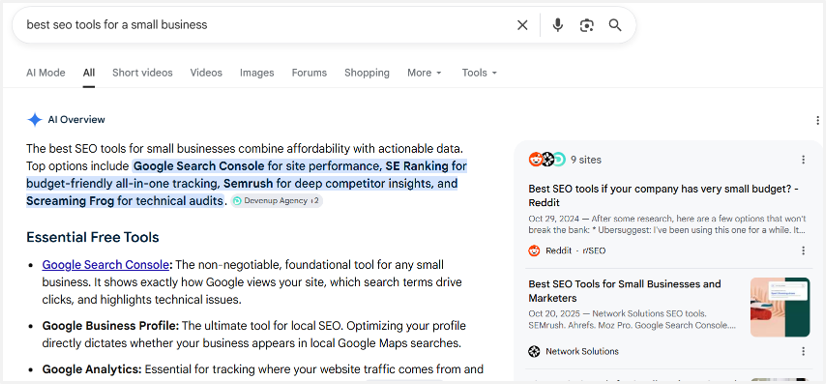
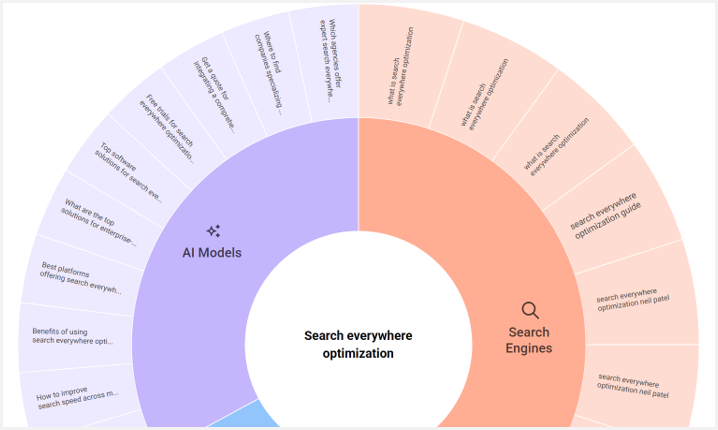
Some of these questions are deep enough to warrant their own dedicated pages. Others are perfect as supporting FAQs on a main pillar page. Using tools like AlsoAsked or AnswerThePublic can help you visualize these branching trees at scale, showing you how one topic leads to another.
Manual research is still necessary. I suggest picking five to ten priority terms and manually expanding the PAA results. When you see the same question appearing across multiple different seed keywords, you have found a high signal candidate. These recurring questions represent broad demand and are the most likely to be picked up by AI engines because they are verified patterns of user interest.
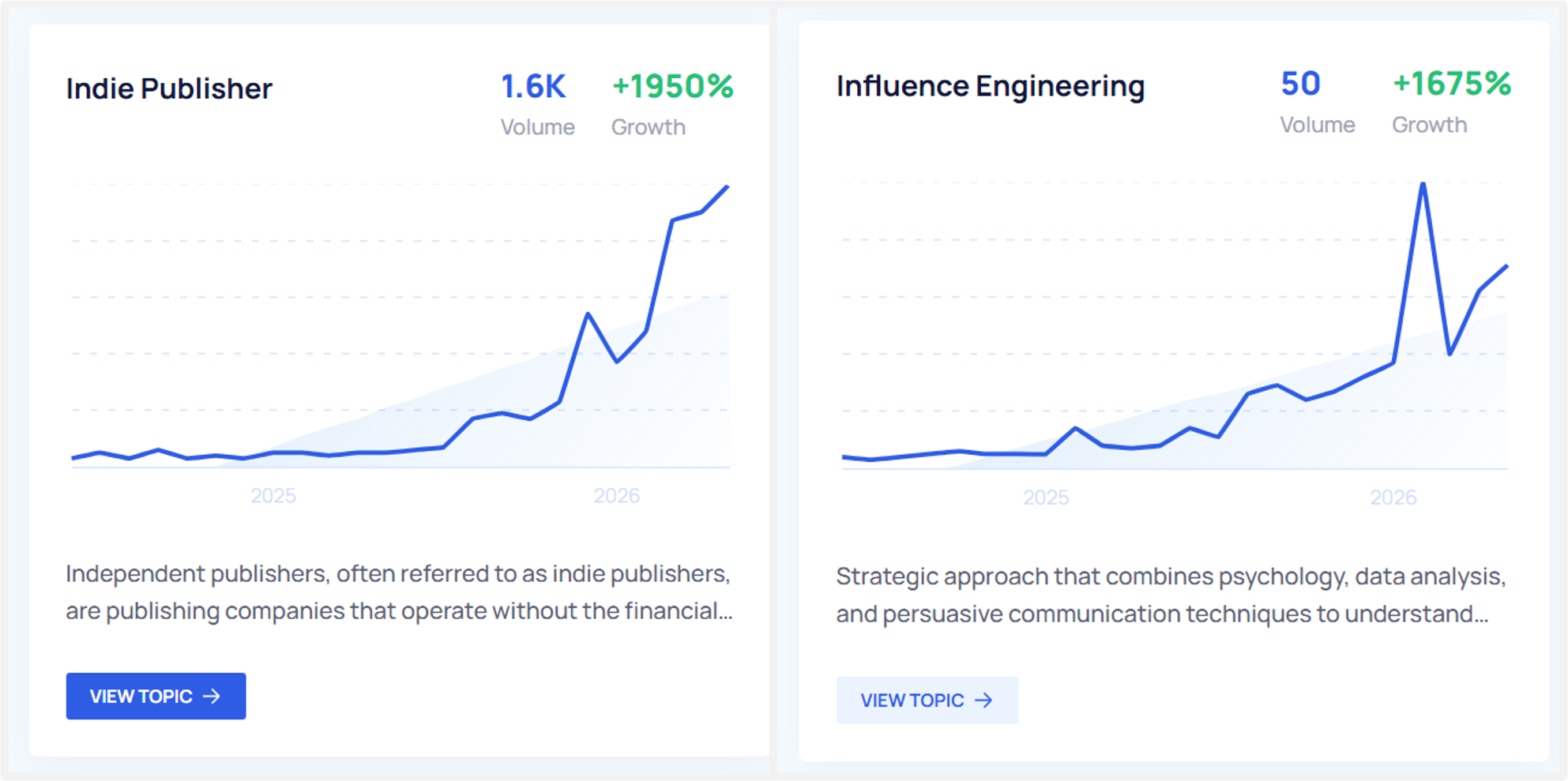
For those looking to get ahead of the curve, tools like Exploding Topics can help you spot rising interest before it peaks. This allows you to build the answers before the competition does, positioning you as the early authority on a new trend.
Expert Interpretation: This matters because it moves you from keyword targeting to journey mapping. The tradeoff is the time required for manual validation, as automated tools can sometimes surface irrelevant noise. The key decision is determining the depth of the answer. Does the question require a 200 word explanation or a simple one sentence direct answer?
Leveraging Internal Customer Data
The most authentic source of FAQ content is your own customer facing teams. Your sales and support staff hear the real world phrasing of your audience every day. They know exactly where the confusion lies, what causes hesitation, and what specific words customers use to describe their problems.
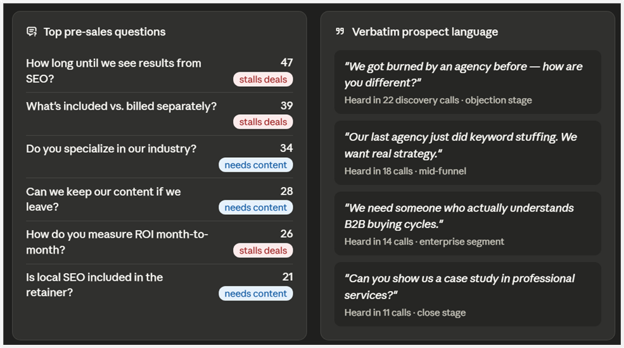
This is critical because AI models are trained on natural language. The way a customer asks a question to a support agent is often very different from how they type it into a search bar. By capturing the conversational language used in support tickets or sales calls, you can create content that feels natural to an AI model and highly relevant to a human user.
Many organizations suffer from a gap between the marketing team and the support team. Bridging this gap is simple. It can be a shared document, a dedicated Slack channel, or a monthly meeting where support teams share the top three most common questions they encountered that month.
Expert Interpretation: This is the highest quality data you can get because it is based on actual friction in the user experience. The tradeoff is that this data is unstructured and requires manual effort to synthesize. The decision here is how to systematize this feedback loop so it becomes a permanent part of your content production rather than a one time project.
Extracting Unfiltered Insights from Reddit
Keyword tools aggregate data, but Reddit provides the raw emotion and phrasing behind the search. It is one of the few places where people are brutally honest about their frustrations and the specific ways they seek help.
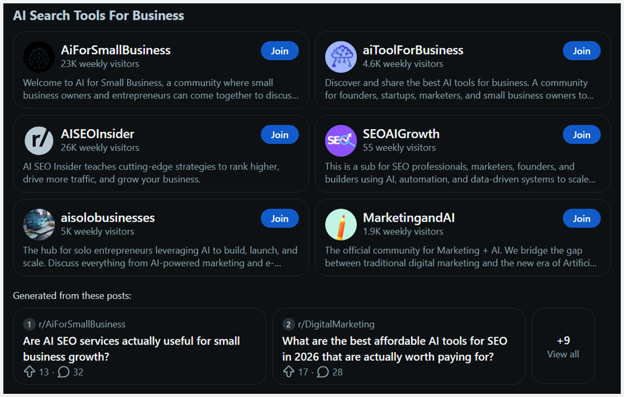
To use Reddit for FAQ research, start by finding the subreddits where your audience hangs out. You can use Google or RedditAnswers to find these communities. Once inside, search for your target keywords and sort the results by Best, Top, or New. Pay close attention to the threads where people are asking for advice or complaining about a specific problem.
The real gold is in the comments. Often, the original post is a general question, but the follow up questions in the comments reveal the deeper, more nuanced pain points. These follow up questions are often the exact long tail queries that drive AI visibility because they represent the second and third steps of a user's search journey.
Expert Interpretation: This matters because it gives you the voice of the customer, which matters for creating content that resonates. The tradeoff is the signal to noise ratio, as Reddit can be filled with anecdotes that are not representative of the broader market. The decision is to look for patterns across multiple threads rather than basing a strategy on a single viral post.
Analyzing AI Prompt Volumes
We are seeing a shift in how people seek information. Some users are skipping traditional search engines entirely and going straight to AI platforms. This means that traditional keyword volume data is no longer a complete picture of demand.
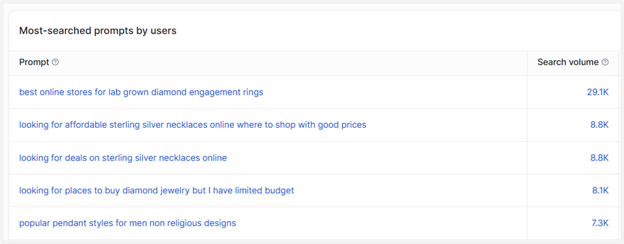
New tools like Profound and Writesonic are beginning to surface aggregated data on the prompts users enter into AI tools. While these datasets are not as mature as Google's, they provide a glimpse into the conversational nature of AI search. Prompts tend to be longer, more specific, and more descriptive than traditional search queries.
By tracking prompt volumes, you can identify questions that people are asking AI but might not be typing into a search box. This gives you a first mover advantage. If you can answer these complex, conversational prompts on your site, you increase the likelihood that the AI will use your content as a source when answering similar prompts for other users.
Expert Interpretation: This matters because it prepares you for a world where the prompt is the new keyword. The tradeoff is that the data is currently imperfect and less stable than traditional SEO metrics. The decision is how much weight to give this data compared to GSC. I suggest using it as a directional signal to inspire new content rather than a strict roadmap for production.
Maintaining a Dynamic FAQ Cadence
FAQ content is not a set it and forget it asset. The questions your audience asks will change as your product evolves, as new competitors enter the market, and as the search landscape shifts.
The frequency of your updates should depend on your industry. For example, a company selling accessories for the iPhone must update its FAQs every time a new model is released. A SaaS company should revisit its FAQ content with every major feature release or product update. In contrast, a service provider like a plumber may find that their core FAQs remain stable for much longer, as the fundamental nature of the work does not change quickly.
The goal is to establish a cadence that matches your business triggers. Whether it is a quarterly audit or a trigger based on product launches, keeping your answers current ensures that you remain a trusted source for both humans and AI models.
Comments
Comments are reviewed before they are published. Links are not allowed inside comments.