How Fintech Brands Can Earn Trust in AI Answers
/ 9 min read

Summary
Your fintech brand can appear in AI search in three ways: Mentioned when AI explains topics in your category Cited and linked. The practical question is what this changes for SEO, content quality, and AI search visibility.
When it comes to managing money, the stakes are inherently high. Most of us feel a natural tension when choosing a new financial tool, there is a fear of hidden fees, a worry about security, and a desire for absolute transparency. This is why the way AI search handles fintech is fundamentally different from how it handles a recommendation for a new toaster or a travel destination. A useful companion note is How Travel Brands Can Earn AI Recommendations, because it looks at a nearby part of the same system. The same pattern also shows up in to Choose Your Next Move, where the practical question is how the signal becomes visible.
In the world of search and AI, fintech falls into the "Your Money or Your Life" (YMYL) category. This means the guardrails are much tighter. AI models aren't just looking for keywords; they are looking for verification. They need to know if a product is legitimate, if the protections are explicit, and if the claims made by the brand are mirrored by independent, trusted sources.
The challenge is that AI doesn't just look at your website. It scans the entire web, including forums, regulatory filings, and review sites, places you don't control. If there is a gap between what you say and what the web says, the AI may misrepresent your brand. The goal isn't just to appear in the answer, but to ensure that when you do, the information is accurate and trustworthy.
3 types of AI visibility in fintech
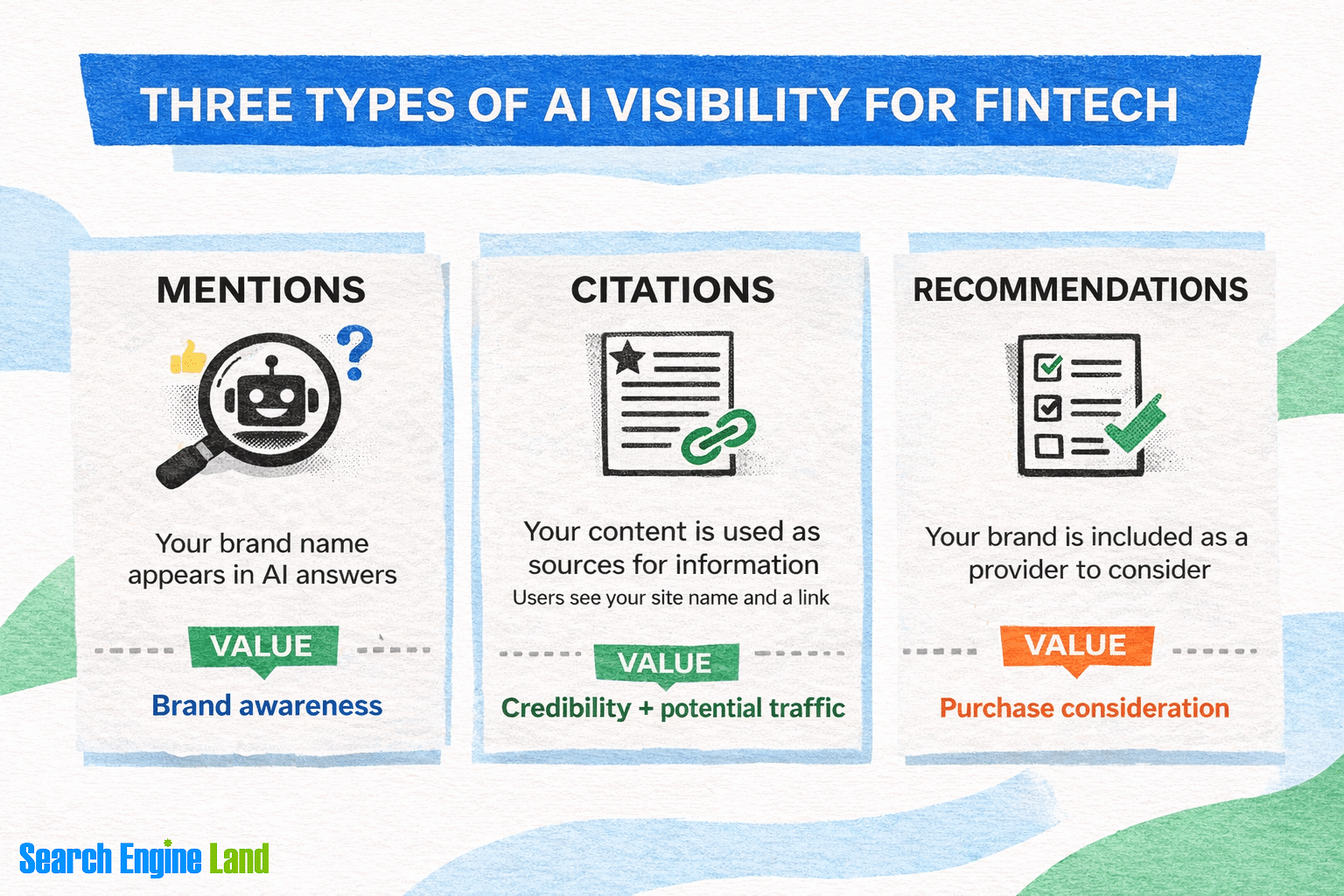
Visibility in AI search isn't a binary "yes or no." It happens in degrees. Depending on the user's intent and the AI's confidence level, your brand will surface in one of three distinct ways.
Brand mentions
A brand mention is the most basic form of visibility. This happens when an AI includes your name while explaining a broader topic. It is less about a direct recommendation and more about category relevance. For instance, if a user asks an AI whether "buy now, pay later" (BNPL) services are a good fit for their business, the AI might list several BNPL providers as examples of how the industry works.
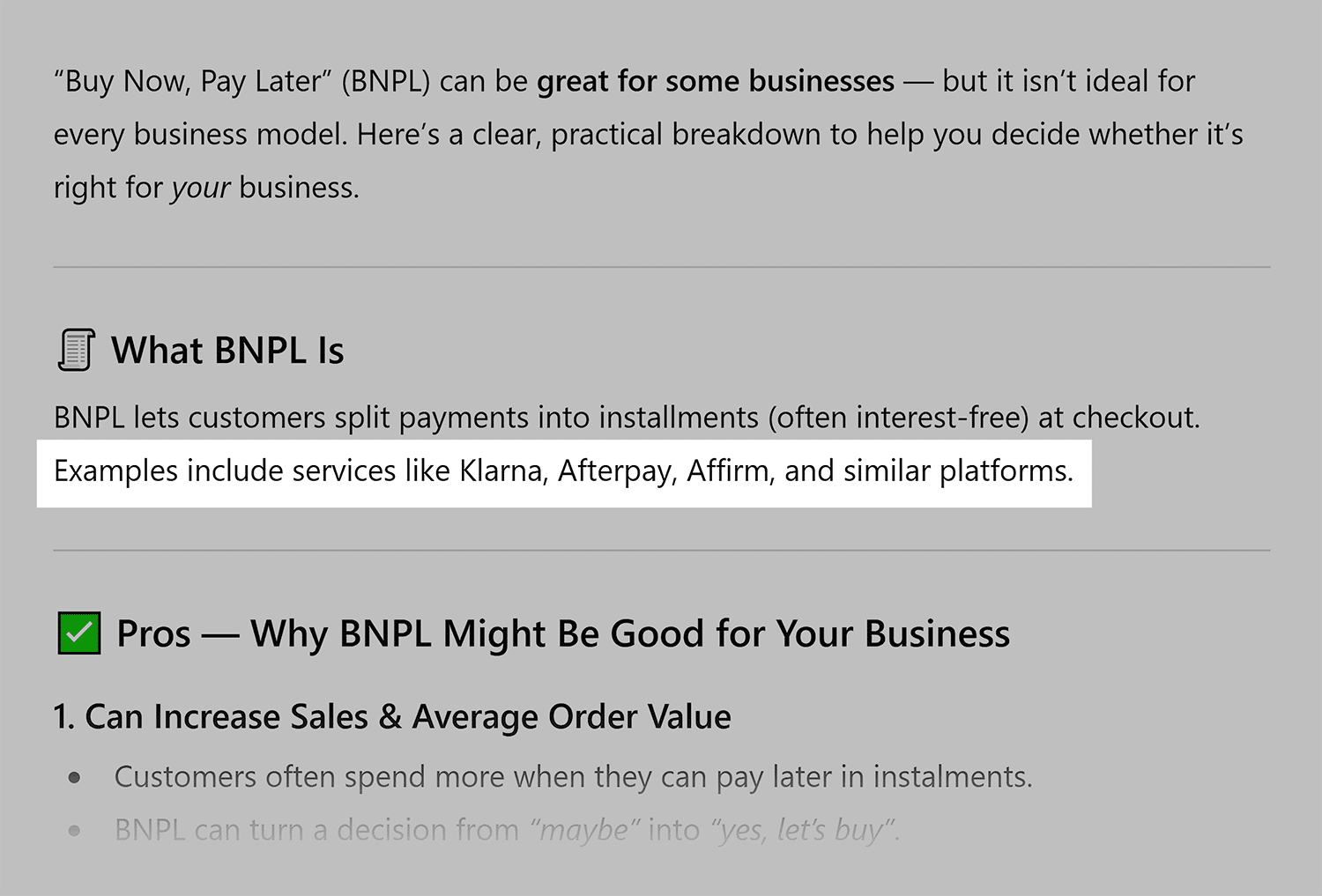
These mentions often appear in a few ways: as part of a list of popular providers, as an example to support a specific point, or as part of a user story describing a transition from traditional banking to a neobank.
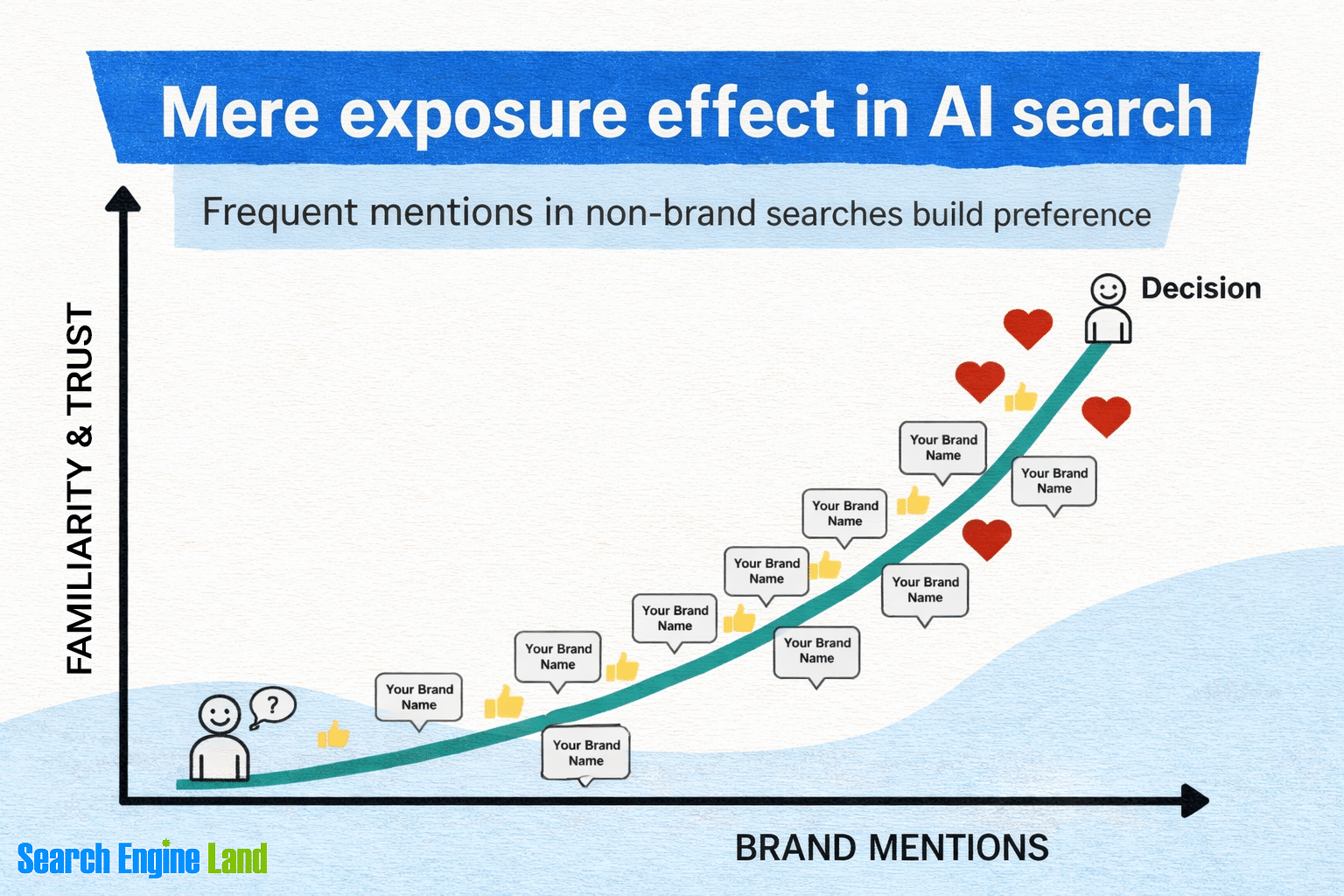
While a mention isn't a hard recommendation, it matters for brand awareness. It leverages the "mere exposure effect", the psychological phenomenon where people develop a preference for things simply because they are familiar with them. If a user sees your name repeatedly during their research phase, they are far more likely to trust you when they finally reach the decision stage.
Citations
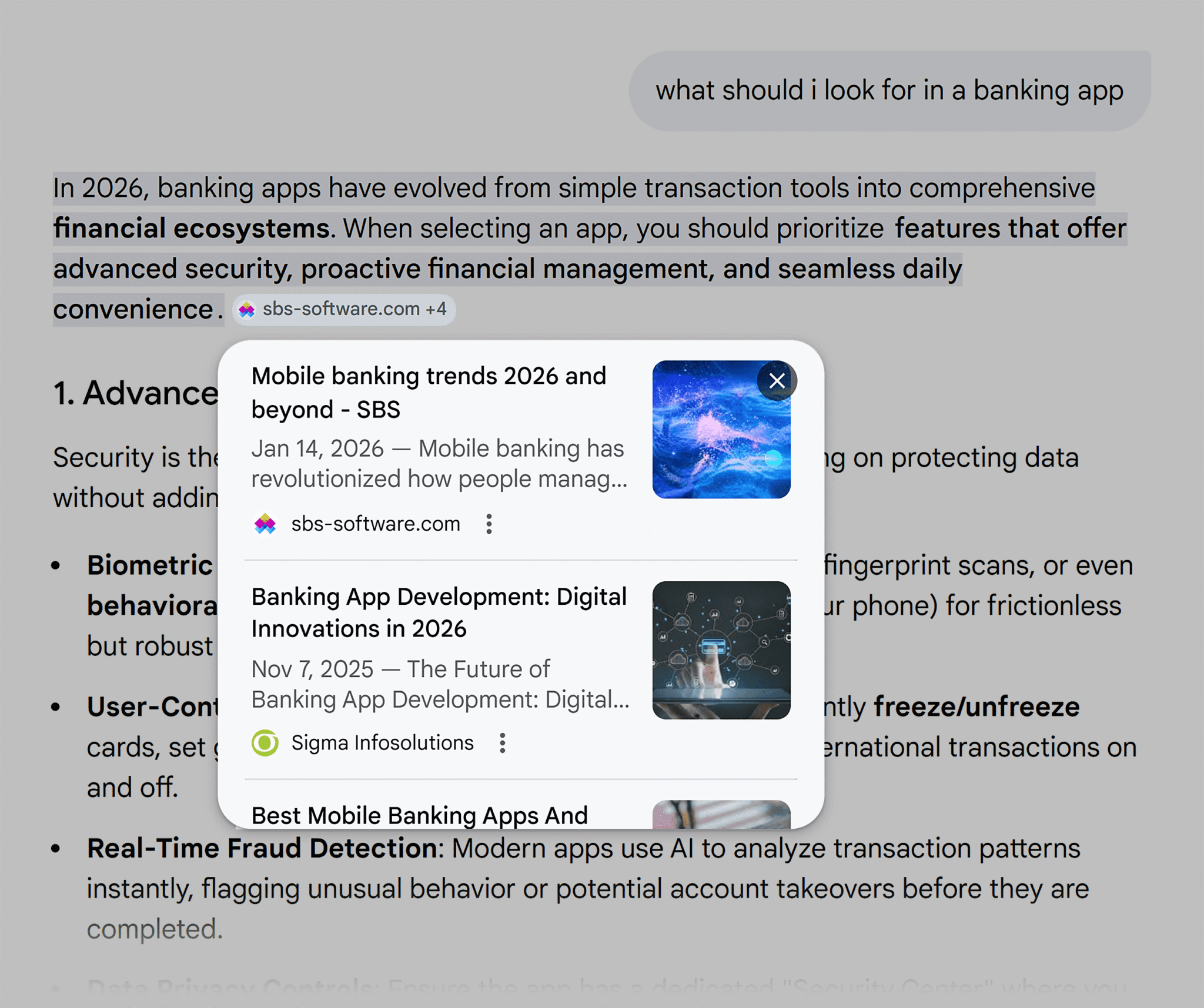
Citations occur when the AI uses your specific pages to build its answer. This is a significant step up from a mention because it acts as an implied endorsement. When an AI cites your documentation, it is essentially telling the user that your content is a reliable source of truth for that topic.
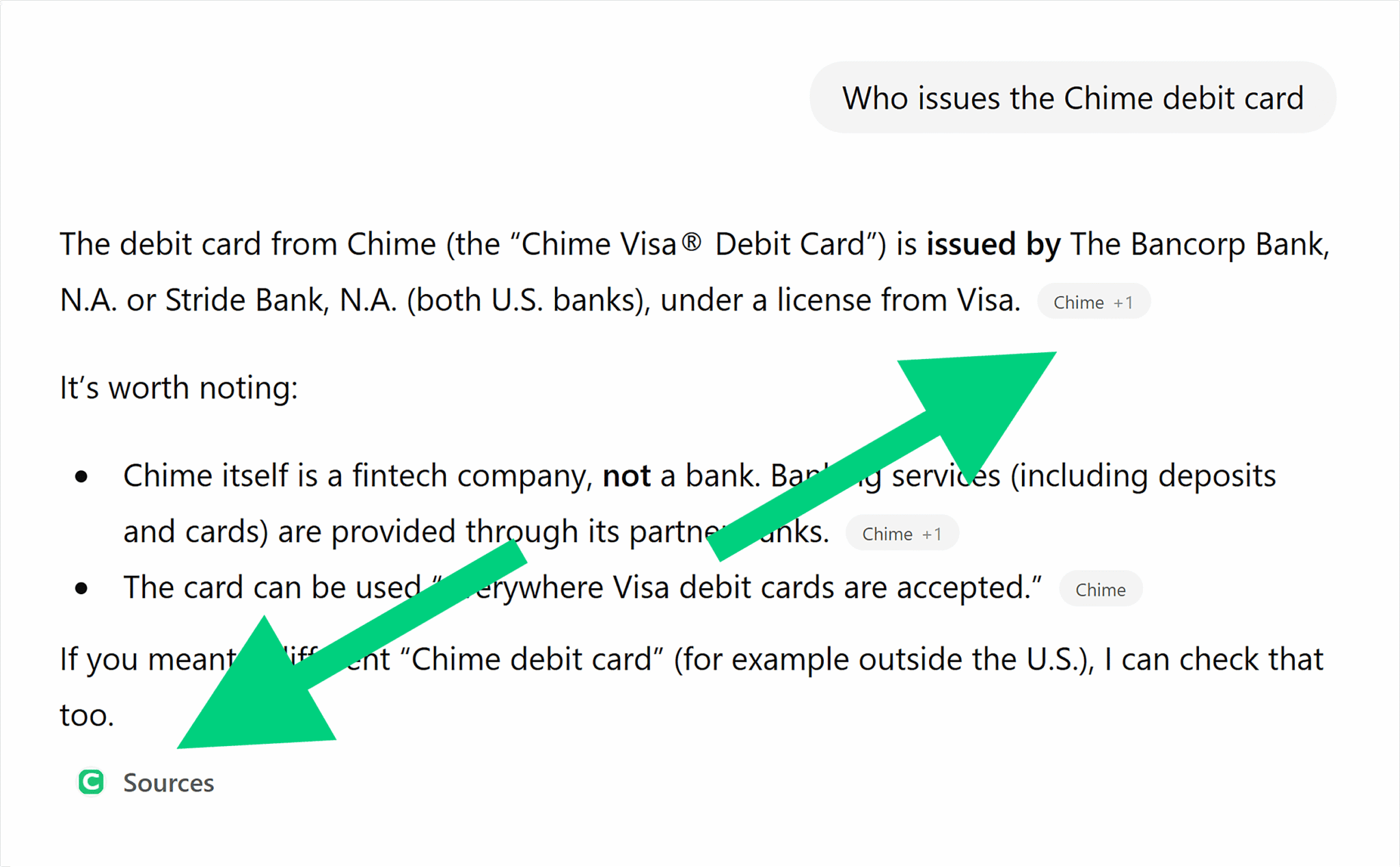
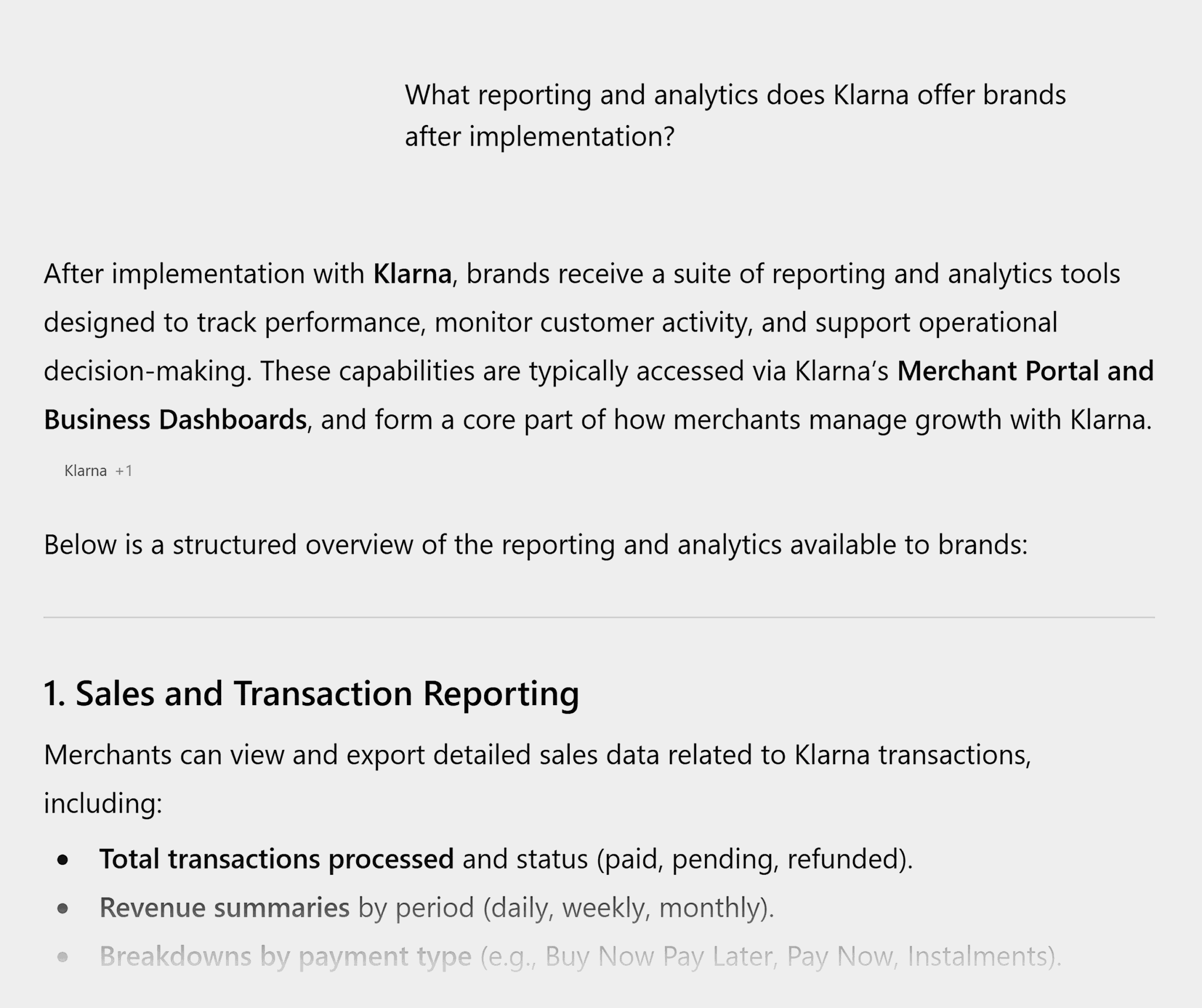
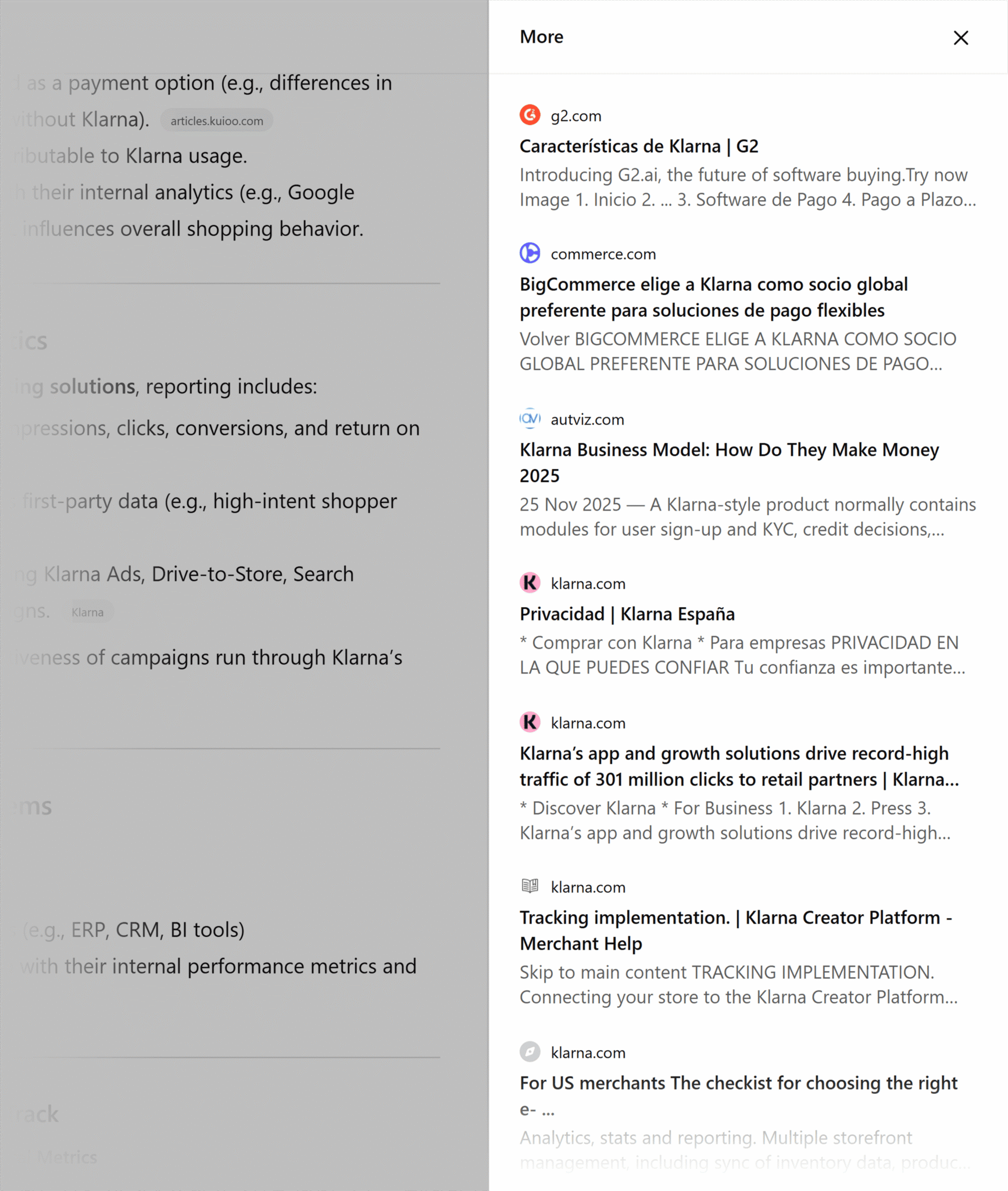
Citations can take many forms depending on the platform. You might see them as inline links, footnotes, or even as thumbnails in a sidebar. Regardless of the visual format, the underlying signal is the same: the AI views your brand as an authority.
This gives you a direct lever to influence the narrative. If your documentation is clear and complete, the AI will pull from those facts to explain your product. For example, when users ask about the specific reporting and analytics tools a platform like Klarna offers, the AI often pulls directly from the brand's own documentation and partner sites to provide a factual answer.
Product recommendations
The most valuable form of visibility is the product recommendation. This is when the AI places your brand on a shortlist of "best" or "top" options. This happens during high intent queries, prompts that include words like "compare," "alternative," or "best."
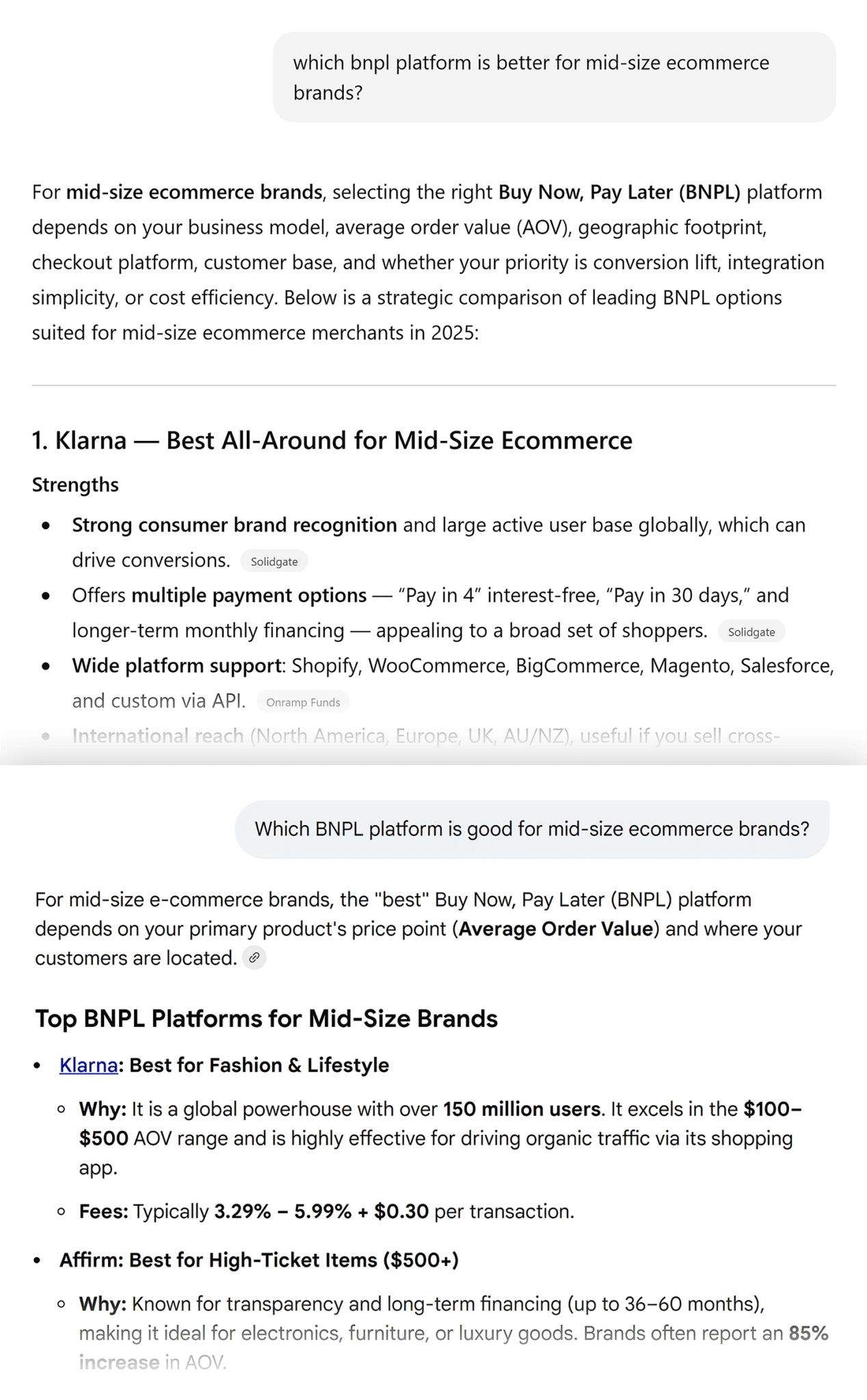
When a user asks which BNPL platform is best for a mid sized ecommerce brand, and the AI lists a specific provider like Klarna, that brand is placed front and center exactly when the buyer is narrowing their options. This is the point of highest conversion potential, but it is also the hardest level of visibility to achieve because it requires the highest level of AI confidence. This connects with to Improve Your Brand’s LLM Visibility when the same signal needs a clearer operating decision.
How LLMs choose which fintech brands to feature
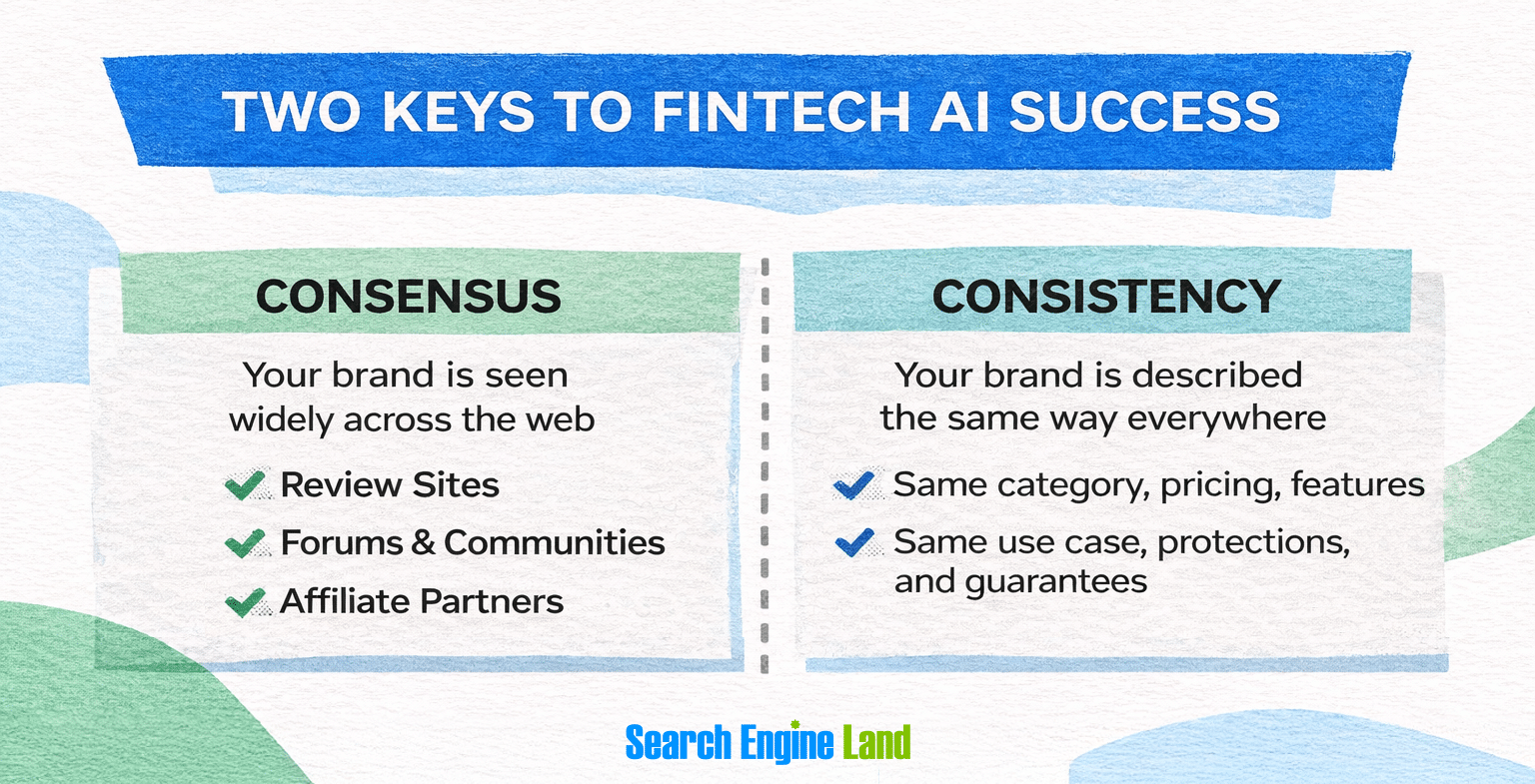
Large Language Models (LLMs) act as a filter between the brand and the consumer. They don't make these choices randomly; they rely on two primary signals: consensus and consistency.
Consensus
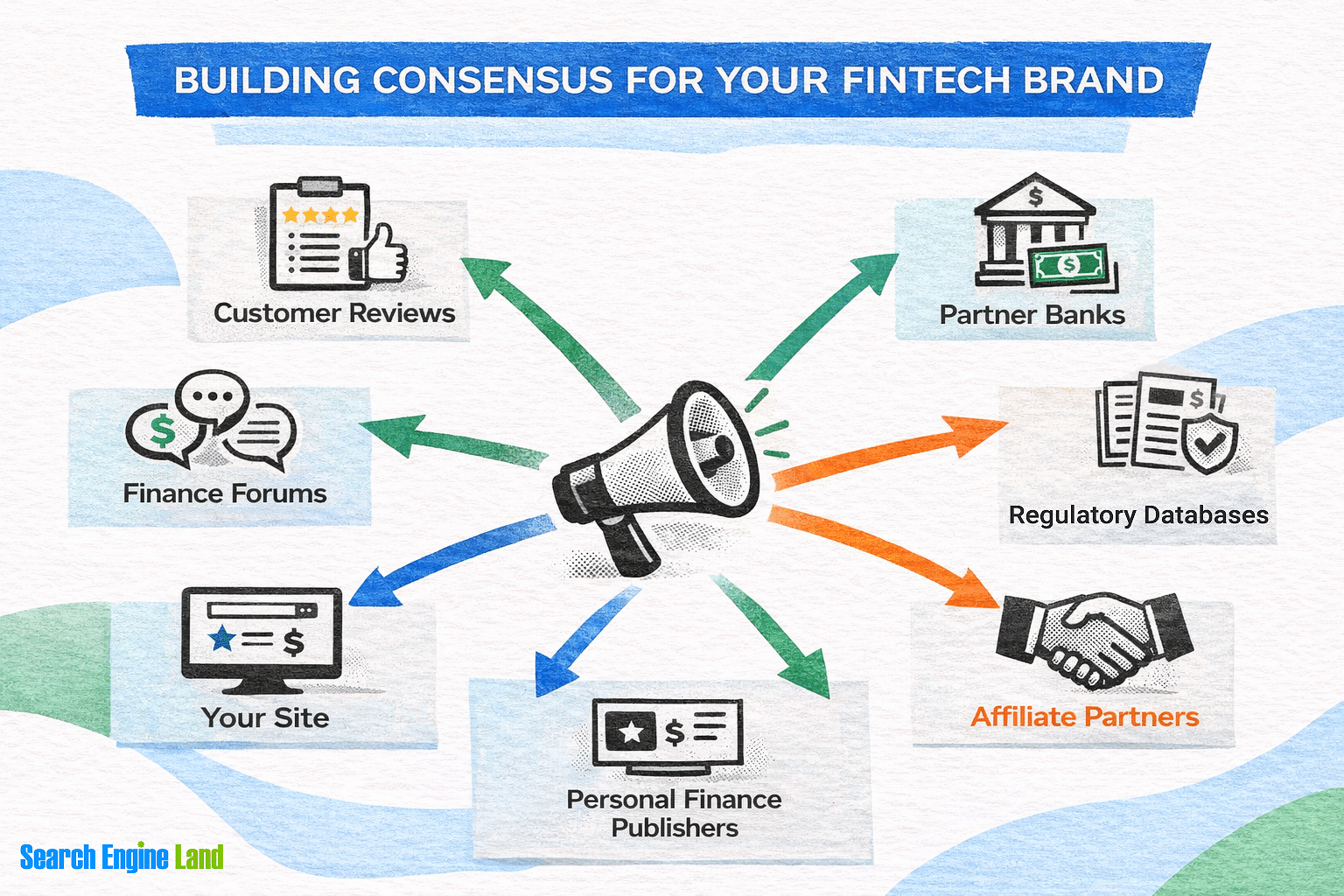
Consensus is essentially digital social proof. The AI looks for a pattern where multiple, reputable, and independent sources all mention the same brand. If a wide array of trusted sites agrees that a product is legitimate and useful, the AI feels confident recommending it.
In fintech, the AI doesn't just look at blogs. It looks at partner bank disclosures, infrastructure providers, and dedicated finance communities. However, consensus is a double edged sword. If the prevailing narrative across the web is negative, highlighting frequent outages or hidden fees, the AI will reflect those warnings to the user.
Consistency
Consistency is the layer that sits on top of consensus. It isn't enough for many sites to mention you; they need to agree on the details. If your website says one thing about your interest rates, but three review sites say another, the AI sees a conflict. This conflict creates hesitation, and the AI may choose a competitor with a more consistent story.
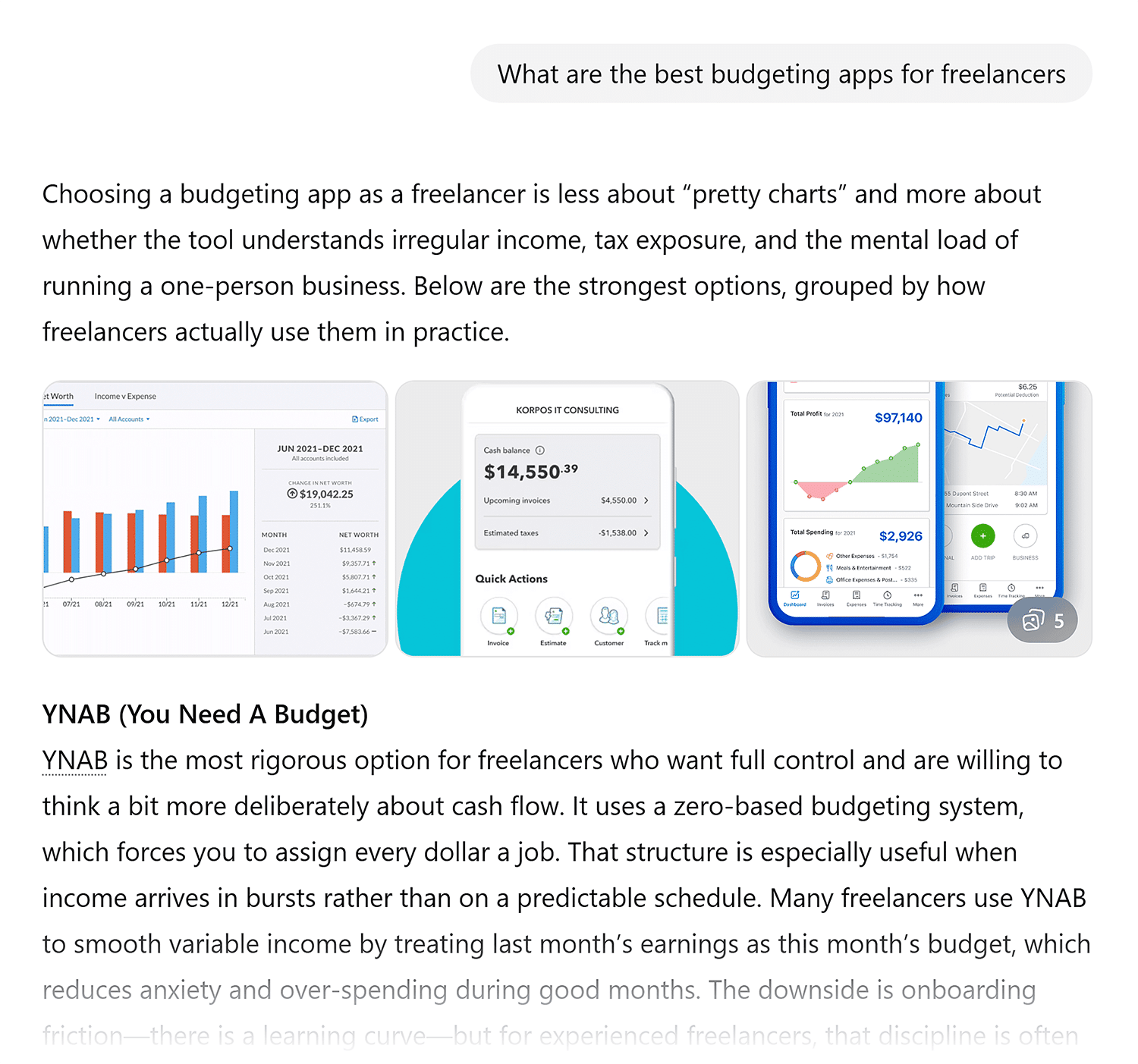
A great example of this is YNAB (You Need A Budget). When you ask AI for the best budgeting apps, YNAB frequently appears. This is because there is a tight loop of consistency across high authority editorial sites like CNBC and NerdWallet, as well as community forums like myFICO. They all consistently label the product as a top budgeting tool, which gives the AI the confidence to feature it.
3 types of content that dominate fintech in AI search
While AI can access almost any public data, certain types of content carry more weight in the fintech space. To influence the AI, you have to understand these three pillars.
1. Owned content
This is the information you control: your website, your help center, and your technical documentation. The AI uses this as the primary source for "what" and "how" questions. For example, if a user wants to compare international FX fees across Wise, Revolut, and Monzo, the AI will likely pull the specific numbers directly from the pricing pages of those three companies.
Your owned content is where you define the facts. If this information is buried or vague, the AI may either ignore you or, worse, guess based on outdated information.
2. Earned media and reviews
Earned media consists of third party perspectives. This includes editorial roundups from sites like MarketWatch, reviews on the Better Business Bureau (BBB), and discussions on Quora or MoneySavingExpert. AI uses these sources to fact check your owned claims.
While you can't control this content, it is how the AI understands the actual user experience. If your owned content says your onboarding is "smooth," but earned media describes it as "cumbersome," the AI will likely lean toward the third party perspective.
3. Official records
In fintech, legitimacy is non negotiable. AI models look for official records, regulatory filings, licenses, and government documents, to confirm that a company is legally authorized to operate. These are treated as the ultimate proof of compliance.
For instance, when verifying if a company like Wise is licensed to operate in the US, an AI might cite a PDF consent order from state regulators or a National Trust application filed with the OCC. These official records provide the "hard proof" that allows an AI to answer questions about safety and legality with confidence.
How fintech brands can improve AI search visibility and accuracy
The shift toward AI search is not a theoretical trend; it is already happening. Research suggests that over half of Americans now use ChatGPT for financial research. AI driven traffic often converts at a significantly higher rate than traditional search or social media because the user has already been "pre vetted" by the AI's recommendation.
To capitalize on this, you need to move beyond traditional SEO and focus on trust signals.
Provide proof that your brand is real and trustworthy
You must make it effortless for an AI to validate your legitimacy. The best way to do this is to create a centralized "source of truth" on your website. Some brands do this through a dedicated "Trust & Security Center," while others use a highly structured Help Center.
The goal is to explicitly list your licenses, protections, and security protocols in a way that is easy for a crawler to parse. Don't just put this on one page; reiterate these trust details in your About page, your FAQ, and your homepage. The more the AI sees these facts repeated across your own domain, the more it views them as core truths.
Reduce mixed messages about your product online
Contradictions are the enemy of AI trust. As a company grows, it is common for old information to linger online, outdated screenshots of a dashboard or old pricing tables on a forgotten landing page. AI models may struggle to determine which version is current, leading to "hallucinations" or cautious, non committal answers.
The first step is a synchronization audit. Ensure that your core narrative and product details are identical across all your landing pages and trust hubs. When your internal messaging is aligned, you provide a stable foundation for the AI to build upon.
Manage brand perception and sentiment
Finally, recognize that AI is a mirror of public sentiment. If you ask an AI if a major player like PayPal is "safe," the AI rarely gives a simple "yes." Instead, it uses qualifying language, citing a mix of official security measures and community debates from places like Reddit (r/privacy) or comparisons from competitors.
You cannot force an AI to be 100% positive, but you can influence the sentiment by engaging with the communities and editorial sites that the AI uses for consensus. By addressing common pain points publicly and improving the user experience, you change the data the AI consumes, which eventually changes the answer the user receives.
Make your fintech brand easy for AI to trust
Winning in AI search isn't about gaming an algorithm; it's about reducing the perceived risk for the end user. By focusing on consensus, ensuring absolute consistency in your messaging, and providing transparent, official proof of your legitimacy, you make it easy for the AI to trust you. When the AI trusts you, it doesn't just mention you, it recommends you.
Comments
Comments are reviewed before they are published. Links are not allowed inside comments.