November Click Spikes in Google Search Console Are Bot Traffic, How to Filter Your Reports
/ 6 min read

Summary
Not real human searchers: Between Oct. 31 and Nov. 2, 2026, several sites saw sudden 2x to 6.5x spikes in Search Console clicks. The practical question is what this changes for SEO, content quality, and AI search visibility.
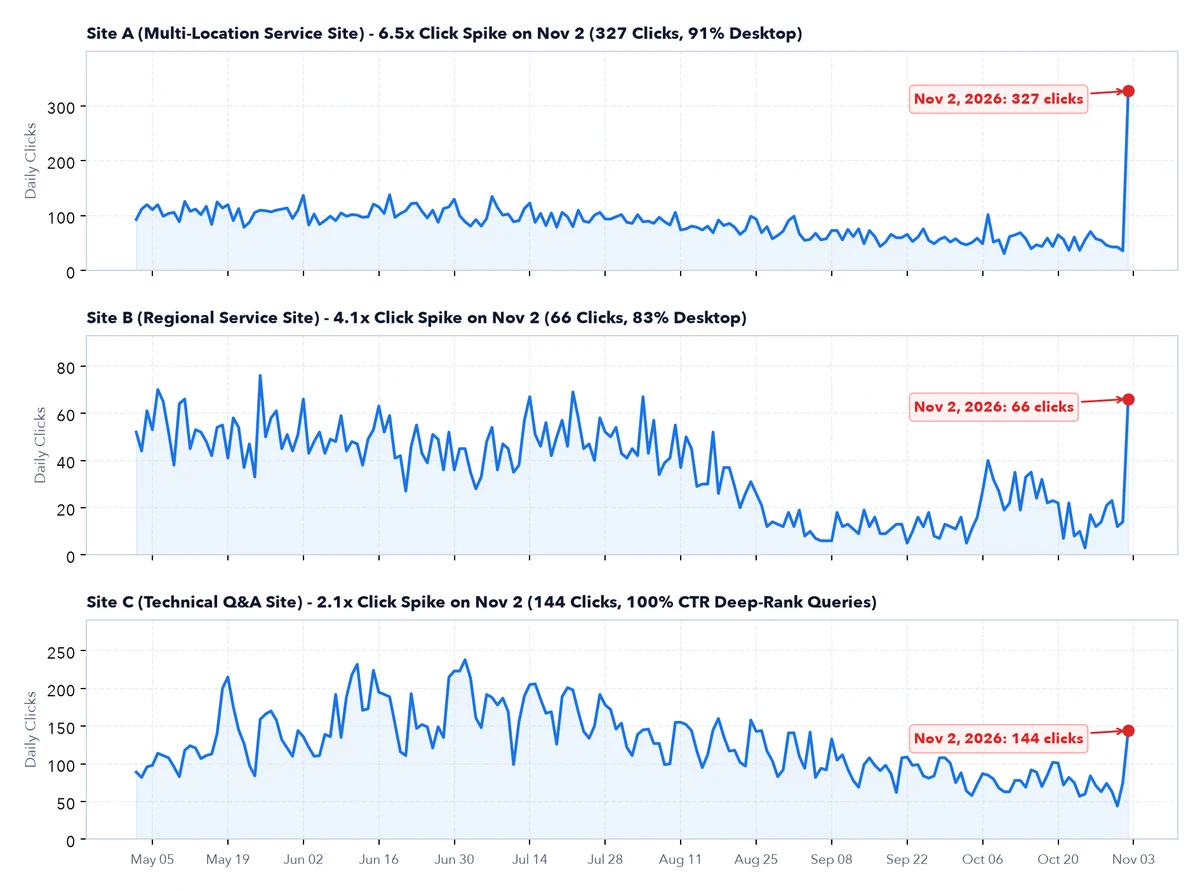
Earlier this week, I saw Barry Schwartz's post on X (and his write up on Search Engine Roundtable ) sharing a screenshot from Joy Hawkins. Joy noticed that several sites were seeing sudden, massive vertical spikes in Google Search Console clicks while impressions stayed flat, and Barry asked a great follow up question: "Anyone else seeing this?
If so, how are you filtering the report…" When I saw Barry's tweet, I immediately thought this would be the ultimate real world test for Marie's Brain, my soon to be launched agentic SEO and AI search analysis system. Over the past several months, I have been building Marie's Brain to combine my 15+ years of research on Google's ranking systems with live, programmatic access to the Search Console and analytics data of the sites I monitor. The same pattern also shows up in We Earned 1, where the practical question is how the signal becomes visible.
What I Found Across The Sites I Monitor
Just like Glenn Gabe and Joy Hawkins mentioned in Barry's Search Engine Roundtable post, the majority of properties I monitor showed completely normal traffic. However, while some SEOs saw the wave begin over the weekend (Oct. 31 to Nov. The search implication is whether the section improves the evidence around the page, not simply whether it adds more wording. Clear entities, crawlable structure, internal links, and useful context are what make the topic easier to evaluate.
The useful check is whether this improves the system behind search performance, not only the words on the page. Internal links, crawlable content, clear entities, current evidence, and a sensible page structure all help the recommendation become easier to trust.
The 2 Big Clues In The Data
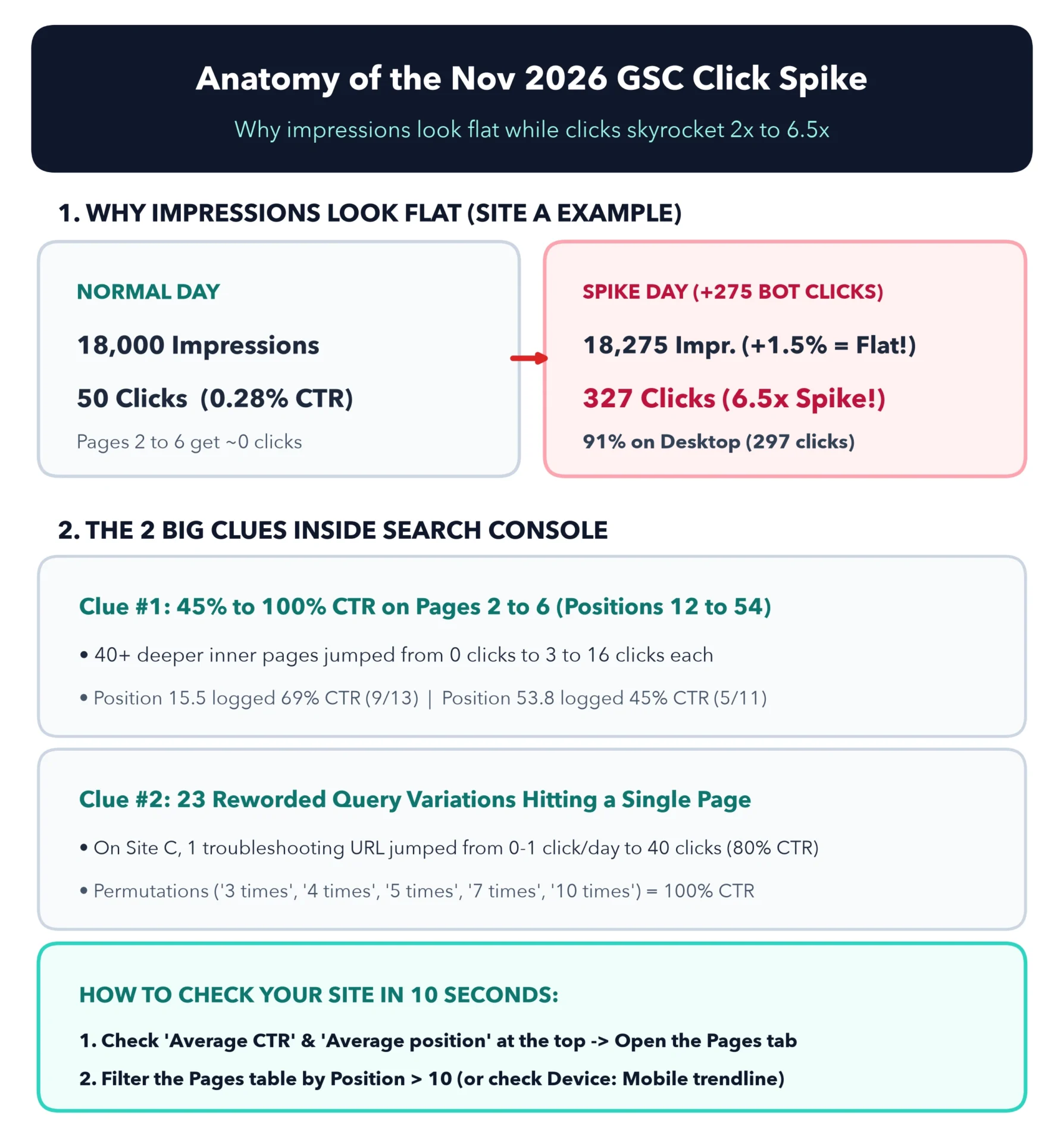
When I had my system drill into the raw API rows for Nov. 2, two unmistakable patterns emerged across the affected sites:. The practical question is what this changes in the system: the page structure, the evidence presented, the measurement habit, or the way the topic is connected to related work.
The practical value is in connecting the idea to an observable signal. That means deciding what should be checked, what would prove the issue is real, and where the team should make the smallest useful improvement first.
1. 45% To 100% CTR On Page 2 To Page 6 Results (And Why Impressions Looked Flat)
Normally, organic clicks in Search Console are heavily concentrated in the top 3 to 5 results on Page 1. On Nov. 2, click through rate (CTR) exploded on pages ranking between Position 11 and Position 55 (Pages 2 through 6 of Google): On. The practical read is that brand signals need to be consistent enough for both people and AI systems to form a stable view of the company, its expertise, and its trust signals.
2. Synthetic Query Fan Out Clusters
On Site C (a technical troubleshooting Q&A site), a single long tail troubleshooting page that normally gets zero to one click per day (and never received more than seven clicks in a single day across the entire previous six months). The search implication is whether the section improves the evidence around the page, not simply whether it adds more wording. Clear entities, crawlable structure, internal links, and useful context are what make the topic easier to evaluate.
What Could Be Causing This?
Normally, when a basic rank tracker or scraper loads a Google search results page, it only generates impressions, not clicks. For Search Console to record a click, a browser or bot has to actually follow (or trigger) Google's. The strategic issue is whether automated visitors can understand, trust, and complete the same journey a human visitor can. Agent readiness is partly technical, but it is also about clear tasks, accessible flows, and reliable evidence.
How To Filter Your Google Search Console Reports
Because GSC does not let you filter the top performance chart by ranking position or CTR, there is no perfect one click button to strip only the bot clicks out of your sitewide graph if dozens of pages were affected. However, these three. The measurement question is whether this signal changes a decision, not whether it adds another number to a dashboard. Useful reporting connects visibility, engagement, and business outcomes without pretending every AI influenced journey will produce a clean click path. A useful companion note is Google Now Reports AI Search Impressions. Here’s, because it looks at a nearby part of the same system.
The reporting question is whether this signal changes a decision. If it only creates another number in a dashboard, it adds noise. If it helps separate profile activity, website visits, calls, bookings, and direction requests, it can make local performance easier to understand.
1. Exclude A Specific Spiked URL (Or Filter By Country)
If only one or a few pages spiked (like Site C): Click + Add filter > Page… > URLs not containing at the top of the report and enter that URL slug (or a subfolder like /locations/ ). This cleanly removes the spiked page from the top. Local visibility depends on whether the details across pages, profiles, categories, reviews, photos, and service descriptions reinforce the same answer for a specific location based query.
2. Use Device: Mobile To Sanity Check Your Trendline
If dozens of pages across your whole site spiked on Desktop (like Sites A & B), you cannot exclude every page individually. While filtering the top bar by Device: Mobile obviously hides your legitimate Desktop traffic too, it is a great. The practical question is what this changes in the system: the page structure, the evidence presented, the measurement habit, or the way the topic is connected to related work.
3. See Which URLs Were Affected In The Pages Table (Position > 10)
To see the exact pages that were affected on your site: Check the boxes for Average CTR and Average position at the top of the chart so those columns appear in the table below. Click the Pages tab (use the Pages tab rather than the Queries. The practical question is what this changes in the system: the page structure, the evidence presented, the measurement habit, or the way the topic is connected to related work.
What the visibility signal actually changes
What the visibility signal actually changes: november Click Spikes in Google Search Console Are Bot Traffic, How to Filter Your Reports: the Practical Angle should be treated as a visibility signal, not a standalone headline. Introduction Earlier this week, I saw Barry Schwartz's post on X (and his write up on Search Engine Roundtable ) sharing a screenshot from Joy Hawkins. Joy noticed that several sites were seeing sudden, massive vertical spikes in Google Search Console clicks. This connects with Search Console AI Reports Go Global when the same signal needs a clearer operating decision.
What the visibility signal actually changes: the practical question is whether the page, brand evidence, and surrounding content make the answer easier to trust. If that support is weak, search systems can still understand the topic but fail to connect it confidently to the brand.
What the visibility signal actually changes: that is why the response should begin with an audit of the evidence already on the site before creating a new asset. The fastest improvement is often a clearer page, a better internal link, or a stronger explanation of why the brand belongs in the answer.
Comments
Comments are reviewed before they are published. Links are not allowed inside comments.