Your AI Salesforce Is Already Selling Your Brand. the Question Is Who Trained It.
/ 6 min read

Summary
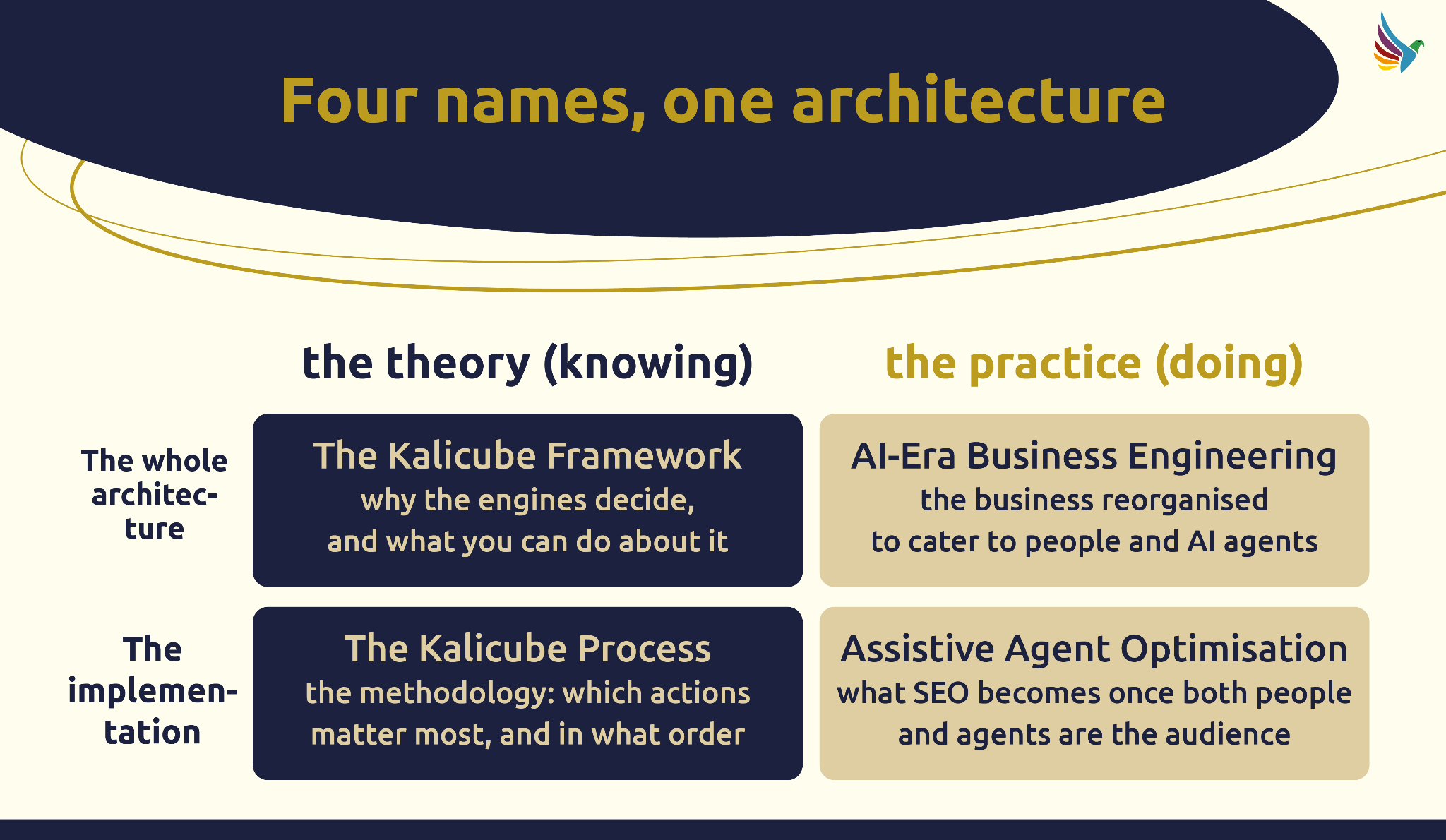
The process is the day to day methodology. It sits above your existing disciplines, SEO, content, PR, paid media, and digital. The practical question is what this changes for SEO, content quality, and AI search visibility.
This series began with an observation: AI systems don't always give the same answer to the same question. In the first article, I argued that the inconsistency wasn't randomness.
It was confidence loss across a measurable pipeline we can diagnose and fix. Working through the AI engine pipeline, gate by gate, eventually led me to the won gate, where three clicks await: the imperfect click of search, the perfect click of recommendations, and the agentic click of agents.
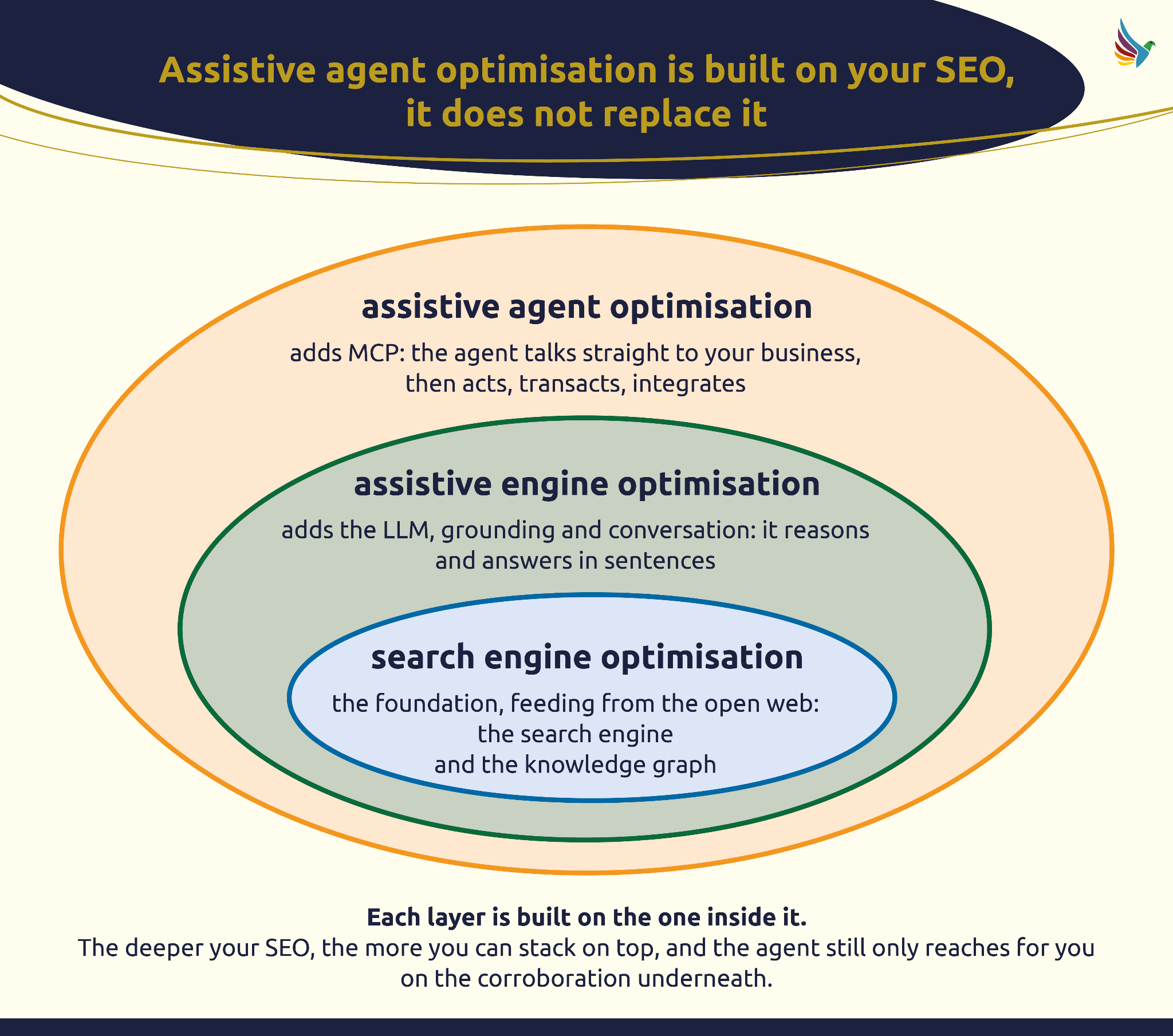
Everything builds on SEO
The process is the day to day methodology. It sits above your existing disciplines, SEO, content, PR, paid media, and digital marketing, helping you prioritize the actions that have the greatest impact on recommendations and visibility. The strategic issue is whether automated visitors can understand, trust, and complete the same journey a human visitor can. Agent readiness is partly technical, but it is also about clear tasks, accessible flows, and reliable evidence.
The risk is usually hidden in the execution layer. A page can look fine to a human and still fail for an automated visitor if the form, call to action, rendering path, or confirmation step is not accessible enough for the agent to complete the task.
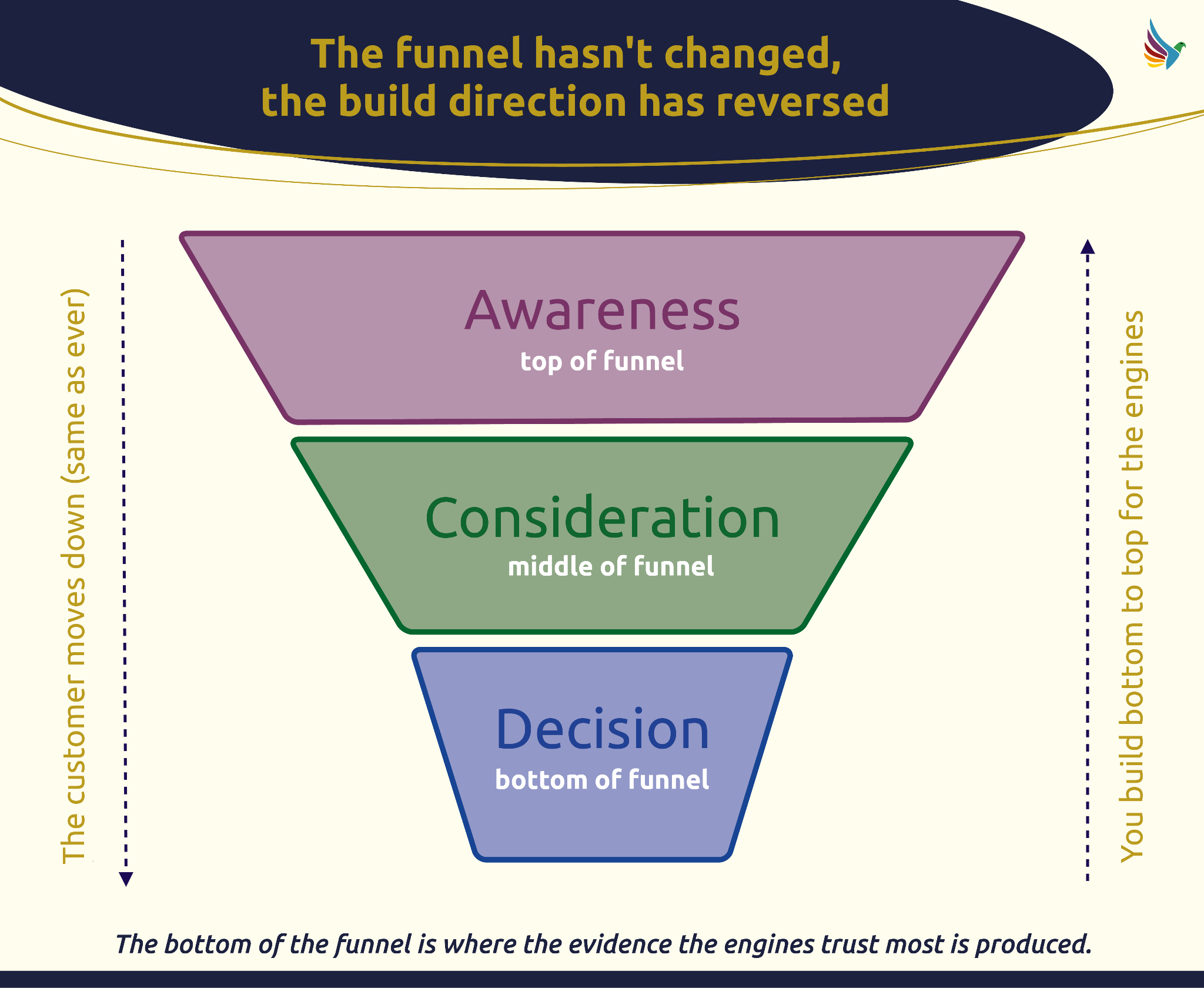
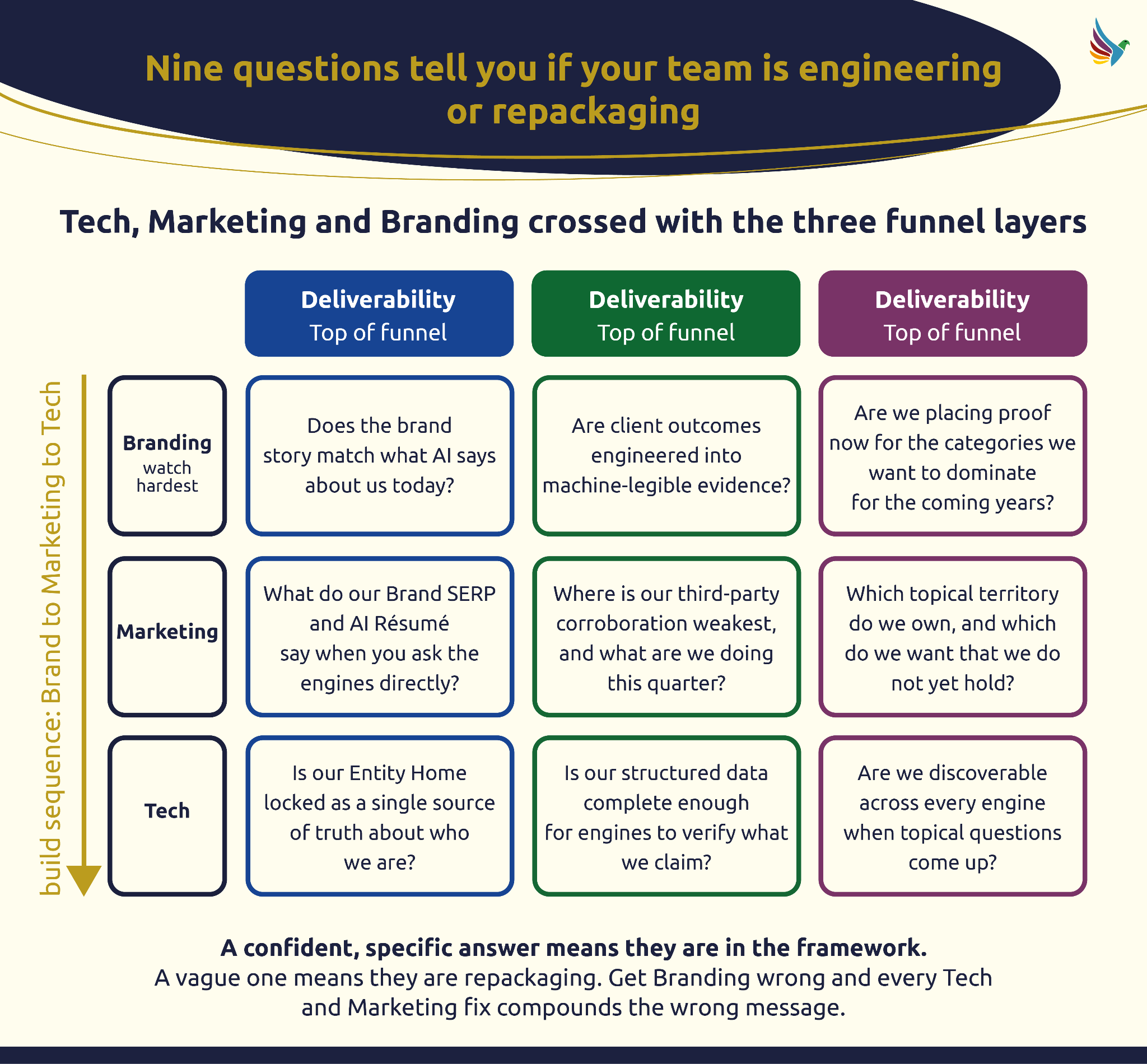
The acquisition funnel hasn't changed in 130 years, but the build direction has reversed
The funnel hasn't fundamentally changed since marketers first drew it in the 1800s: awareness at the top, consideration in the middle, decision at the bottom, the customer moving down while the brand tries to catch them. What's changed is. The practical read is that brand signals need to be consistent enough for both people and AI systems to form a stable view of the company, its expertise, and its trust signals.
The useful check is whether this improves the system behind search performance, not only the words on the page. Internal links, crawlable content, clear entities, current evidence, and a sensible page structure all help the recommendation become easier to trust.
Where you sit on the agentic spectrum determines how much of the business has to change
Two ideas determine how much of your business has to change. The first is the delegation boundary from Part 13. The second is the agentic spectrum. The delegation boundary is the micro view. It tracks how much of one buyer's journey -. The practical read is that brand signals need to be consistent enough for both people and AI systems to form a stable view of the company, its expertise, and its trust signals. This connects with What AI Says About Your Locations when the same signal needs a clearer operating decision.
Your untrained salesforce is selling around the clock, for you or your competitor
Every business now runs a salesforce it never hired: Google, ChatGPT, Perplexity, Claude, Copilot, Siri, and Alexa. The real number is higher and growing every month. Every major tech platform now answers questions in app the way an. The strategic issue is whether automated visitors can understand, trust, and complete the same journey a human visitor can. Agent readiness is partly technical, but it is also about clear tasks, accessible flows, and reliable evidence.
3 taxes quietly costing you recommendations
You'll pay a tax at every stage of the funnel for as long as this salesforce isn't working explicitly for you. Someone types your name directly into an engine, and instead of a clean answer, it hedges: "claims to be," "reportedly serves,". The practical read is that brand signals need to be consistent enough for both people and AI systems to form a stable view of the company, its expertise, and its trust signals.
The reporting question is whether this signal changes a decision. If it only creates another number in a dashboard, it adds noise. If it helps separate profile activity, website visits, calls, bookings, and direction requests, it can make local performance easier to understand.
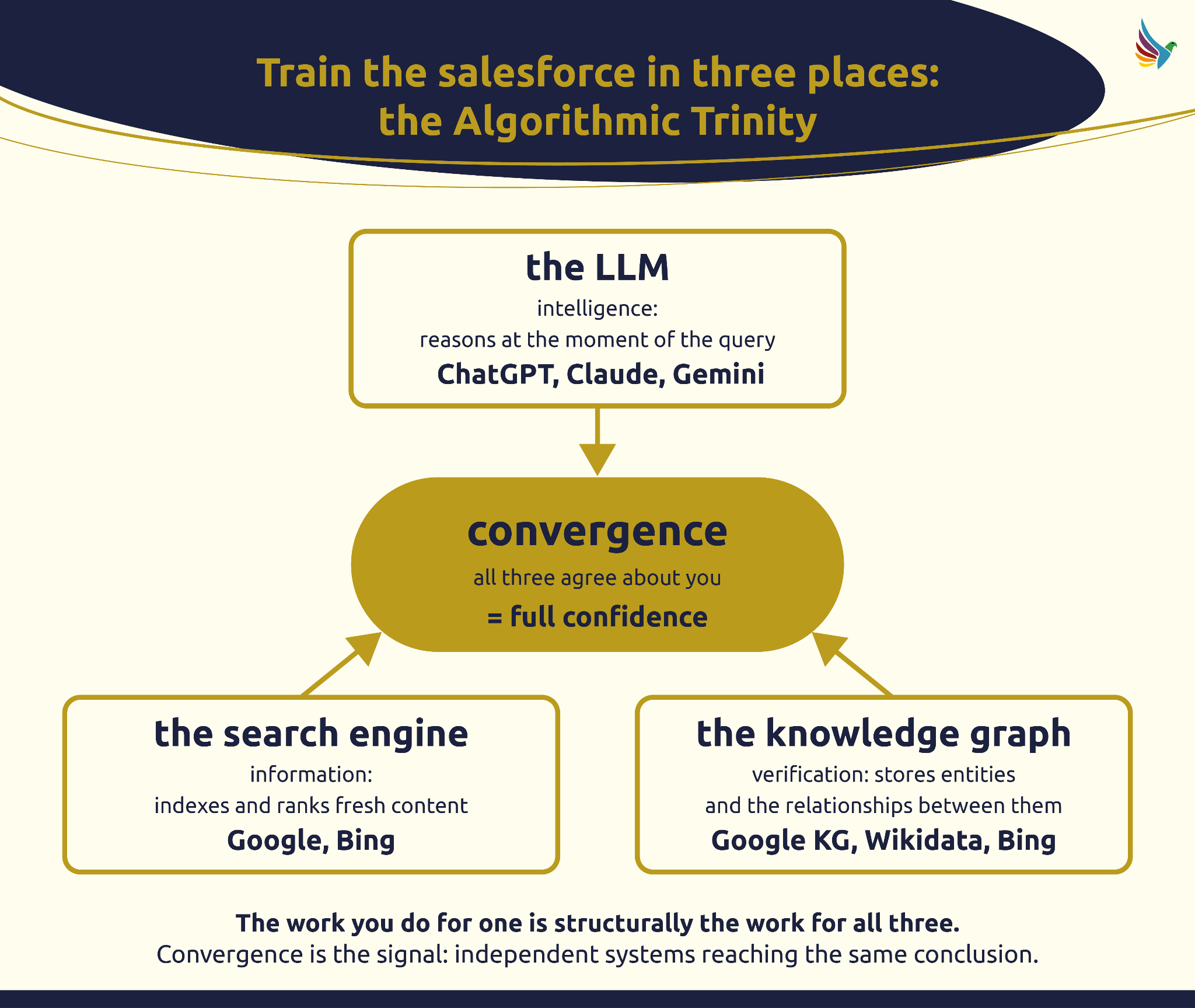
The algorithmic trinity is where your work lands, and there are only a handful at the root
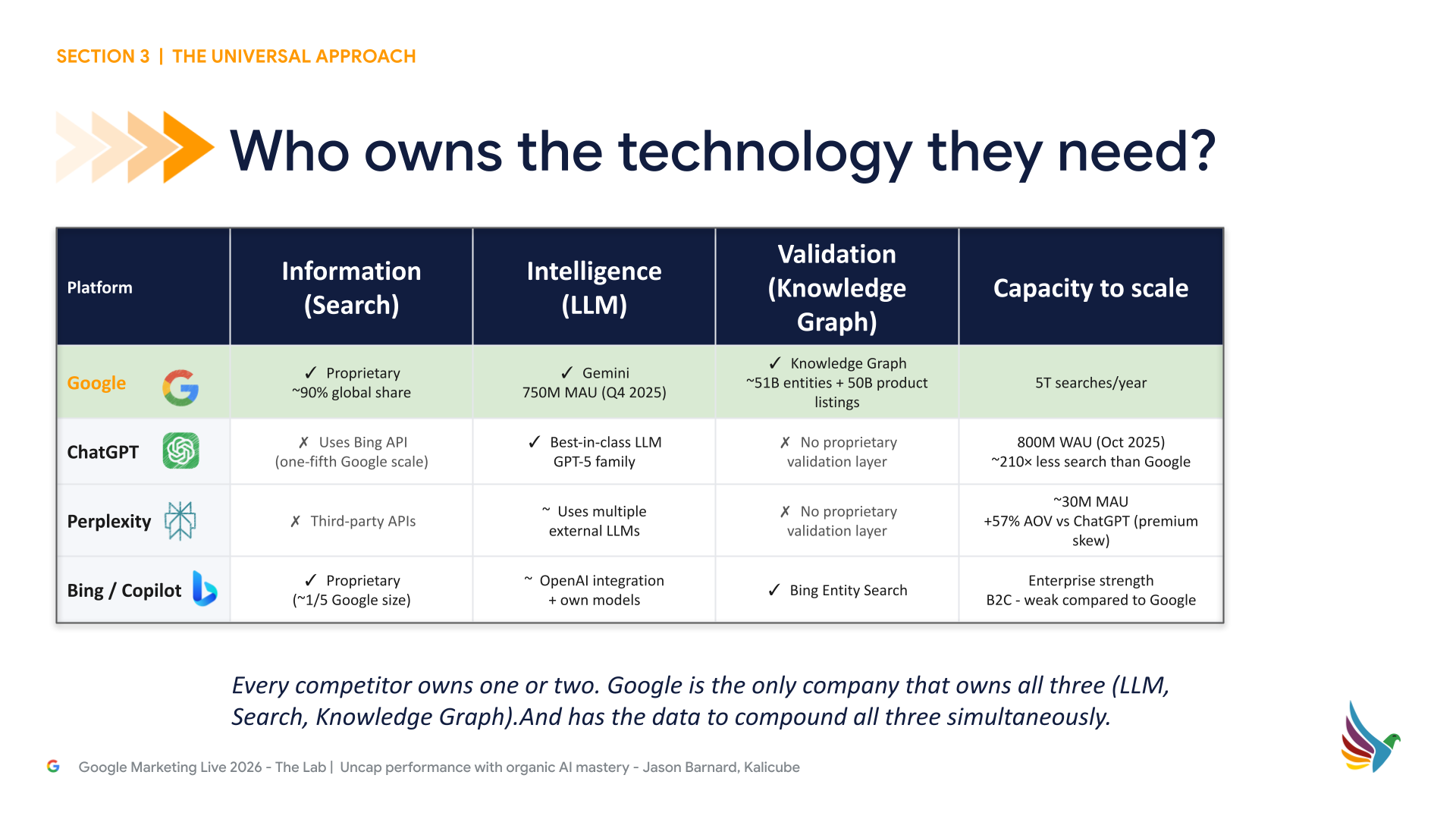
You train the salesforce in three places, and you have to be present in all three for that training to hold over the long term. Large language models do the reasoning at the moment of the query, the intelligence layer: ChatGPT, Claude, and. The search implication is whether the section improves the evidence around the page, not simply whether it adds more wording. Clear entities, crawlable structure, internal links, and useful context are what make the topic easier to evaluate.
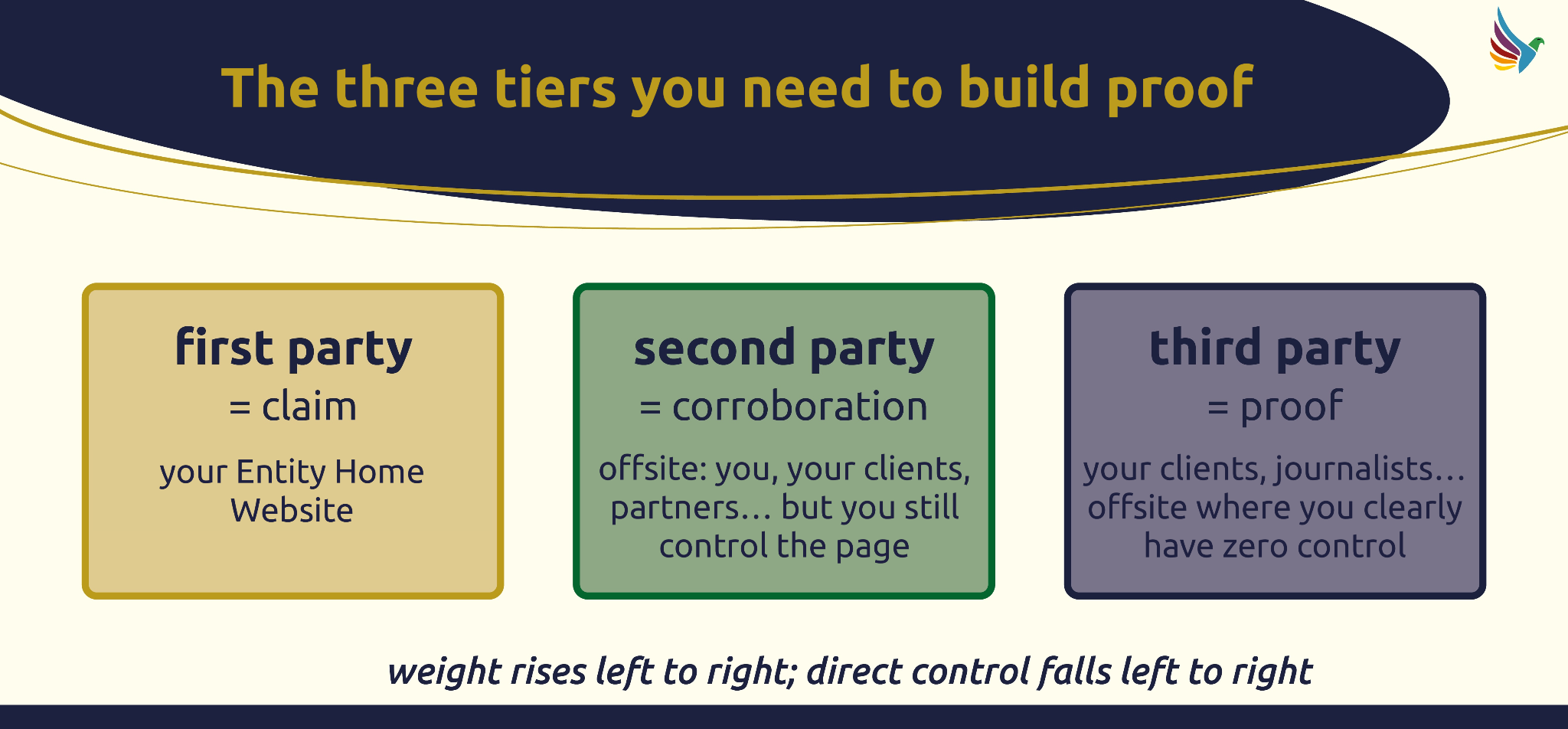
Third party proof is what the salesforce actually believes, and without it, nothing stands
Knowing where your work is ingested is only half of it. The other half is knowing which evidence the salesforce believes because not all evidence carries the same weight, and the gap between the weakest and strongest is the differentiator. The practical read is that brand signals need to be consistent enough for both people and AI systems to form a stable view of the company, its expertise, and its trust signals.
3 levels of effort lead to completely different outcomes
Introduction This series began with an observation: AI systems don't always give the same answer to the same question. In the first article, I argued that the inconsistency wasn't randomness. It was confidence loss across a measurable. The practical read is that brand signals need to be consistent enough for both people and AI systems to form a stable view of the company, its expertise, and its trust signals.
Barely trained, partially trained, and fully trained
Most brands sit at the bottom without ever choosing to. The minimum effort brand keeps a website, runs some content marketing, responds to the occasional mention, and otherwise lets the ecosystem do what it does. It shows up in. The practical read is that brand signals need to be consistent enough for both people and AI systems to form a stable view of the company, its expertise, and its trust signals. The same pattern also shows up in Paid Brand Mention Problem in GEO, where the practical question is how the signal becomes visible.
The salesforce is already working. The only question is who trained it.
In 2026 and beyond, the salesforce operates inside your supply chain as well as your sales funnel. AI sits at the gates that decide whether to include you in what it knows, whether to deploy you in an answer, and whether to reselect you. The search implication is whether the section improves the evidence around the page, not simply whether it adds more wording. Clear entities, crawlable structure, internal links, and useful context are what make the topic easier to evaluate.
What the visibility signal actually changes
What the visibility signal actually changes: your AI Salesforce Is Already Selling Your Brand. the Question Is Who Trained It.: the Practical Angle should be treated as a visibility signal, not a standalone headline. Introduction This series began with an observation: AI systems don't always give the same answer to the same question. In the first article, I argued that the inconsistency wasn't randomness. It was confidence loss across a measurable pipeline we can. A useful companion note is New Clovion Data, because it looks at a nearby part of the same system.
What the visibility signal actually changes: the practical question is whether the page, brand evidence, and surrounding content make the answer easier to trust. If that support is weak, search systems can still understand the topic but fail to connect it confidently to the brand.
What the visibility signal actually changes: that is why the response should begin with an audit of the evidence already on the site before creating a new asset. The fastest improvement is often a clearer page, a better internal link, or a stronger explanation of why the brand belongs in the answer.
Comments
Comments are reviewed before they are published. Links are not allowed inside comments.