Content Repurposing Map for Better SEO and LLM Visibility
/ 6 min read

Summary
You likely already know how to write for SEO and how to create a multichannel content marketing strategy. But to repurpose. The practical question is what this changes for SEO, content quality, and AI search visibility.
Content repurposing takes a single piece of existing content, such as a blog post, video, or webinar, and transforms it into multiple formats for various channels. Your content repurposing map is your production plan: It outlines how you'll break down an idea and prepare it for distribution across channels.
Intentional content repurposing turns content into assets that drive business value across channels. When you have a map for this process, you can keep track of content assets, increase brand visibility, and ensure each piece works hard for the business. The same pattern also shows up in Working Framework, where the practical question is how the signal becomes visible.
What do LLMs like?
You likely already know how to write for SEO and how to create a multichannel content marketing strategy. But to repurpose content that drives visibility across AI engines, you need to know what LLMs like ChatGPT and AI search tools like. The search implication is whether the section improves the evidence around the page, not simply whether it adds more wording. Clear entities, crawlable structure, internal links, and useful context are what make the topic easier to evaluate. This connects with 4 Layer AI Ops Playbook when the same signal needs a clearer operating decision.
The useful check is whether this improves the system behind search performance, not only the words on the page. Internal links, crawlable content, clear entities, current evidence, and a sensible page structure all help the recommendation become easier to trust.
Content freshness
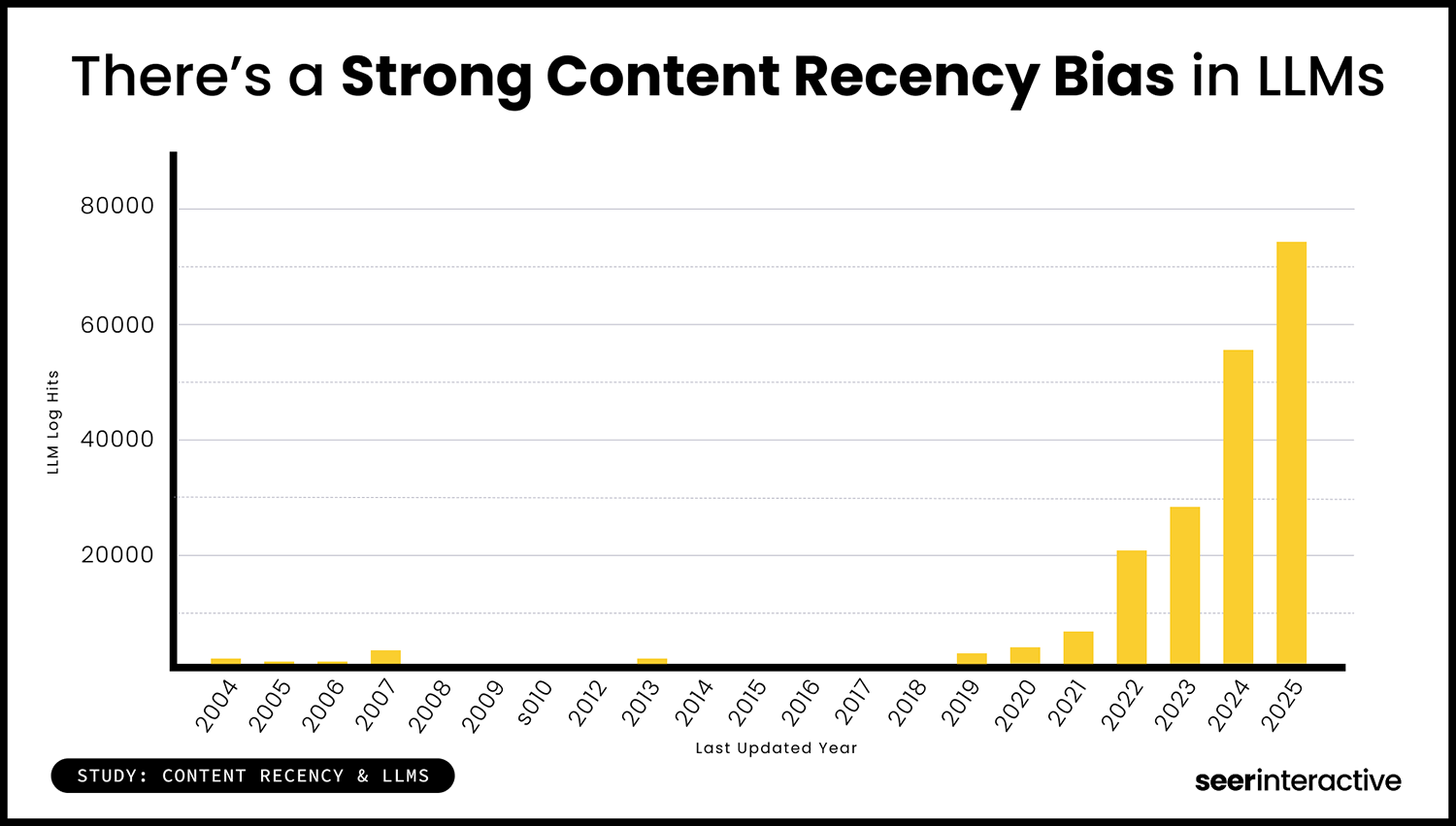
LLMs appear to prefer fresh content that was recently published or updated and that reflects current information, trends, or data. Content published in the last five years receives 94% of LLM crawler hits, according to Seer. The strategic issue is whether automated visitors can understand, trust, and complete the same journey a human visitor can. Agent readiness is partly technical, but it is also about clear tasks, accessible flows, and reliable evidence.
The risk is usually hidden in the execution layer. A page can look fine to a human and still fail for an automated visitor if the form, call to action, rendering path, or confirmation step is not accessible enough for the agent to complete the task.
Original data and statistics
LLMs seem to prioritize content that incorporates original data and statistics. Content that includes statistics and qualitative statements results in 30 to 40% higher citation rates, according to data compiled by Onely. This makes sense. For search teams, the important part is not the headline movement by itself. It is whether the shift changes which communities, forums, video surfaces, or publisher pages now satisfy the query better than the old ranking pattern.
Structured content
LLMs also seem to prefer structured content with clearly organized information and on page elements. For example: headings, bullet points, tables, definitions, and step by step formats. Well structured content is three times more likely to. The search implication is whether the section improves the evidence around the page, not simply whether it adds more wording. Clear entities, crawlable structure, internal links, and useful context are what make the topic easier to evaluate.
Top cited domains
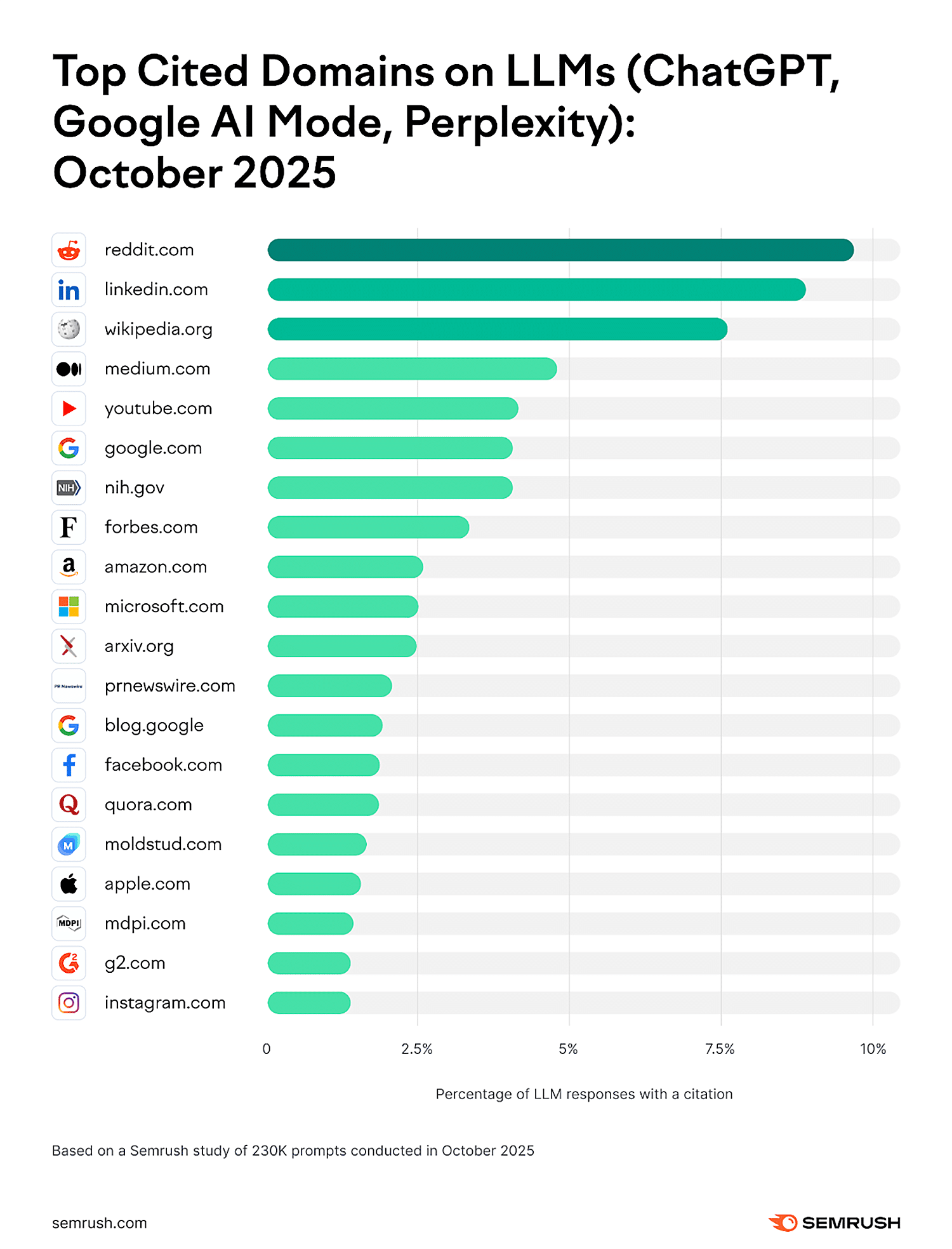
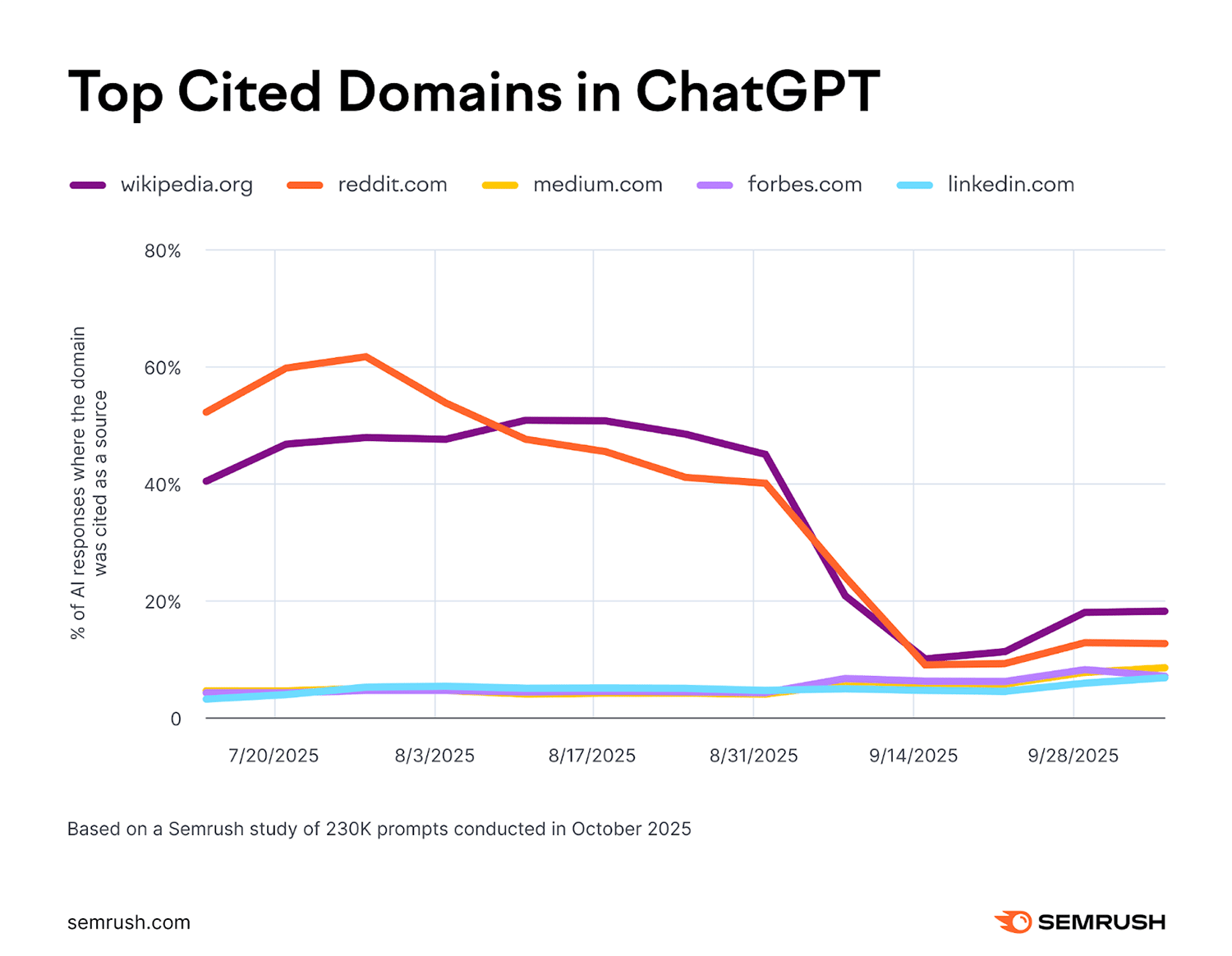
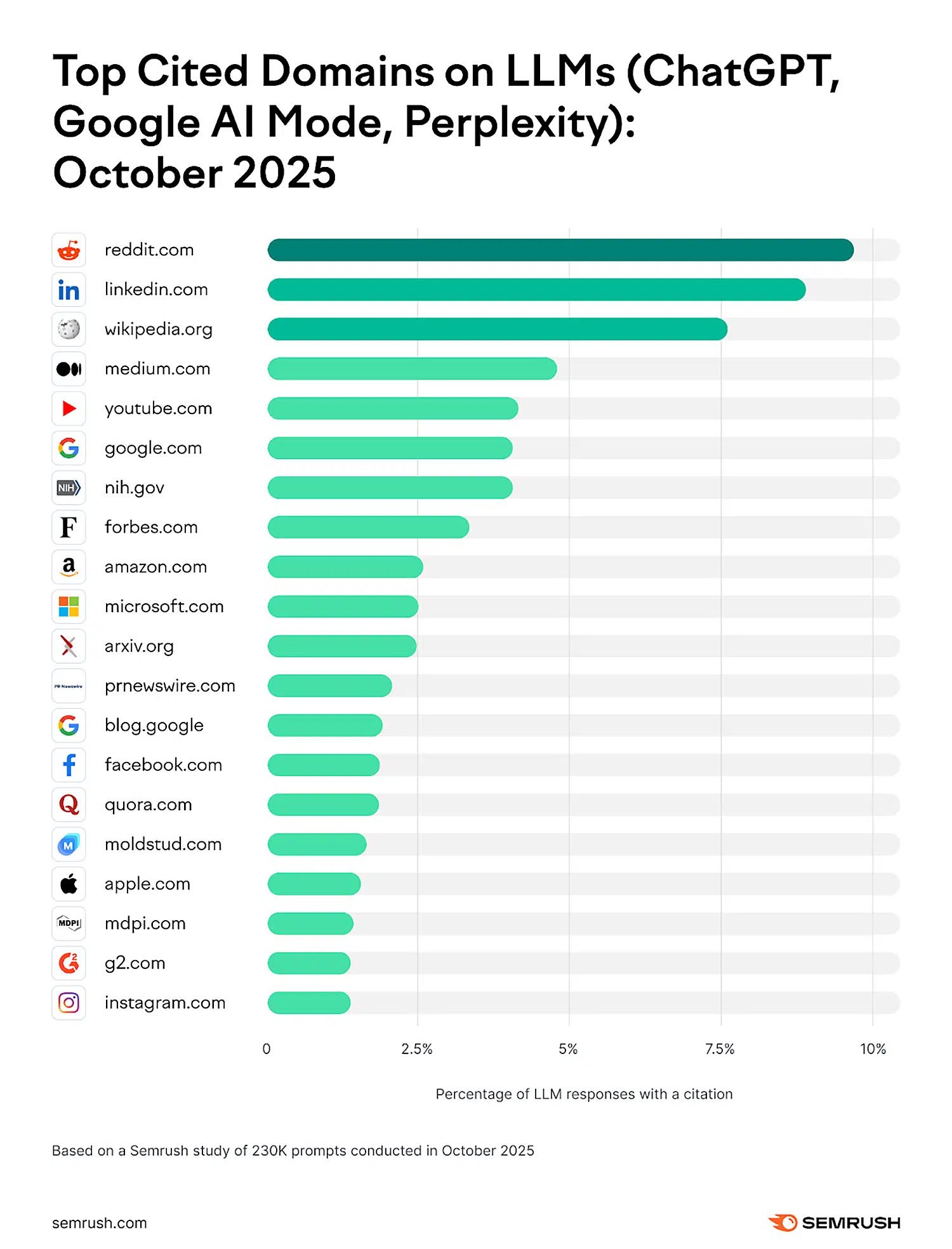
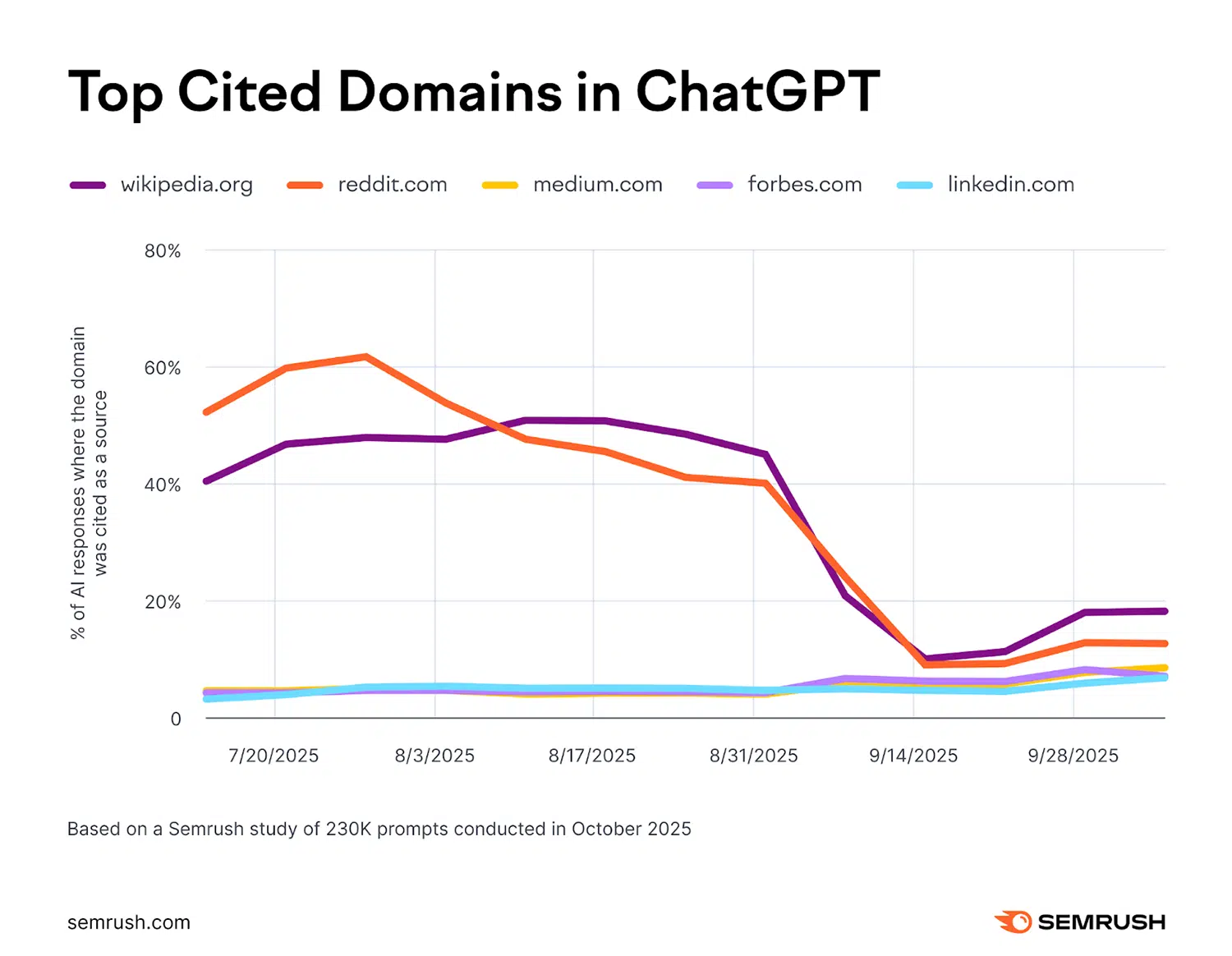
No matter how well your content follows AI visibility best practices, LLMs do seem to have a bias toward certain domains. However, research from Semrush indicates that major LLM platforms may be rebalancing their citation mix. Reddit,. For search teams, the important part is not the headline movement by itself. It is whether the shift changes which communities, forums, video surfaces, or publisher pages now satisfy the query better than the old ranking pattern.
Different content formats you can use to repurpose content
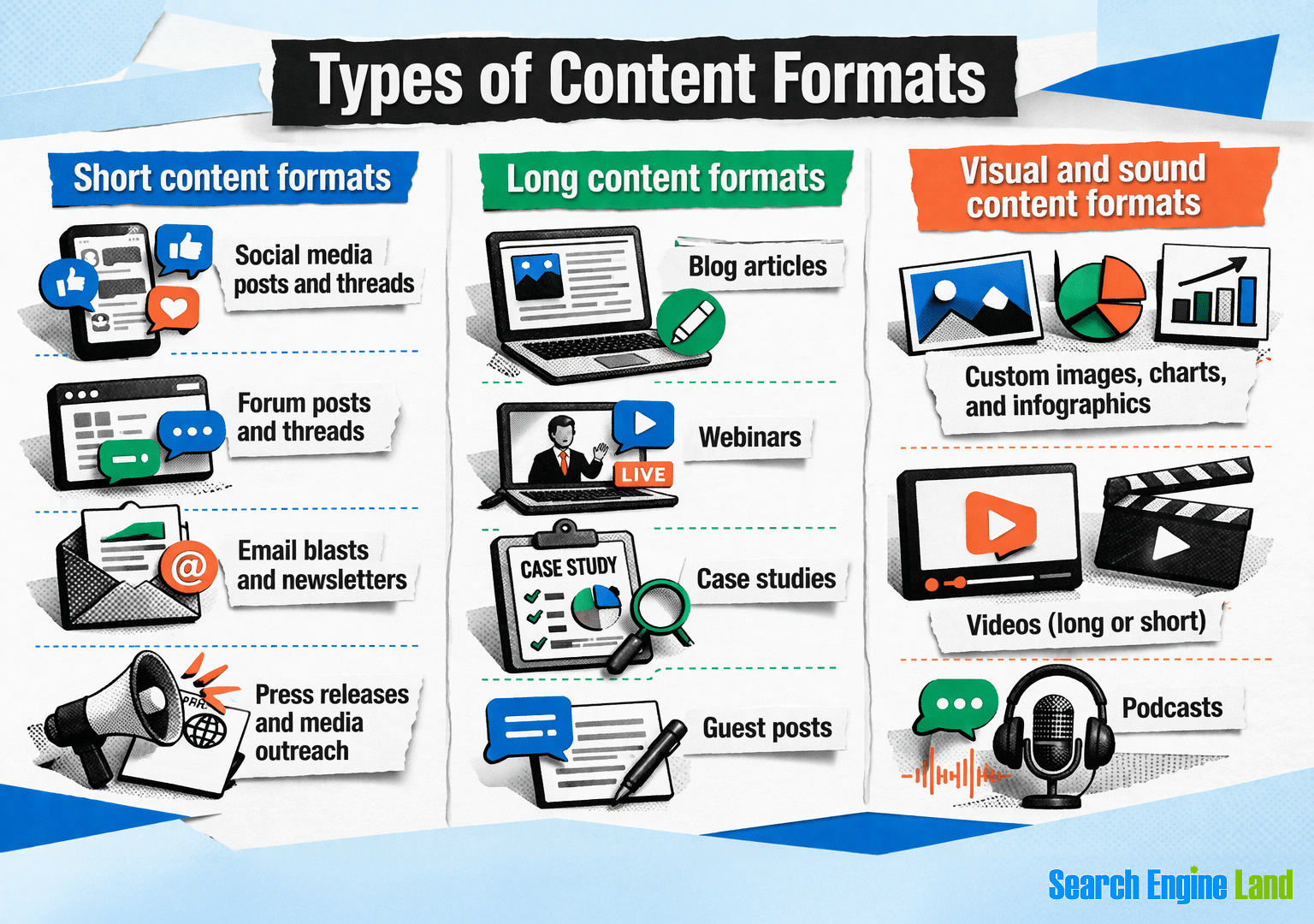
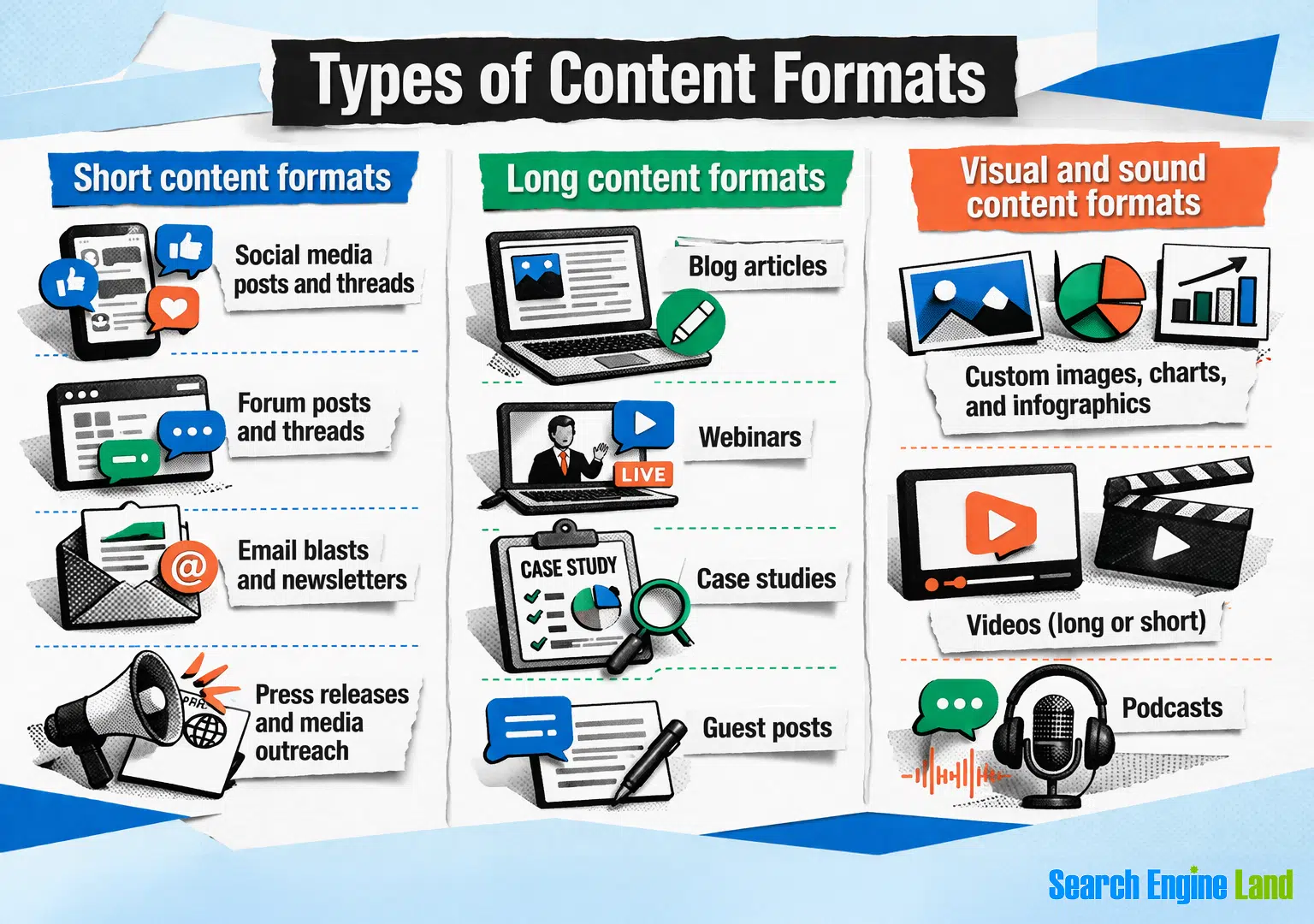
Your content needs to exist in multiple formats to maximize visibility for SEO and AI search. Various search platforms favor different types of content, so repurpose to expand your presence across multiple surfaces. In doing this, you'll. The search implication is whether the section improves the evidence around the page, not simply whether it adds more wording. Clear entities, crawlable structure, internal links, and useful context are what make the topic easier to evaluate.
Content repurposing map for SEO & LLMs
Here's a step by step workflow to creating a content repurposing map for SEO and LLMs. The search implication is whether the section improves the evidence around the page, not simply whether it adds more wording. Clear entities, crawlable structure, internal links, and useful context are what make the topic easier to evaluate.
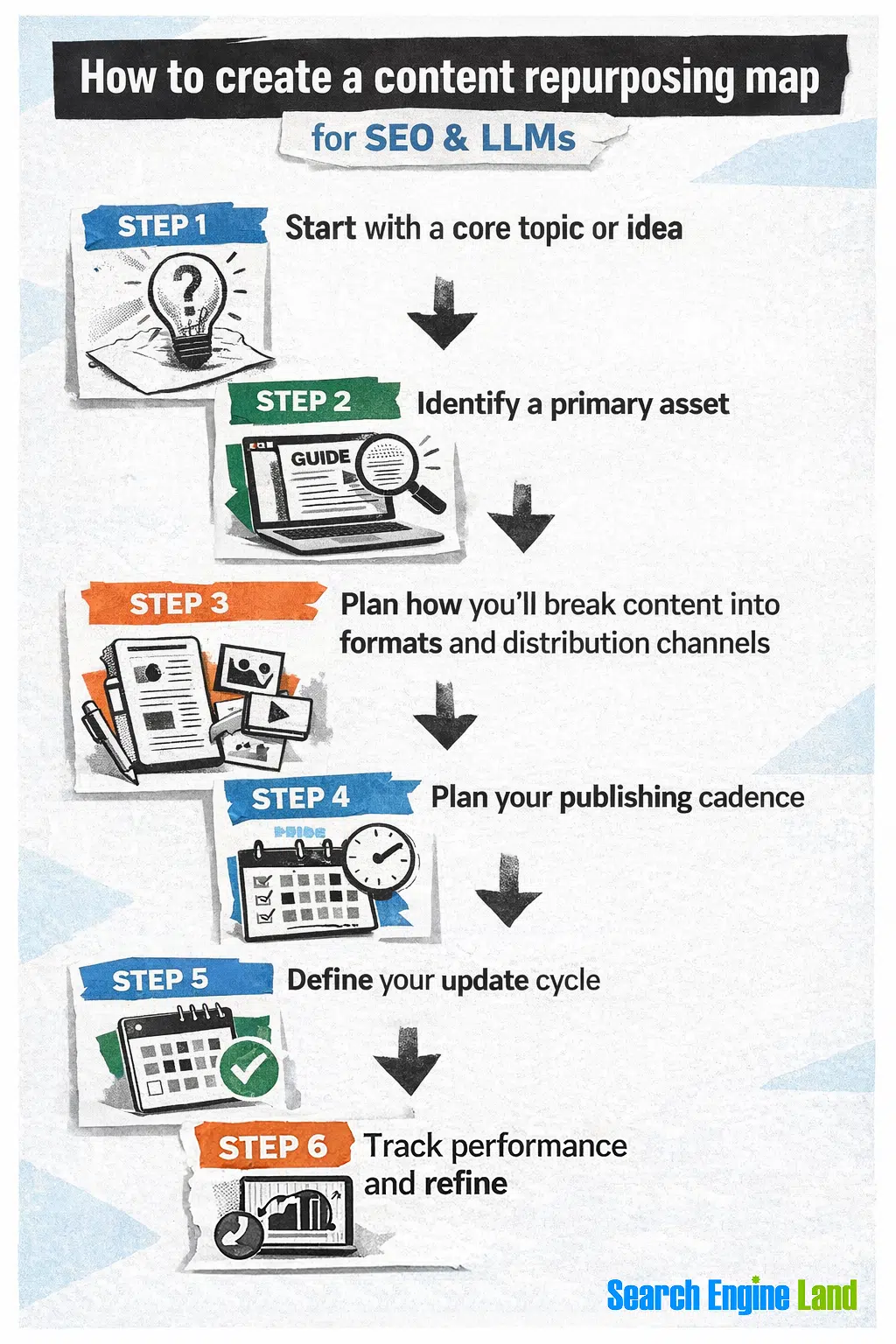
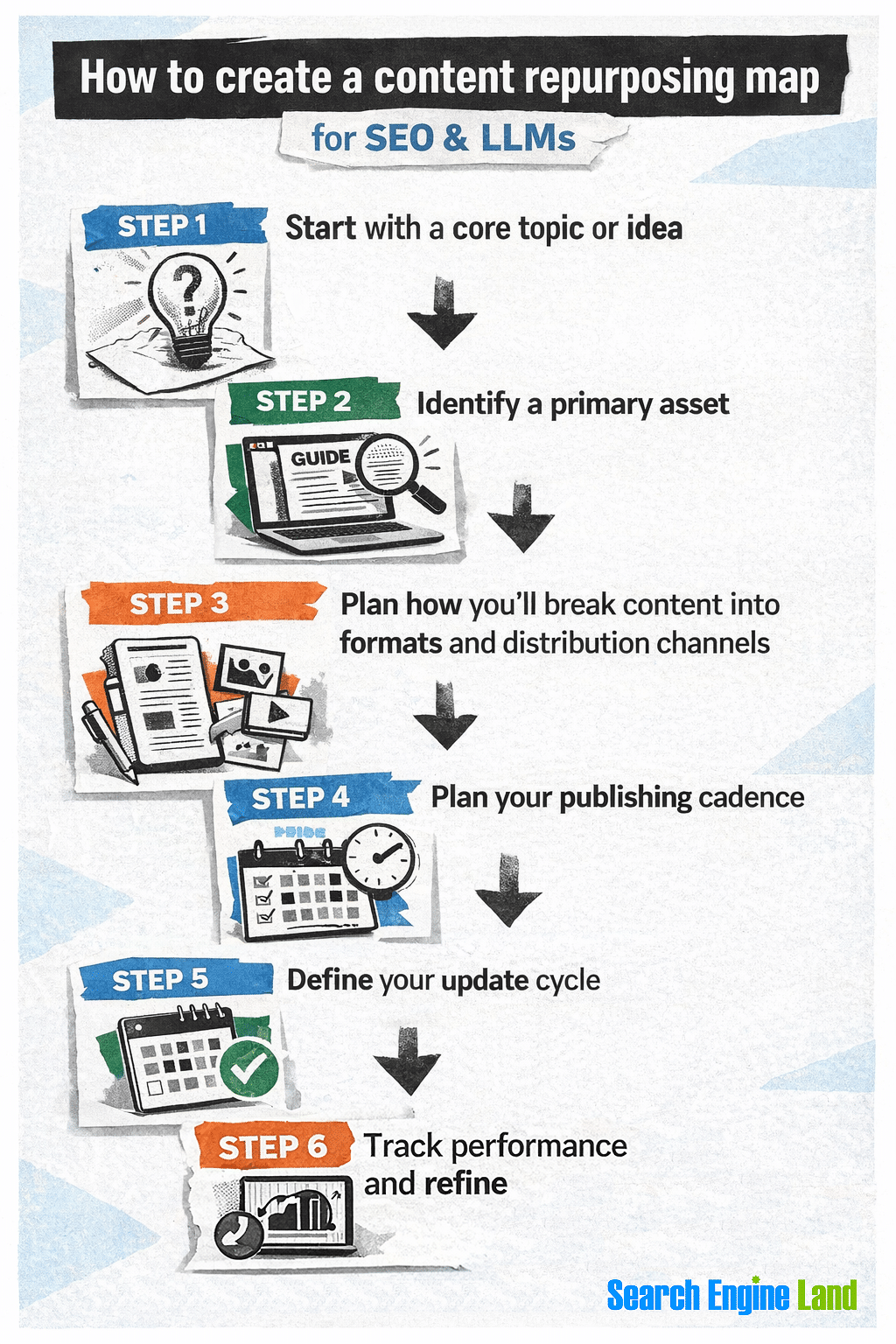
Step 1: Start with a core topic or idea
Every content repurposing map begins with one central idea: the topic that anchors your content. It should have enough depth that it allows you to expand and distribute content across multiple formats and channels. Aligns closely with your. The search implication is whether the section improves the evidence around the page, not simply whether it adds more wording. Clear entities, crawlable structure, internal links, and useful context are what make the topic easier to evaluate.
Step 2: Identify a primary asset
Once you've defined your topic, start with a single, in depth piece of content that allows you to explore the topic fully. This primary asset acts as the foundation for all repurposed content and should provide enough depth, insight, and. The search implication is whether the section improves the evidence around the page, not simply whether it adds more wording. Clear entities, crawlable structure, internal links, and useful context are what make the topic easier to evaluate.
Step 3: Plan how you'll break content into formats and distribution channels
Before you create your primary asset, break it down into smaller components and map each to the most suitable format and platform. This is where your content starts to expand beyond a single piece, becoming a multichannel asset through. The search implication is whether the section improves the evidence around the page, not simply whether it adds more wording. Clear entities, crawlable structure, internal links, and useful context are what make the topic easier to evaluate.
What the visibility signal actually changes
What the visibility signal actually changes: content Repurposing Map for Better SEO and LLM Visibility: the Operator's View should be treated as a visibility signal, not a standalone headline. Introduction Content repurposing takes a single piece of existing content, such as a blog post, video, or webinar, and transforms it into multiple formats for various channels. Your content repurposing map is your production plan: It outlines how you'll break.
What the visibility signal actually changes: the practical question is whether the page, brand evidence, and surrounding content make the answer easier to trust. If that support is weak, search systems can still understand the topic but fail to connect it confidently to the brand.
What the visibility signal actually changes: that is why the response should begin with an audit of the evidence already on the site before creating a new asset. The fastest improvement is often a clearer page, a better internal link, or a stronger explanation of why the brand belongs in the answer. A useful companion note is LLM Visibility Starts with Better Internal Communication, because it looks at a nearby part of the same system.
Where the evidence needs to be tested
Where the evidence needs to be tested: a single study or ranking observation should not become a strategy by itself. It should become a diagnostic prompt: which source is being trusted, which query pattern is affected, and which part of the site would make that trust easier to earn?
Where the evidence needs to be tested: that keeps the response grounded. The goal is to improve the evidence chain around the topic rather than publish another summary that repeats what every other page already says.
Where the evidence needs to be tested: the important distinction is between a useful signal and a fashionable talking point. A useful signal changes the brief, the page structure, the linking plan, or the measurement view.
Comments
Comments are reviewed before they are published. Links are not allowed inside comments.