Core Updates, Ranking Feedback, Google Agent & WordPress, SEO Pulse
/ 8 min read

Summary
Google's November 2026 core update finished rolling out on Nov. 24. About an hour later, Google preannounced a December core. The practical question is what this changes for SEO, content quality, and AI search visibility.
The landscape of search changes quickly, but the real challenge isn't just keeping up with the news. It is knowing which updates actually require a change in strategy and which are just noise. When Google rolls out back to back core updates or a CEO claims SEO is dead, the instinct is to react immediately.
I find it more useful to look at these events as a series of signals. Some signals tell us to wait and gather data, while others suggest we need to audit our technical infrastructure. This pulse covers the most recent shifts in Google's ranking systems, the evolving role of AI agents, and the changing makeup of the web's CMS landscape.
The Rapid Cycle of November and December Core Updates
Google has moved quickly. The November 2026 core update finished its rollout on November 24, but the breathing room was short. Almost immediately after, Google announced another core update for December via the Search Status Dashboard.
The November update followed the typical two week window, starting on November 10. The upcoming December update is more specific in its intent. Google has indicated that this one focuses on how its systems understand and rank relevant content, particularly for complex or longer queries. There is also a focus on improving personalized results for users who have those settings enabled. While we know it is coming in December, a specific date has not been set.
The practical interpretation: The danger here is the "reaction gap." Google recommends waiting for a full week of post update data before comparing it to the week before the rollout. For the November update, that window (Nov 25 to Dec 1) coincides with major shopping events like US Thanksgiving and Cyber Monday. This creates a data noise problem where seasonal spikes can be mistaken for ranking gains or losses.
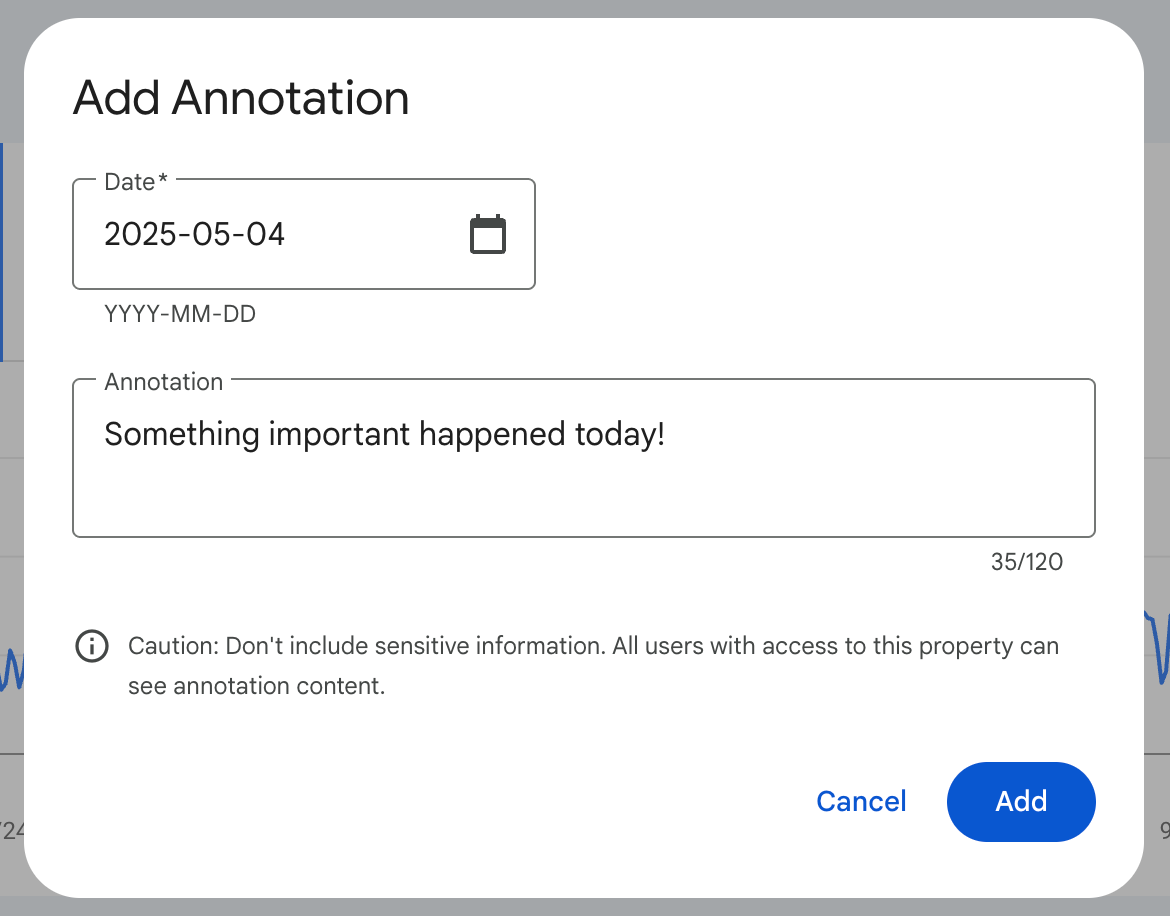
The tradeoff is between speed and accuracy. If you react to the November data too quickly, you might be optimizing for a holiday anomaly rather than a core algorithm shift. I suggest using Search Console to create custom annotations for November 24 and the December start date. This allows you to visually separate these events from seasonal traffic shifts in your reports.
New Channels for Ranking Feedback and UK Appeals
Google has introduced new documentation in Search Central regarding how it handles notice and feedback for ranking and policy changes. This is a move toward more transparency, though it comes with specific caveats. The same pattern also shows up in Google Documents Advance Notice, where the practical question is how the signal becomes visible.
Google now states it will provide notice for significant ranking changes, such as core updates, and actionable policy changes. For users in the UK, there is an additional layer of transparency to comply with the fair ranking requirements set by the Competition and Markets Authority (CMA). Starting December 17, UK site owners who have been manually removed from the index can pursue an appeal through the CMA process.
For those who want to provide feedback on updates, verified site owners can use the Submit Feedback button in Search Console. Google suggests using hashtags, like #NovemberCoreUpdate2026, to categorize the feedback. However, Google explicitly states this feedback does not trigger manual ranking adjustments for individual URLs.
The practical interpretation: Many SEOs view feedback tools as a way to "fix" a drop, but that is a misunderstanding of the mechanism. This is a telemetry tool for Google, not a support ticket for the site owner. The value here is not in the immediate fix, but in the documentation process.
If you are submitting feedback, do not just send a complaint. Include a snapshot of your Performance report, the specific URLs and queries that shifted, and the relevant hashtag. The decision to spend time on this should be based on whether you have a clear, data backed case of a "bug" versus a "ranking shift." If it is the latter, feedback is unlikely to move the needle.
Managing the Google Agent and Bot Defenses
A technical shift occurred on November 17 when Google released guidance on allowing "Google Agent" to bypass bot defenses. Google Agent is the identifier used by agents that navigate sites to perform actions on behalf of users.
To ensure these agents can function, Google explains that requests will carry the "Google Agent" User Agent header and originate from IP addresses listed in their user triggered agents.json file. Some requests in the Web Bot Auth experiment also include a digital signature. The goal is for these verified requests to bypass the challenges typically posed by CDNs, Web Application Firewalls (WAFs), and other bot detection services.
Common friction points include CAPTCHAs on search forms, rate limits on shared IPs, and blocks on specific actions like adding items to a cart or making a booking. Interestingly, Google has not yet specified exactly which products are utilizing this agent.
The practical interpretation: This highlights a growing tension between security and accessibility. Most site owners want to block bots to prevent scraping or DDoS attacks, but blocking Google Agent could potentially hinder how AI driven Google services interact with your site.
The critical decision here is the order of your firewall rules. If you have a "block all AI agents" rule at the top of your stack, you will block Google Agent regardless of its verification. You must ensure that the verified Google Agent rule sits above managed bot rules and general AI category blocks. you need to check that this access extends beyond the homepage to include API requests and checkout flows, as that is where these agents are most likely to operate.
The Decline of WordPress Market Share
Recent data from W3Techs shows a notable shift in the CMS landscape. As of late November, WordPress's share of the web dropped to 38.4%, down from 43.2% a year prior. That is a loss of nearly five percentage points in a single year. This connects with Branded API Data & CDN Advice when the same signal needs a clearer operating decision.
What is more interesting is where that share went. The percentage of sites running none of the CMSs tracked by W3Techs rose by 4.4 points, moving from 28.6% to 33.0%. This group includes sites built with custom code, proprietary frameworks, or smaller CMS platforms that fall under the radar of major surveys.
The practical interpretation: For years, the industry assumption has been that "most sites are WordPress." This allowed SEOs to rely on a mental shorthand, assuming that a site likely has a plugin like Yoast or RankMath handling the technical basics like canonicals, sitemaps, and robots meta tags.
With a third of the web now operating outside of tracked CMSs, that assumption is dangerous. When auditing a new site or pitching a client, you can no longer assume the technical foundation is being managed by a standard plugin. The tradeoff is a higher workload for the auditor, but the reward is avoiding the embarrassment of missing a critical technical error because you assumed a plugin was handling it. Every project must now start with a CMS verification step.
The Conflict Between AI Agents and Traditional SEO
There is currently a public contradiction within Salesforce regarding the future of search. On one hand, CEO Marc Benioff recently posted on X that users are moving away from searching and instead asking AI assistants for brand recommendations, concluding with "Goodbye SEO. Hello Palmata!" (referring to a Salesforce AI product).
On the other hand, a Salesforce guide published in September by Graham Hardt, a senior director of SEO, argues that SEO remains the foundation. The guide suggests that while relying solely on SEO creates a "blind spot," it is not going away. Instead, it frames SEO and AEO (Answer Engine Optimization) as two different visibility layers for the same audience.
The guide recommends a dual tracking approach, monitoring organic traffic and rankings alongside AI citations to ensure a brand is visible across both traditional search and AI driven answers.
The practical interpretation: This is a classic clash between the "visionary" executive level and the "operational" expert level. The CEO is looking at the shift in user behavior, while the SEO director is looking at the underlying data that feeds those AI assistants.
The reality is that AI agents do not invent information; they synthesize it from the web. If the SEO foundation is missing, the AI agent has nothing to synthesize. The decision for a business owner is not whether to choose SEO or AEO, but how to balance the two. If you ignore SEO, you lose the source material that allows you to be cited by AI. The most prudent path is to treat organic search as the data layer and AEO as the distribution layer.
Reevaluating Assumptions for the New Year
Looking at these updates as a whole, there is a recurring theme: the erosion of long held assumptions. We have assumed that core updates provide a clean window for analysis, but seasonal noise now complicates that. We have assumed that bot defenses are purely for security, but they can now block Google's own agents. We have assumed WordPress is the default state of the web, but its dominance is slipping.
Even the debate at Salesforce shows that we can no longer assume that "ranking in Google" is the only metric that matters, yet we cannot assume that AI replaces the need for a structured, optimized web presence.
As we move toward the end of the year, the most useful exercise is to audit these assumptions. Check your firewall rules for Google Agent, verify the actual CMS of your portfolio sites, and set your Search Console annotations to account for the overlap between the November and December updates. The goal is to move from a state of reaction to a state of informed observation.
Comments
Comments are reviewed before they are published. Links are not allowed inside comments.