Measuring AEO: a 3-layer Attribution Framework
/ 6 min read

Summary
Earlier this year, Google A released the AI Assistant channel in your GA4 reports, which finally provided an easy way to monitor. The practical question is what this changes for SEO, content quality, and AI search visibility.
Attributing success in SEO has always been a bit of a guessing game. We dig through data and run experiments, but we rarely hit 100% accuracy. When you add AI search into the mix, the complexity doesn't just increase, it jumps to a whole new level because the way people interact with information has fundamentally shifted. The same pattern also shows up in We Earned 1, where the practical question is how the signal becomes visible.
For those of us working with B2B SaaS brands, the question from leadership is inevitable: How do we know the investment in Answer Engine Optimization (AEO) is actually paying off? I don't view AEO as a standalone service or a separate package. To me, SEO is the foundation of the house, and AEO is the roof. You need both for the structure to work, but measuring the "roof" requires a different lens than measuring the "foundation."
The GA4 baseline: Why your data is likely the floor
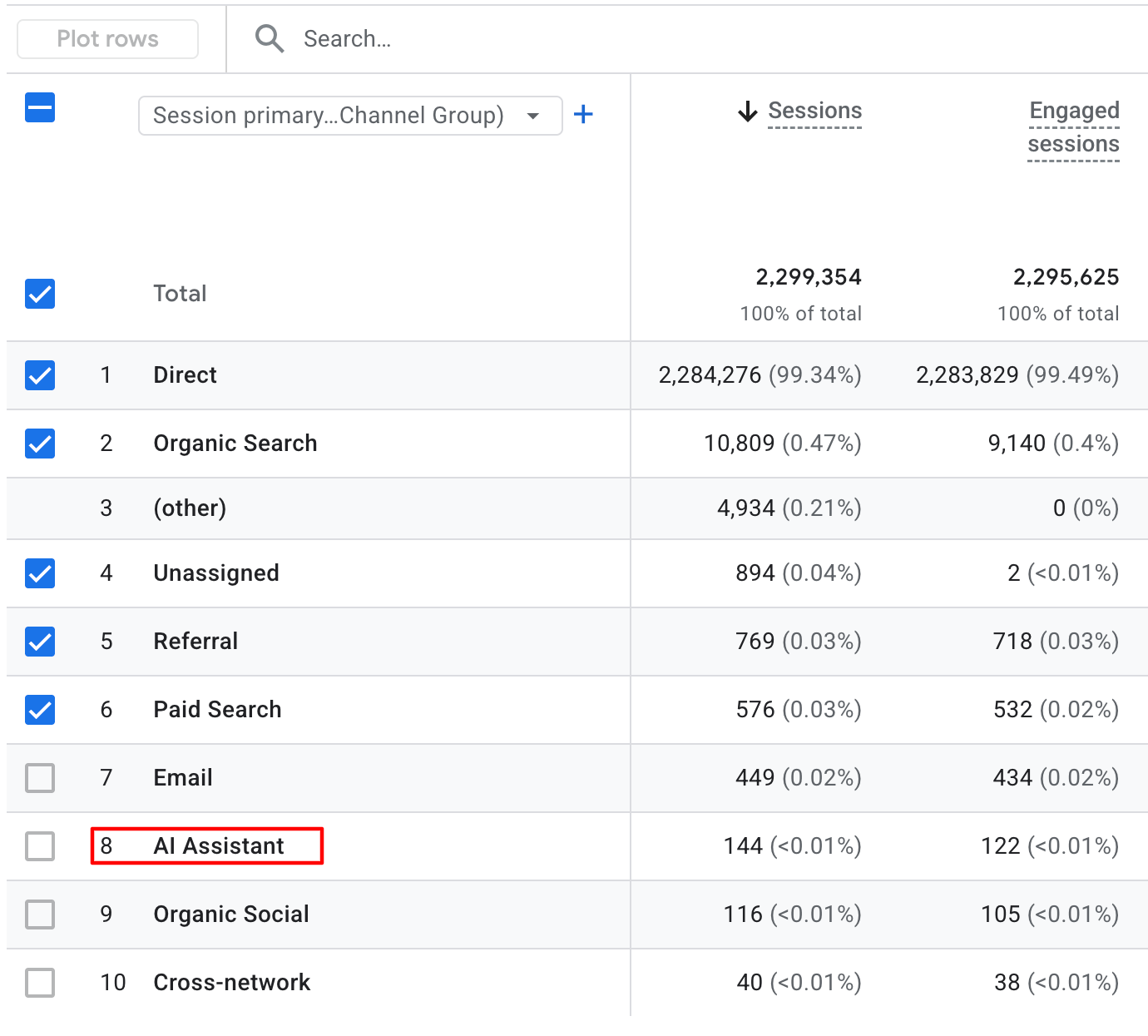
Google recently introduced the AI Assistant channel in GA4, which is a helpful start. It gives us a dedicated place to monitor traffic coming from AI sources. However, if you are using these numbers as your primary source of truth, you are almost certainly undercounting your impact.
The data in GA4 represents the floor, not the actual volume. There are a few structural reasons why LLM traffic vanishes before it hits your dashboard. First, many users get the answer they need directly within the AI interface and never click through to a website. Second, referrer headers are frequently stripped, especially when users are on mobile or desktop apps, causing that traffic to be categorized as "direct." Finally, the cross device journey is a major leak; a user might start a query on their phone and finish it on a laptop, breaking the attribution chain.
Essentially, a huge portion of the AI buyer journey happens in the "dark funnel." If you rely solely on these metrics, you're ignoring the invisible influence the AI is having on the user before they ever land on your page.
Expert Interpretation: The tradeoff here is between precision and reality. While GA4 provides "precise" numbers, those numbers are an incomplete reality. The decision you need to make is whether to report these as "total AI traffic" or "minimum confirmed AI traffic." I recommend the latter to avoid overpromising on data that is fundamentally leaky.
A three layer framework for AEO attribution
Because AEO is a rapidly evolving space, we can't rely on a single metric. I've developed a three layer framework to help connect the dots and provide a more honest picture of how AI search is impacting the business. This connects with Measuring AI Search Performance when the same signal needs a clearer operating decision. A useful companion note is 5 layer Framework for Measuring GEO Performance, because it looks at a nearby part of the same system.
1. Direct attribution
This is the most basic layer. It consists of the reported figures you can actually see in your tools. This includes the LLM traffic from GA4 and any leads that carry an AI referrer into your CRM, such as HubSpot or Salesforce. Some teams have created specific "AI search" channels in their CRM to capture this.

It is important to accept that these numbers are likely a small fraction of the actual leads generated. However, from a business perspective, a small number of leads tied to closed won revenue is far more valuable than a massive number of "impressions" that lead nowhere.
To capture more of this, I suggest adding a "How did you hear about us?" dropdown on your demo and contact forms with "LLMs" as an explicit option. While asking sales reps to manually track this during calls is more tedious, it often captures the leads that the software misses.
Expert Interpretation: This layer is about ROI calculation. While it's the least complete data set, it's the only one where you can confidently assign a dollar value. The risk is under investing because the direct numbers look small, but the reward is having a "hard" baseline that the finance team trusts.
2. Influenced attribution
This is where the narrative for the boardroom becomes more compelling. Influenced attribution tracks the indirect ripples caused by your AEO efforts. Since users often interact with an AI and then move to another channel, you have to look for growth in "unattributed" areas.
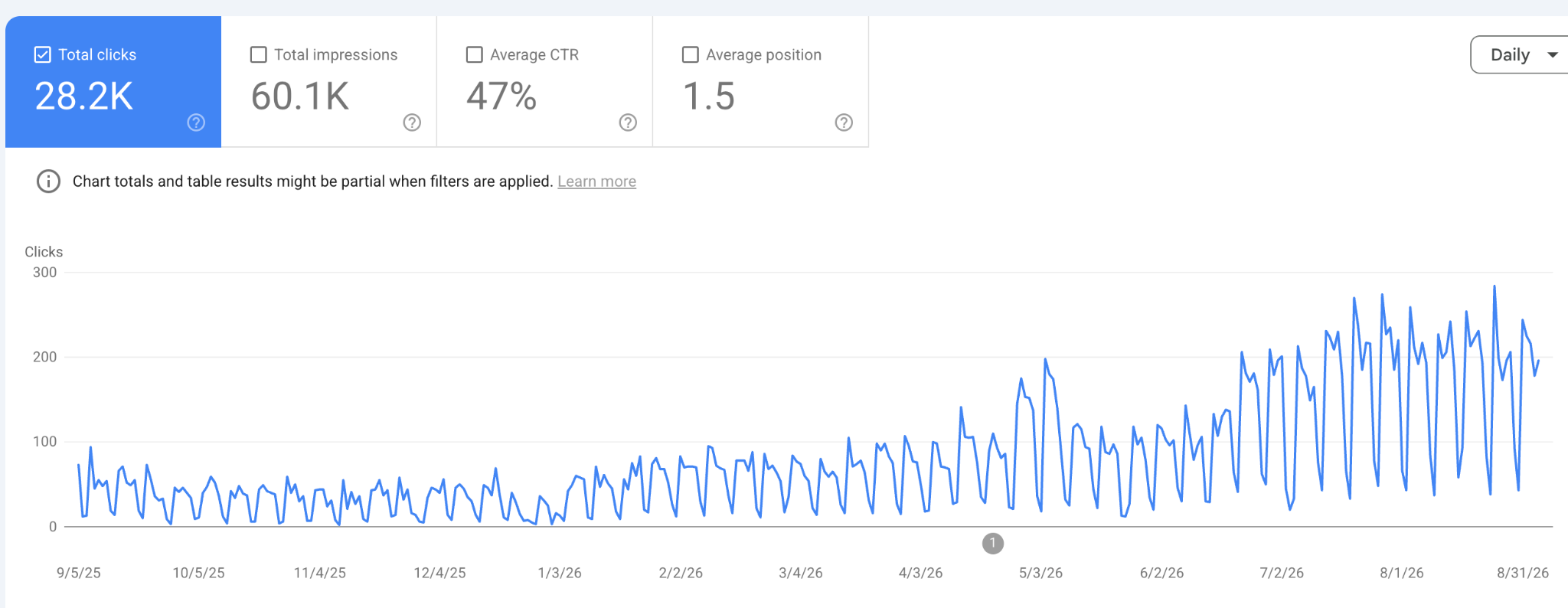
One key indicator is a rise in direct traffic and demos. If people are seeing your brand in an LLM response, they may copy and paste your URL directly into their browser rather than clicking a link. Similarly, you should look for a natural increase in branded organic traffic in Google Search Console. A user might ask a bottom of funnel question in an AI tool, see your brand name, and then search for you specifically on Google a few days later.
Beyond traffic, look at the quality of the sales pipeline. When AEO is working, sales cycles often shorten. This happens because the AI has already handled the basic objections, pricing questions, and integration queries during the research phase. By the time the lead reaches your team, they are further along in the decision process, which typically improves win rates against competitors.
Expert Interpretation: This layer requires a shift from "tracking" to "correlation." You aren't proving a 1:1 link, but you are showing a trend. The decision here is to monitor the delta between your branded search growth and your AEO visibility. If both are climbing together, you have a strong case for influence.
3. Future moat
The final layer is strategic rather than tactical. It's about building a foundation for where AI search will be in two years. This involves tracking KPIs like AI share of voice, citation rates, and sentiment analysis using specialized tools.
The goal here is twofold: ensuring your brand is mentioned in the right conversations and ensuring the AI is saying the right things. This isn't about immediate leads, but about market positioning. The critical question for any brand is whether they can afford to be absent from these AI driven research conversations three years from now.
Expert Interpretation: This is a long term hedge. The tradeoff is spending resources on "visibility" metrics that don't immediately drive revenue. However, the risk of ignoring this is "digital erasure," where your brand simply ceases to exist in the eyes of the AI assistant. This is a strategic insurance policy.
Synthesizing the impact of AEO
Putting these three layers into a single dashboard is relatively simple, but interpreting the data takes patience. I recommend tracking these metrics monthly and treating the entire process as an experiment. You won't see the full story in thirty days.
Usually, it takes six months or more of combined data to see the patterns emerge. When you look at the direct leads, the rise in branded search, and the share of voice together, a clearer story begins to form. This approach only works, however, if you are treating SEO and AEO as a unified strategy rather than two separate projects. One provides the data and authority that the other uses to win the answer.
The GA4 baseline: What you're seeing is the floor
Earlier this year, Google A released the AI Assistant channel in your GA4 reports, which finally provided an easy way to monitor AI generated traffic. If you're relying on GA4 to show the real number of people visiting your website from. The practical read is that brand signals need to be consistent enough for both people and AI systems to form a stable view of the company, its expertise, and its trust signals.
The reporting question is whether this signal changes a decision. If it only creates another number in a dashboard, it adds noise. If it helps separate profile activity, website visits, calls, bookings, and direction requests, it can make local performance easier to understand.
Comments
Comments are reviewed before they are published. Links are not allowed inside comments.