AI Shopping Adoption Is Rising, but Trust Still Caps Action
/ 5 min read

Summary
A practical view on AI Shopping Adoption Is Rising, but Trust Still Caps Action, focused on the signal to inspect, the risk to avoid, and the decision it should change.
Introduction
Editor's note: This research was conducted by Exploding Topics, the trend discovery platform owned by Semrush, and is republished here with permission. Data is drawn from a proprietary survey of 1,009 US consumers. Full methodology appears at the end of this article. More than three in four consumers have used AI to help with shopping or purchasing decisions in the last six months, according to new research from Exploding. This connects with ChatGPT Mentions Start With Better Topic Evidence when the same signal needs a clearer operating decision.
Fast facts
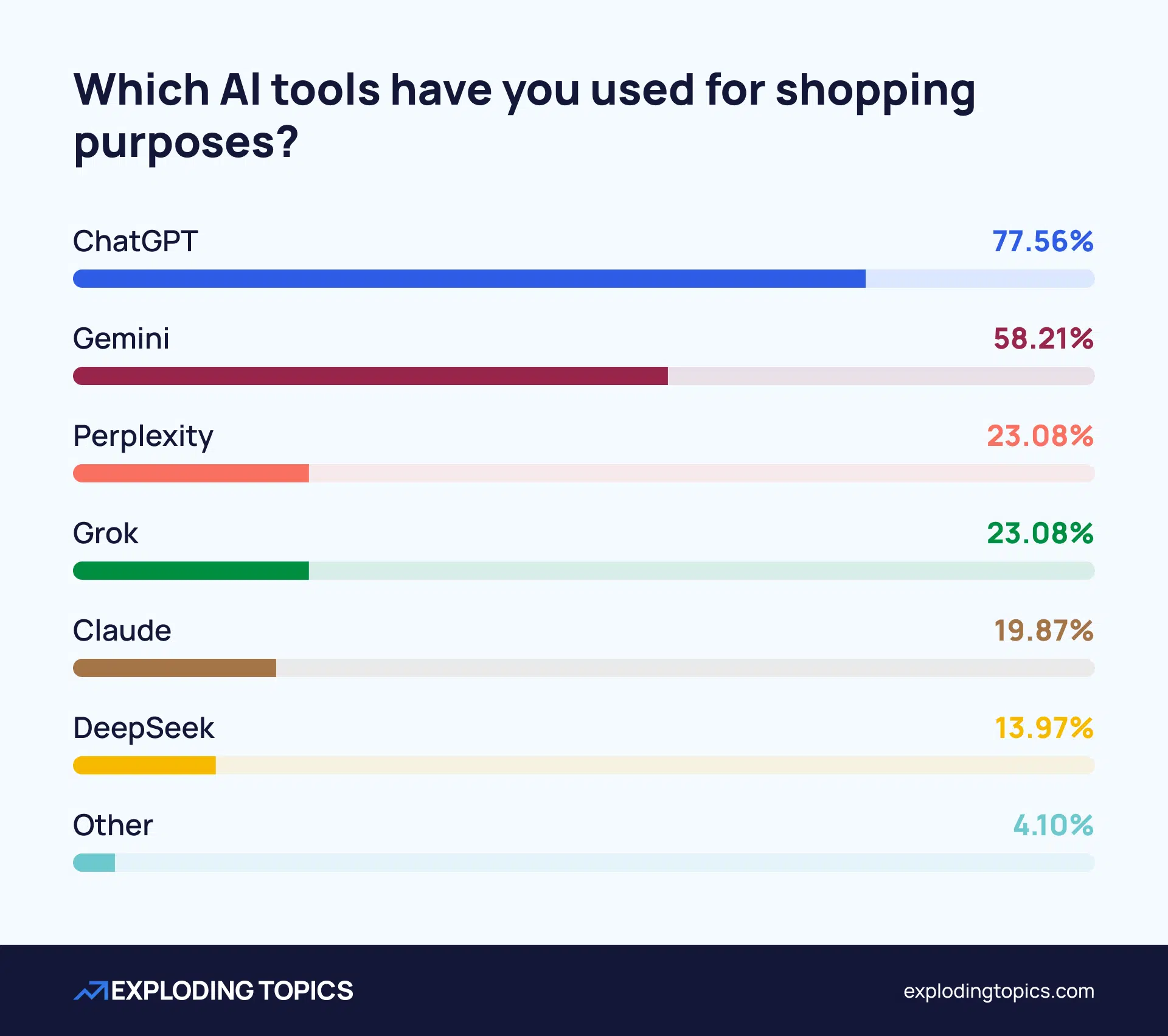
77.6% of consumers have used AI to shop in the past six months, with 43.21% using it weekly or more Most shoppers are using AI for product research (68.5%) and finding the best price (55.19%) Among those who use AI to shop, ChatGPT is the most popular tool (77.56%), followed by Google Gemini (58.21%) 68.07% of consumers who have tried using AI to help with their shopping have increased their usage in the past six months AI.
Part 1: The AI Commerce Surge
This section introduces a point that needs to be interpreted in context before it becomes useful.
AI is an increasingly ubiquitous shopping tool
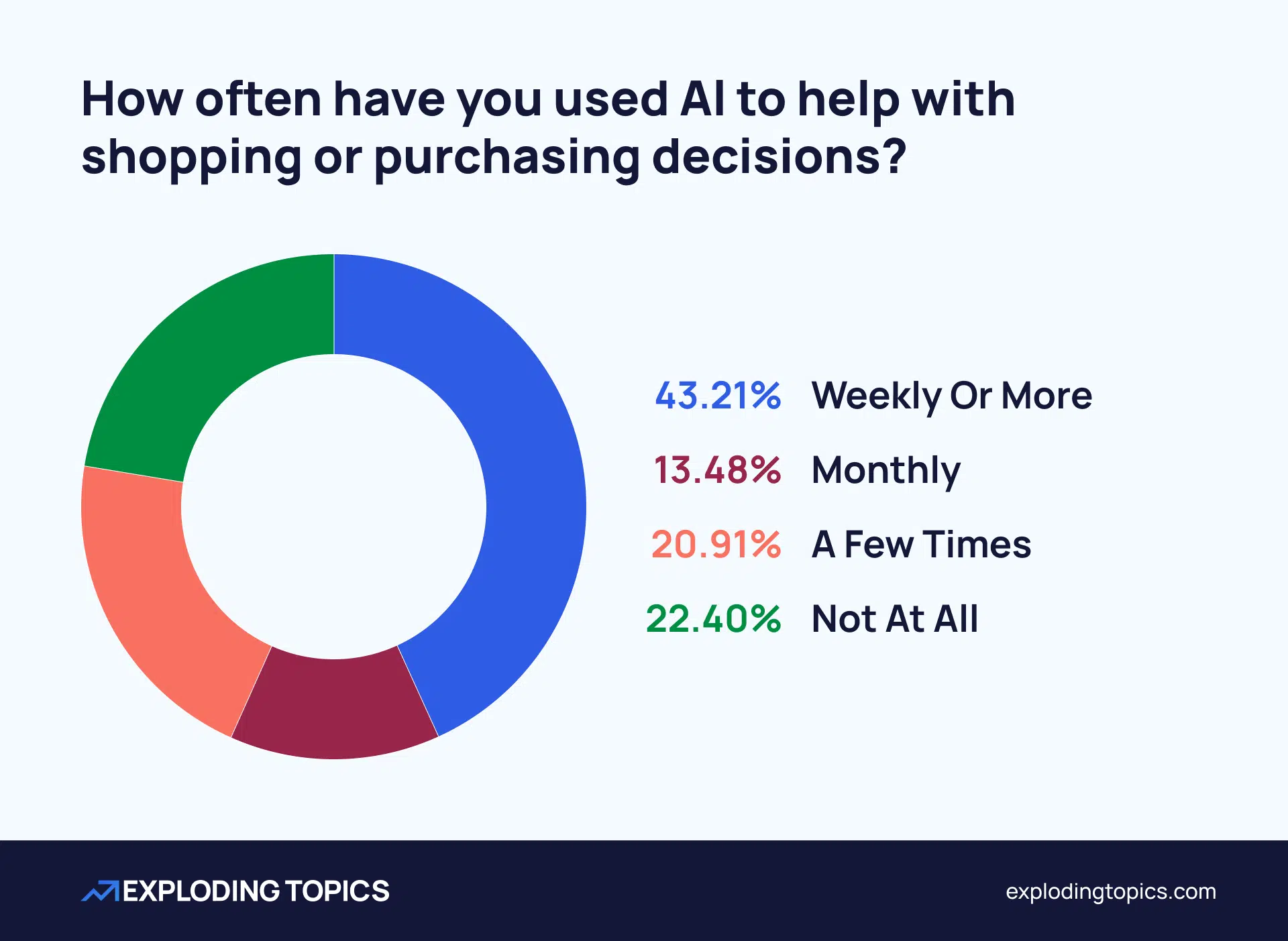
To get a baseline, we first asked respondents how they would describe their use of AI generally. This yielded a striking response. Of the 1,000+ people we surveyed, almost half reported using AI frequently. But more eye catchingly, only 9.81% had never used an AI tool. High adoption was a recurring theme when we asked about AI commerce specifically. 43.21% of consumers are using AI to help with shopping at least once a week,.
How are consumers using AI to shop?
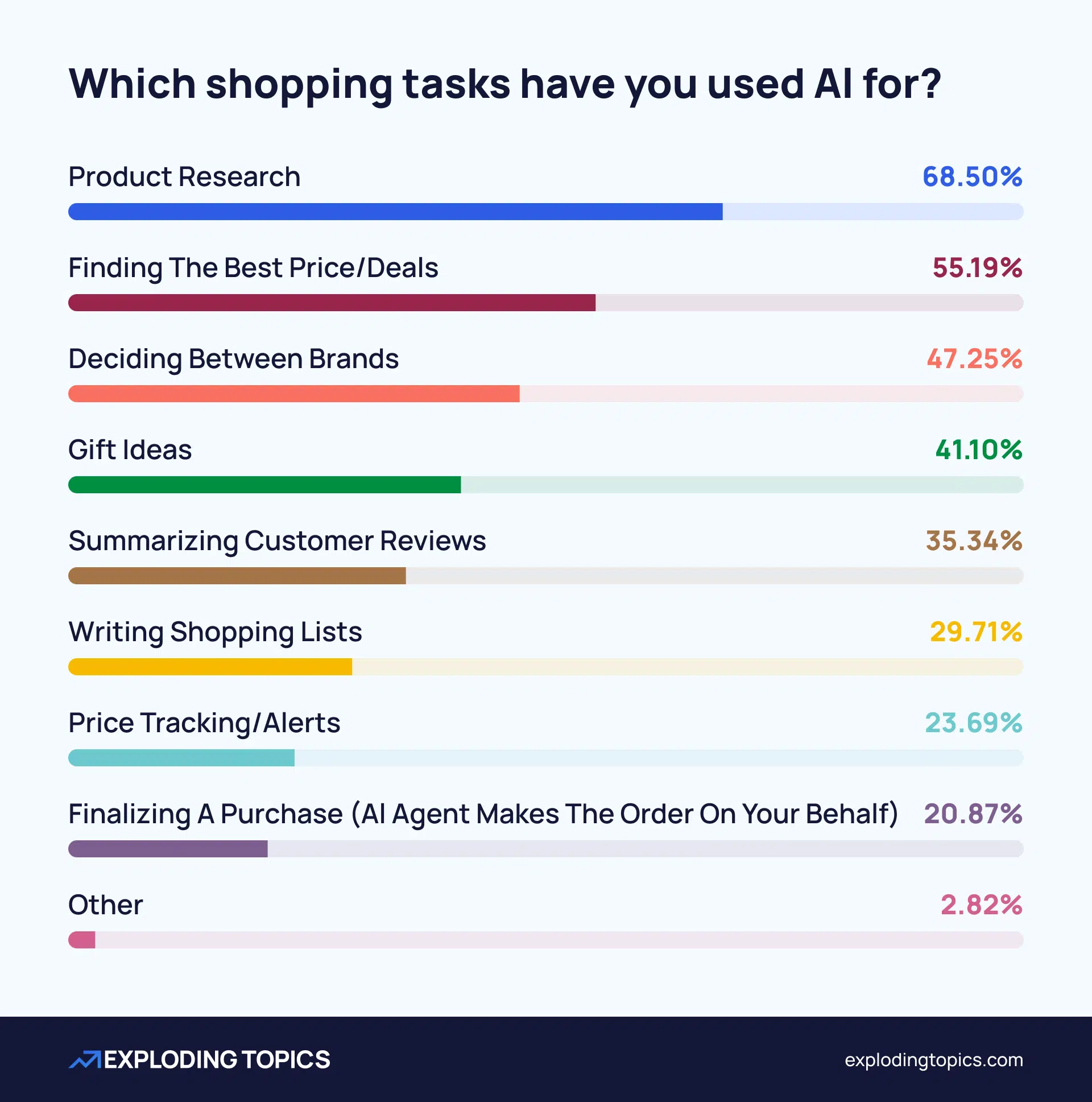
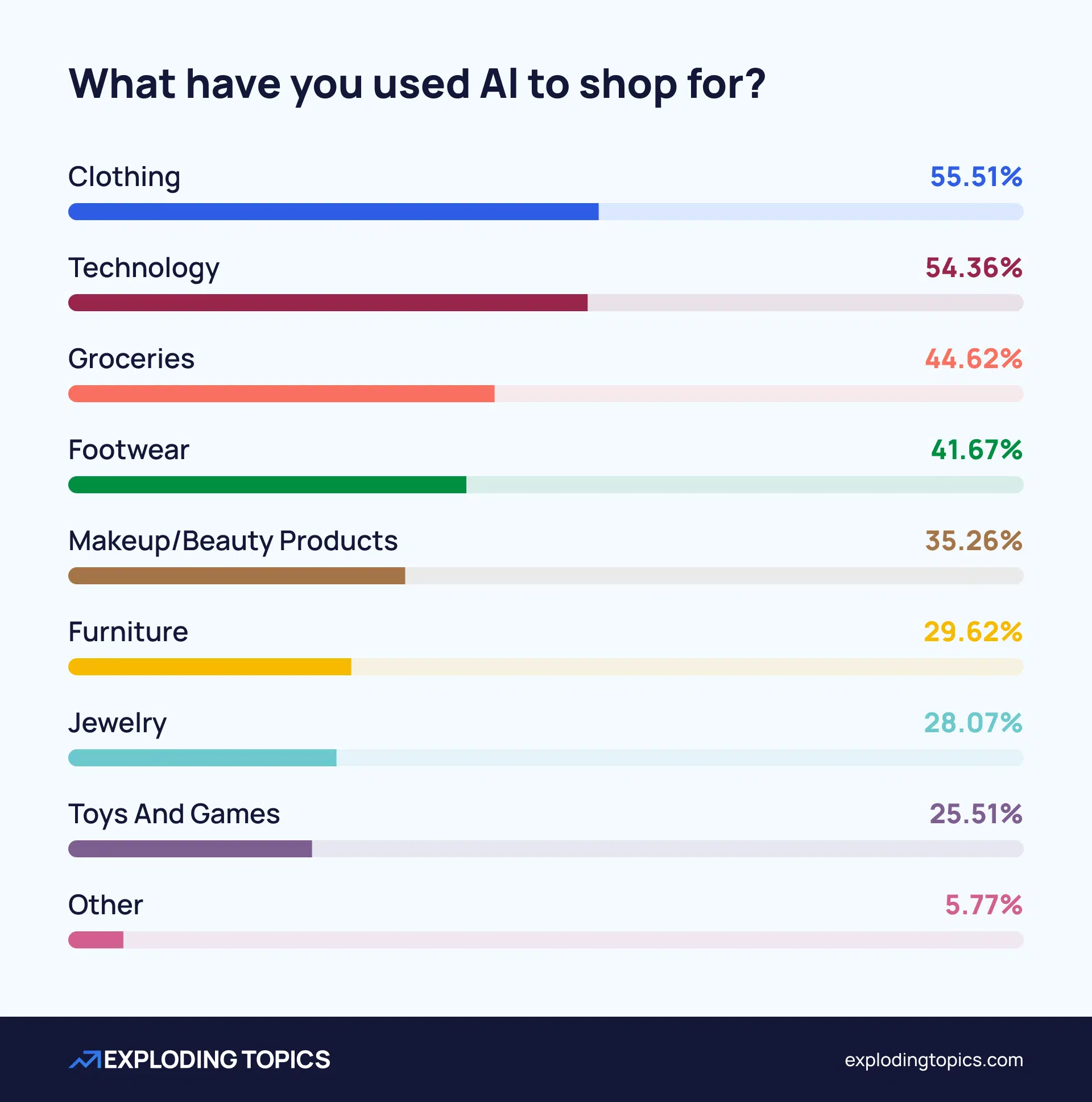
"AI commerce" is a broad term that can capture a wide range of consumer activities. We wanted to find out exactly how people are incorporating AI into their purchases. Product research emerged as the leading use case, adopted by more than two thirds (68.5%) of shoppers. More than half (55.19%) also reported using AI for finding the best price/deals. Deciding between brands, getting gift ideas, and summarizing customer. The same pattern also shows up in AI Search Cannot Fix Weak Brand Positioning, where the practical question is how the signal becomes visible.
The AI shopping tools of choice
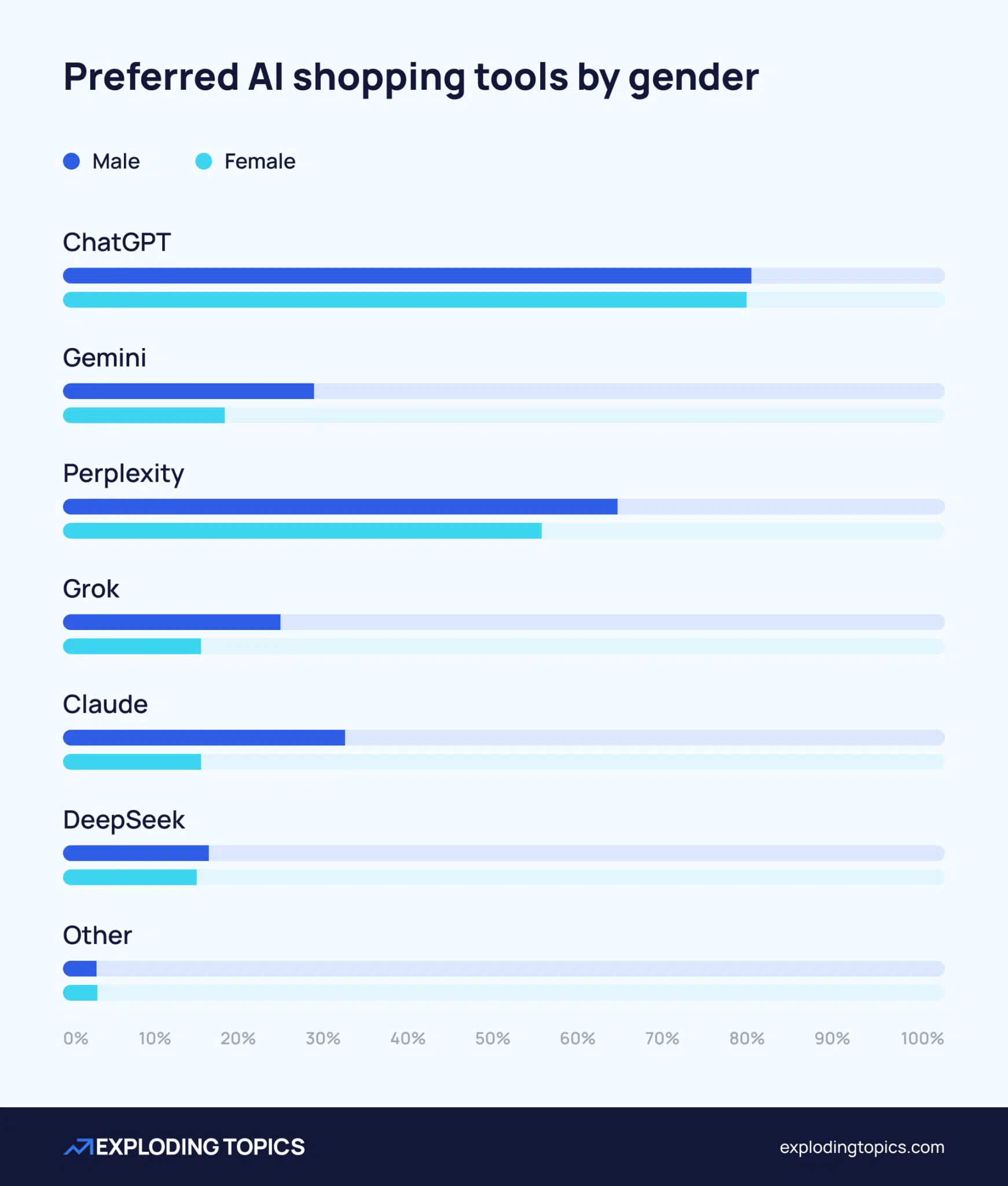
ChatGPT still enjoys the largest market share across most consumer AI functions, and shopping is no different. 77.56% of shoppers use ChatGPT when they want AI assistance. The prevalence of Gemini is perhaps more surprising. 58.21% of shoppers reported using Google's AI, well over twice as many as the next most popular tool. Of course, Google has embedded Gemini in AI Overviews and AI Mode. Its search engine has long been the.
Evolving AI shopping habits
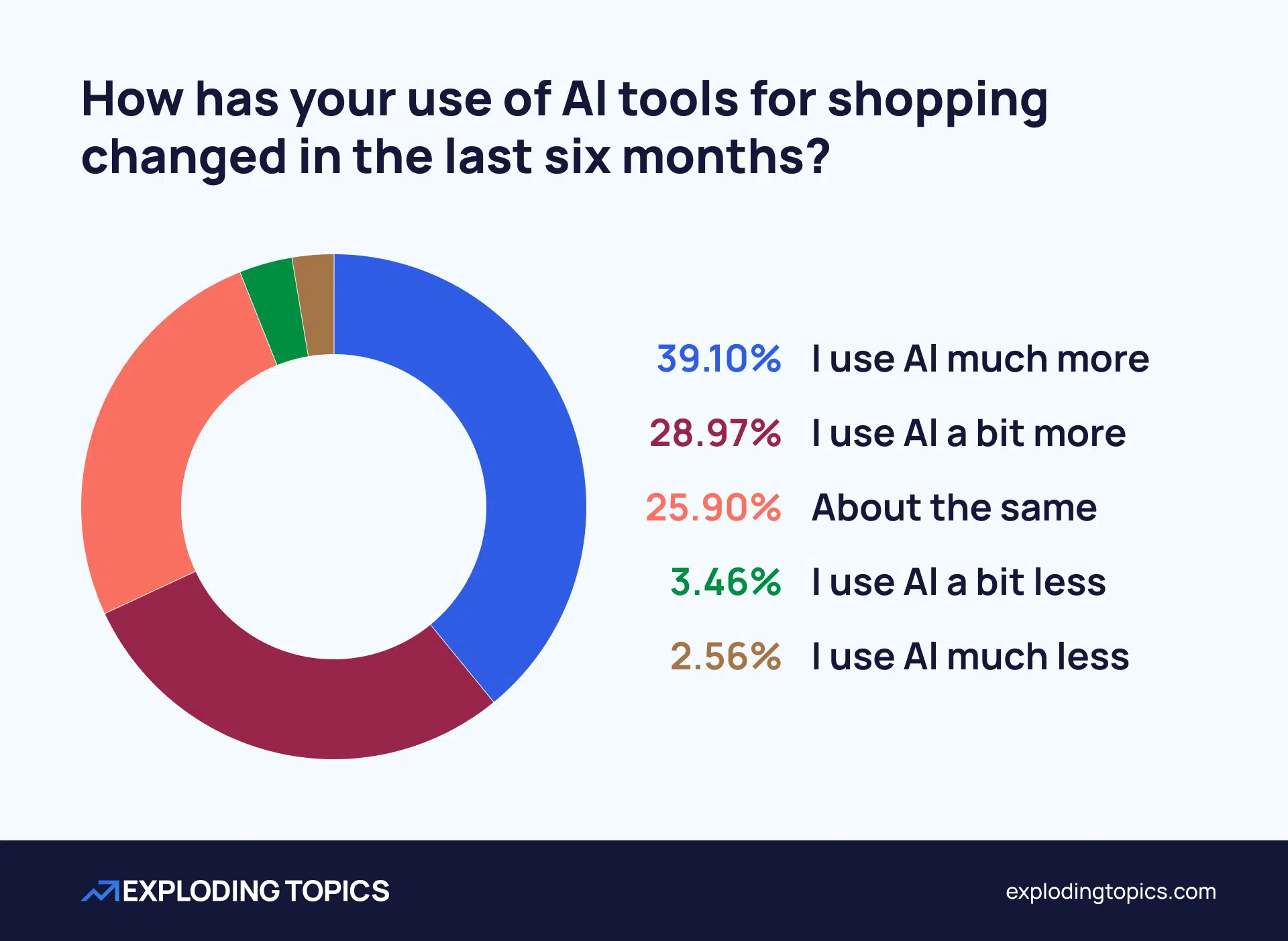
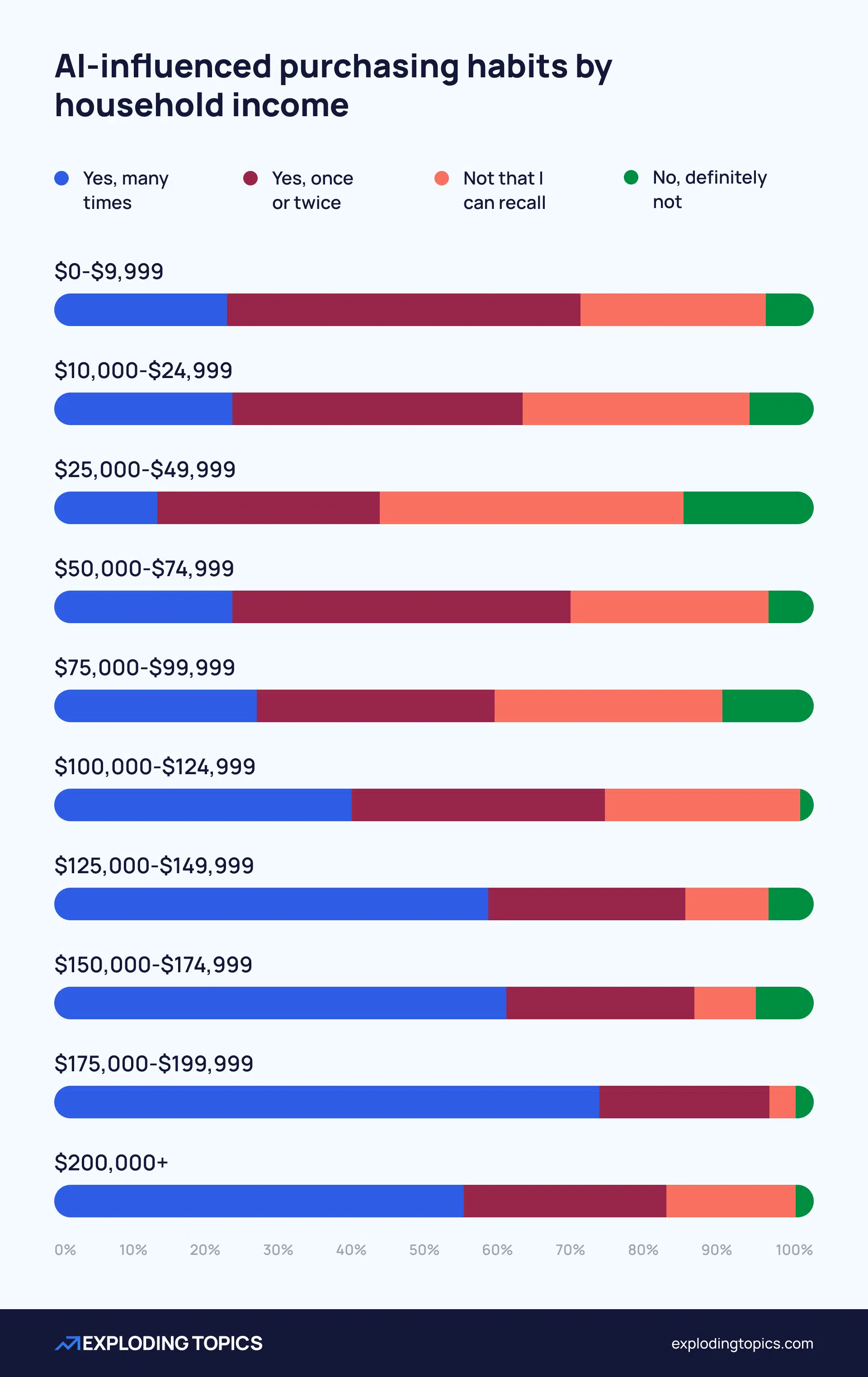
It is remarkable how quickly AI has embedded itself as a standard shopping companion. Among those who are now using the technology, 39.1% say they use AI for shopping "much more" than they did six months ago. A further 28.97% of consumers are using AI tools for shopping "a bit more" in the last half year. Only 6.02% have decreased their usage. Middle Atlantic residents stand out as the keenest adopters. Almost half (49.04%).
The typical AI purchase pipeline
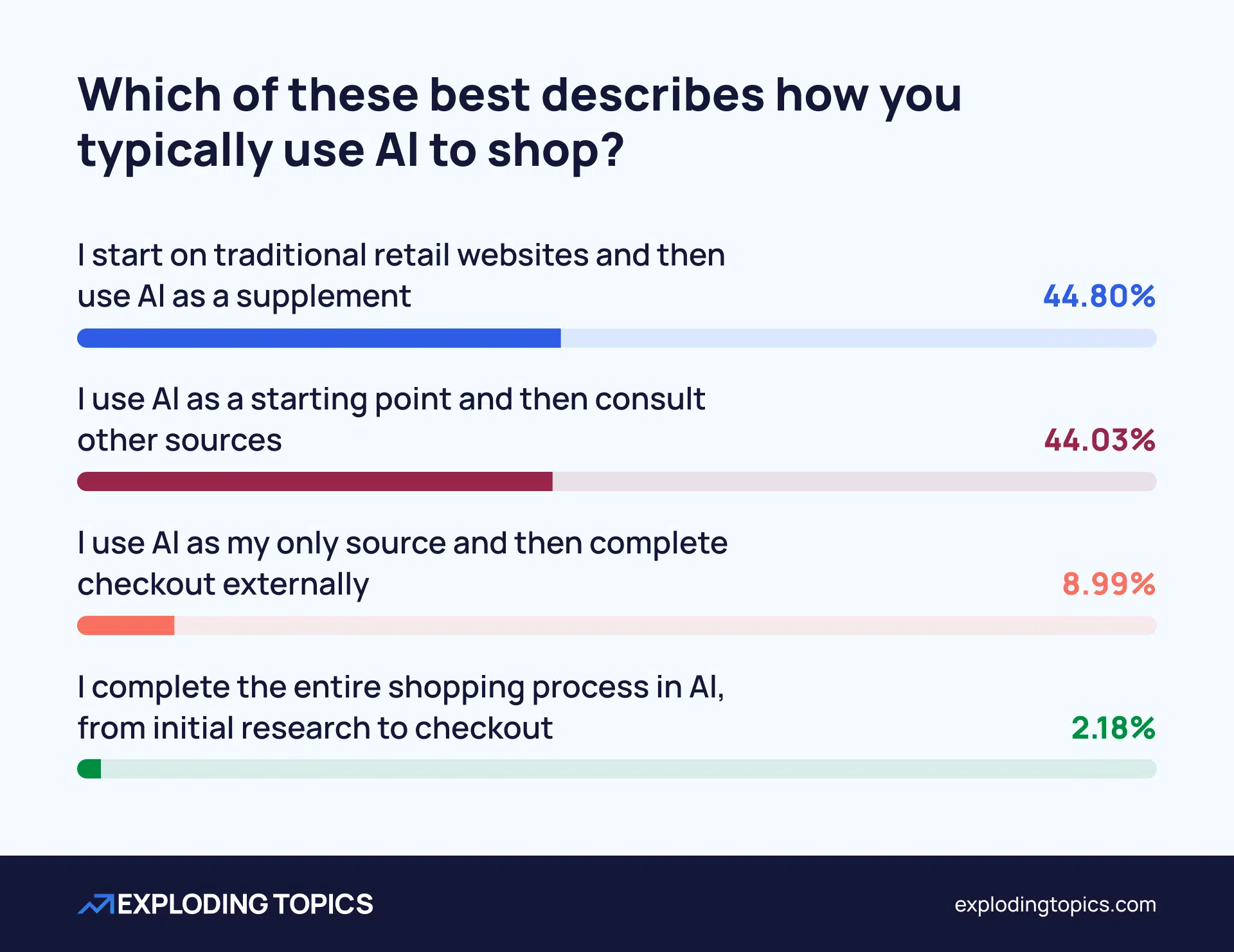
So most people are using AI commerce tools, and uptake has only gotten higher in the last six months. But interestingly, there is no clear consensus about how to use AI for shopping. We know that product research and price comparison is popular. But that doesn't tell us too much about what a typical AI assisted purchasing journey actually looks like. I use AI as a starting point and then consult other sources I start on.
Part 2: The AI commerce red line
This section introduces a point that needs to be interpreted in context before it becomes useful.
Instant Checkout: Don't know it, don't like it
Regardless of which stage in the shopping process users introduce artificial intelligence, the final step is nearly always external checkout. Given that consumers are clearly keen on using AI as part of the commerce journey, tools that eliminate this point of friction make superficial sense. That was the idea behind Instant Checkout from ChatGPT; you can do all of your research within the app, and then complete your purchase.
Distrust of AI companies with payment data
One of the biggest hurdles when it comes to further integrating AI into commerce is that most people don't feel comfortable trusting chatbots with their card details in order to make direct purchases easier in future. In total, 51.45% of consumers are at least somewhat uncomfortable at the idea of AI tools storing their card details. Only around 1 in 4 are "very comfortable." As well as being the most popular response.
Hard spending cap for autonomous AI purchases
Given that some degree of skepticism cuts across multiple demographics, it isn't too surprising to learn that consumers remain reluctant to empower AI to spend vast sums autonomously. However, the extent of the reluctance is eye catching: the mode amount a consumer would authorize AI to spend autonomously is $0. Specifically, we asked how much consumers would trust AI to spend in the scenario where they were instructing an.
Agentic commerce is here to stay
The tension at the heart of these results is that despite this reluctance to sanction AI spend, there is widespread belief that AI's role in commerce will continue to get bigger. More than half of people (55.83%) think AI will play a bigger role in how they shop in five years' time. Only 12.37% believe it will play a smaller role. Even among non users, almost a third (32.44% ) predict that AI will play an at least somewhat. A useful companion note is Visibility Now Starts Before the Search Result, because it looks at a nearby part of the same system.
Methodology
This survey was completed by 1,009 respondents in total. After the general questions about frequency of AI usage and AI shopping usage, non users were skipped for the remainder of Part 1, before being reintroduced for Part 2 (where the opinions of non users offered valuable insights). All respondents were from the US, spanning all regions (there were no respondents from the US Territories). 56.03% of respondents were female,.
Comments
Comments are reviewed before they are published. Links are not allowed inside comments.