AI Search Cannot Fix Weak Brand Positioning
/ 4 min read

Summary
A practical view on AI Search Cannot Fix Weak Brand Positioning, focused on the signal to inspect, the risk to avoid, and the decision it should change.
Introduction
This article translates the framework into practitioner register. The full theoretical model, including the formal mechanics, the testable predictions, and the academic engagement with current AI reasoning literature, is developed in the academic working paper The Framing Gap: Strategic Claim Bridging and the Limits of Generative AI Interpretation in Brand Representation (Barnard, 2026, Zenodo: 10.5281/zenodo.19857447 ). A useful companion note is AI Shopping Adoption Is Rising, because it looks at a nearby part of the same system.
Why AI can't make the leap your brand needs
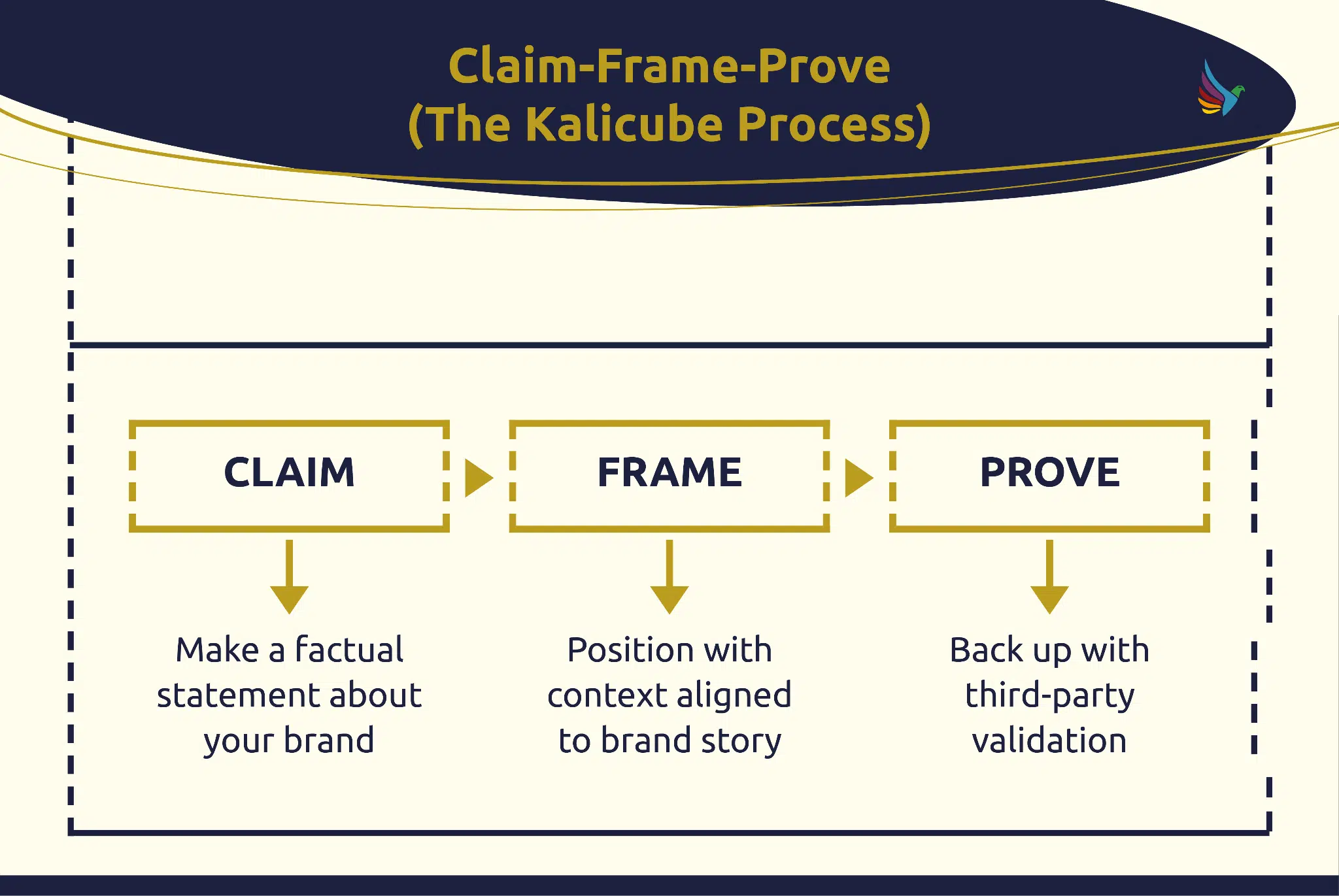
CFP runs claim by claim, fact by fact. The brand's full picture is built from many CFP cycles compounding: each claim framed and proven becomes a fact in the corpus, and the cumulative weight of those facts is what positions the brand to dominate. AI can join known facts, but it can't leap to a new one that benefits your brand. Given Facts A and B, AI can derive Conclusion C that follows logically. That's standard inference,.
AI won't choose what's best for your brand
AI doesn't choose the J that's good for your brand. You do. That choice, and the bridge that proves it, is the work AI has no commercial stake in, and a future (more capable) AI without your stake just produces a more sophisticated version of the same problem. Whether AI can be creative is contested ground. The narrower claim holds regardless: even when AI produces a novel looking output, it has no commercial intent guiding.
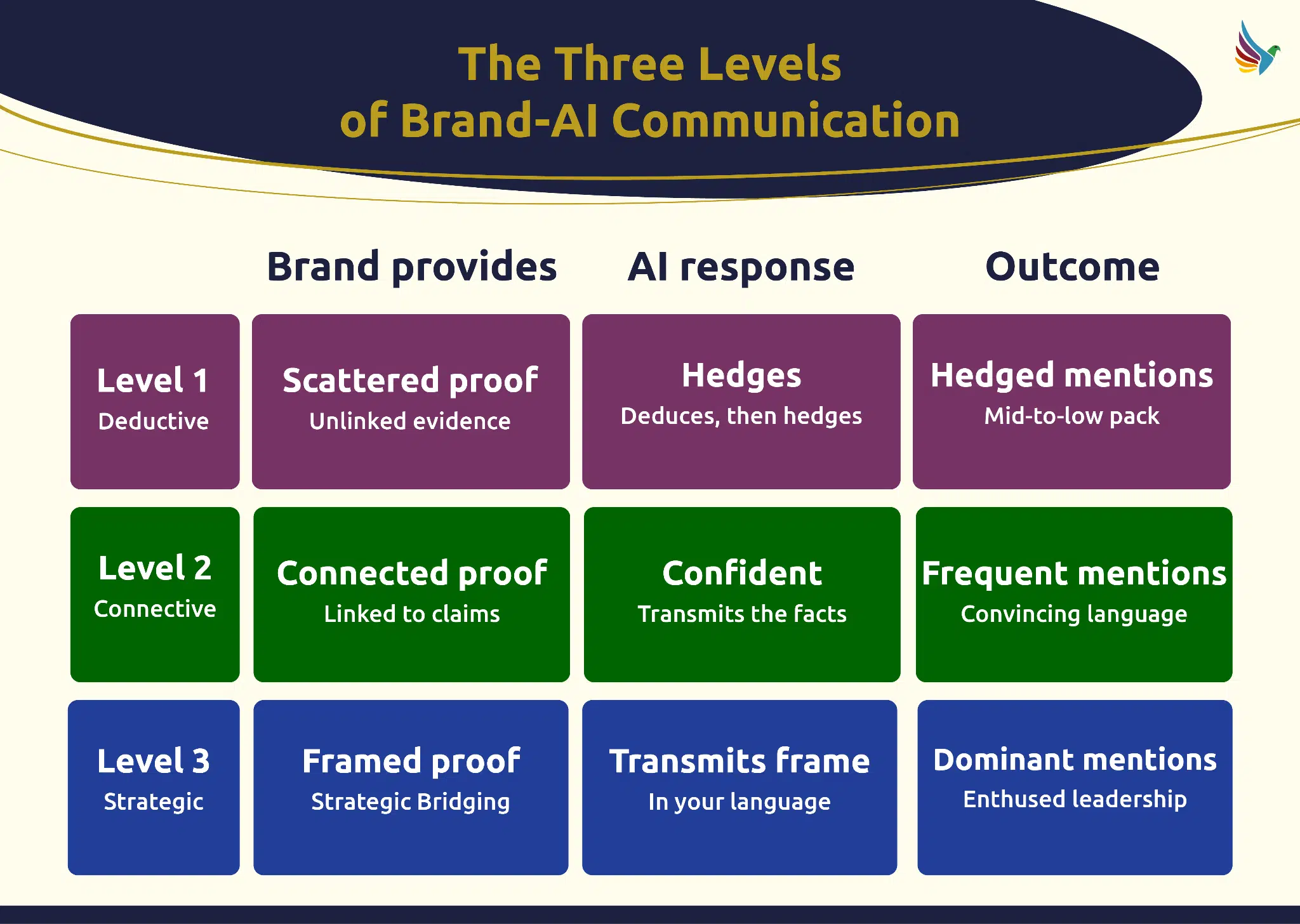
Level 1: Scattered proof of claims
Proof exists, but there's nothing linking it to the claim. This is where most brands sit, and it leaves the engine to perform inference over whatever it can find. The brand publishes Claim A on its website. Proof Z exists somewhere else: a conference program, an industry database, a Wikipedia citation, and a trade publication from four years ago. The brand assumes the engine will connect the two. To connect them, the engine.
Level 2: Connected proof of claims
Here, the brand explicitly connects claim to proof through a combination of copy, hyperlinks, and schema. It also closes the inference gap by providing what the engine would otherwise have to figure out. The brand publishes Claim A and explicitly connects it to Proof Z, with the logical thread stated in copy, anchored by hyperlinks to the proof, and encoded in schema: a fact with a significant number of supporting pieces of.
Level 3: Framed proof of claims
This is where framing enters, and where strategic claim bridging earns its name. For each claim that matters, the brand publishes Claim A, connects the proof, and then does the thing the engine can't do (and the audience is unlikely to do either, for that matter). It reaches the non obvious J that benefits the brand, and constructs the bridge from A and B to J in language the engine can transmit. Not merely "we are the leader.
Most brands are only halfway to framed proof of claims
The brands that think they're at framed proof of claims are usually at framed proof of claims for humans, and scattered proof of claims for machines. Marketing and narrative work supplies frames to humans all the time, and plenty of brands do it well. What almost no brand does is supply frames the machine can use, and the gap between the two is where framed proof of claims is most powerful. Some brands operate below even that. The same pattern also shows up in Visibility Now Starts Before the Search Result, where the practical question is how the signal becomes visible.
The better AI gets, the more framing matters
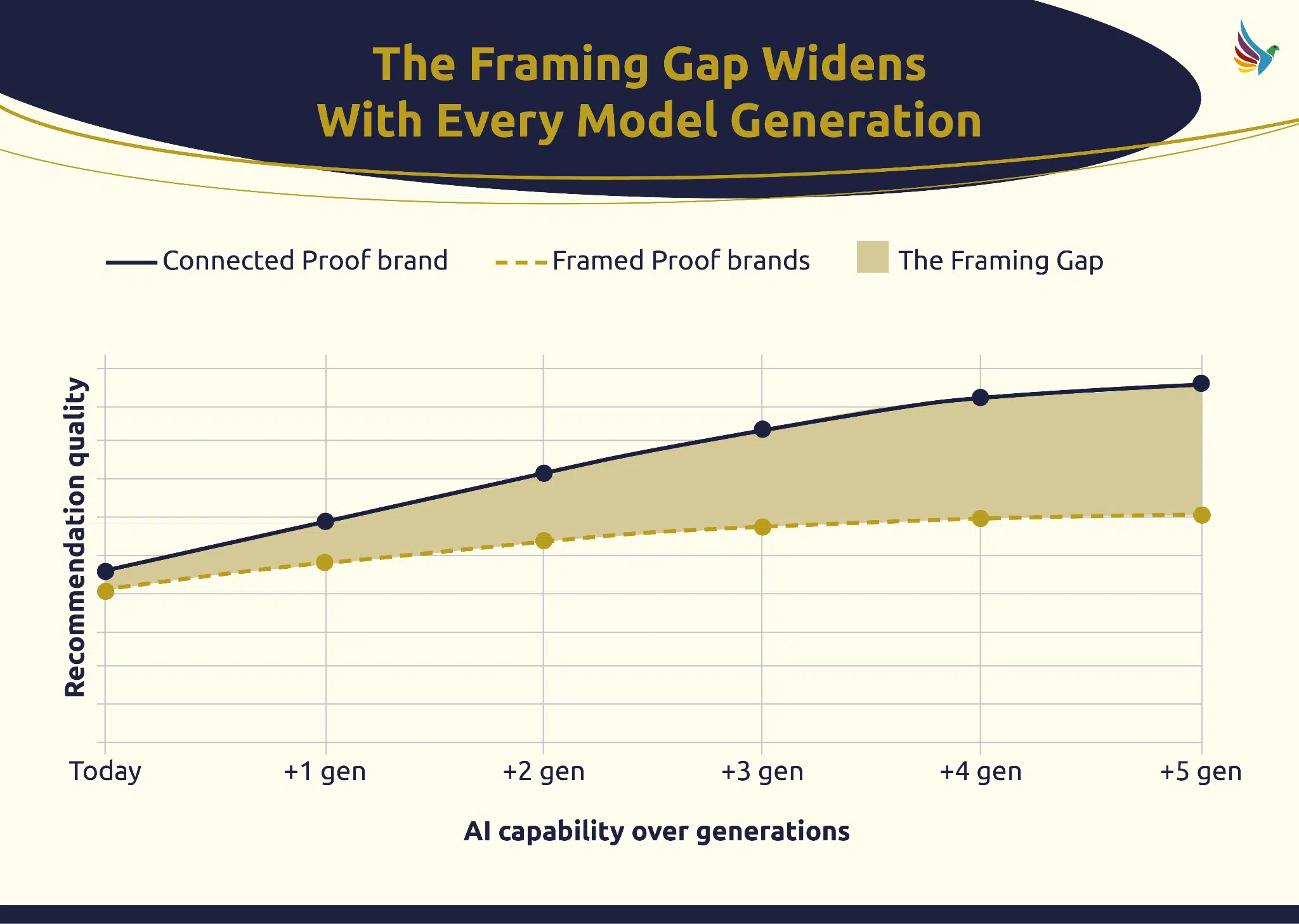
Smarter AI rewards better framing rather than replacing it, and the reason is the same selection pressure SEO practitioners have been operating under since the early 2000s. There's a seductive and entirely wrong conclusion to draw from rapid improvement in AI reasoning: that engines will eventually figure out how to frame brands correctly without help. The opposite is true. The engine rewards the brand whose assets reduce its.
The bridge stays human
The bridge is human territory, and it stays human because it requires commercial intent specific to the brand that the engine doesn't have. Everything the machine does well will get better: retrieval, connection, pattern extraction, and synthesis. None of that helps the brand whose evidence the machine can see but can't bridge meaningfully to a beneficial conclusion. Whether AI confirms your brand, overlooks it, or champions. This connects with ChatGPT Mentions Start With Better Topic Evidence when the same signal needs a clearer operating decision.
Comments
Comments are reviewed before they are published. Links are not allowed inside comments.