SEO/GEO Audits with AI Fail Without These 3 Essentials
/ 8 min read

Summary
Let's take a simple example: generating SEO recommendations for an existing blog. This should be an easy task for an advanced. The practical question is what this changes for SEO, content quality, and AI search visibility.
There is a seductive quality to modern AI. When you ask a high end model to audit a webpage or a content strategy, it doesn't just give you a few bullet points; it delivers a polished, professional looking report. The formatting is clean, the tone is authoritative, and the length is impressive. For many, this feels like a superpower, the ability to condense hours of manual analysis into seconds. A useful companion note is X Robots Tag, because it looks at a nearby part of the same system.
The problem is that "impressive" does not equal "accurate." In my work, I frequently encounter what I call "naive audits." These are reports generated by AI that look perfect on the surface but collapse the moment you ask a basic question about the underlying data. The danger here isn't just a wasted prompt; it's the risk of implementing a strategy based on hallucinations and guesswork, which can actively harm your visibility in search and generative engines.
The trap of the "naive" SEO audit
To understand how easily AI can lead us astray, consider a straightforward task: generating SEO recommendations for an existing blog post. On paper, this is a perfect use case for a Large Language Model (LLM). The process should be simple: analyze the content, identify the target keyword, look at the competition, and suggest improvements.
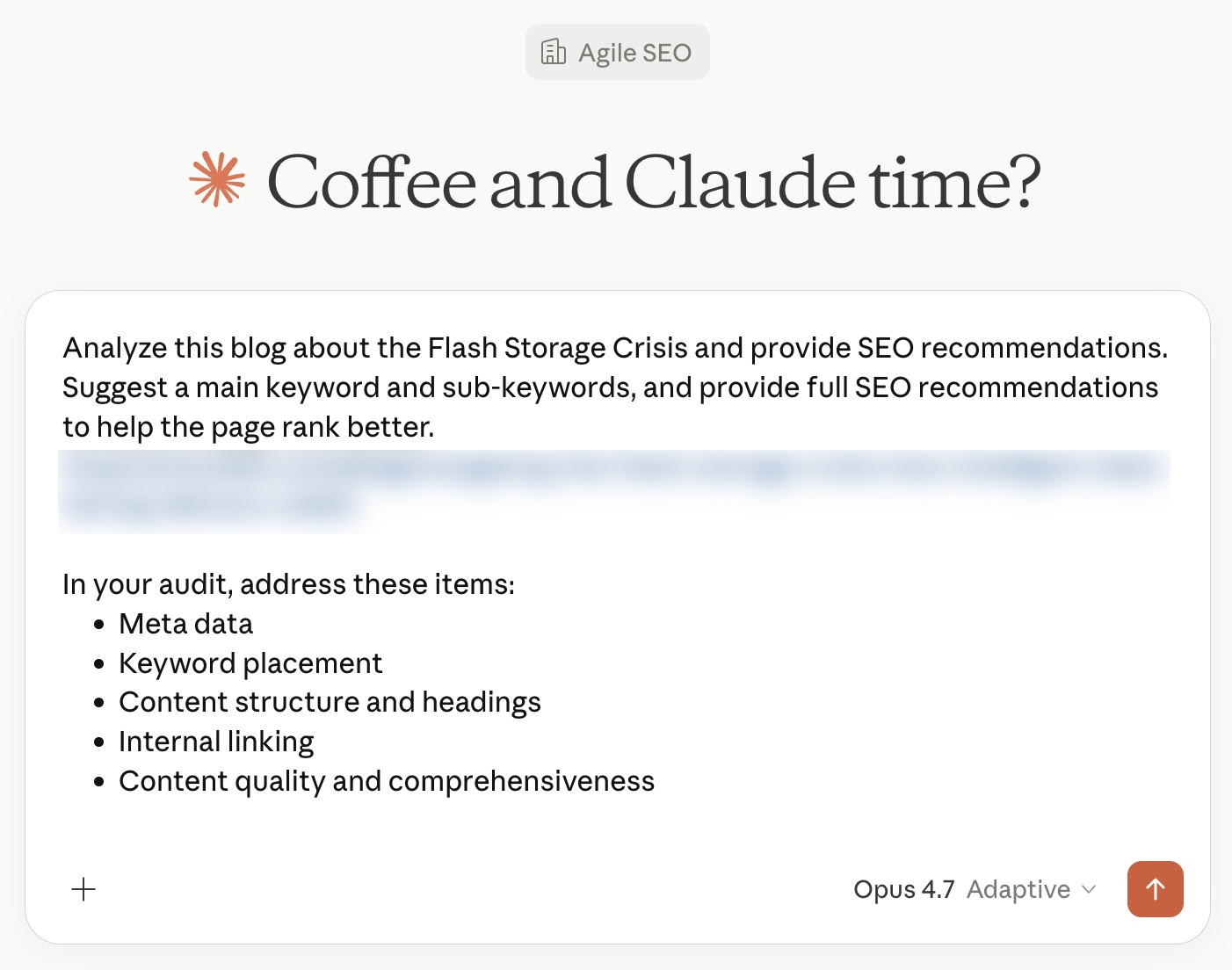
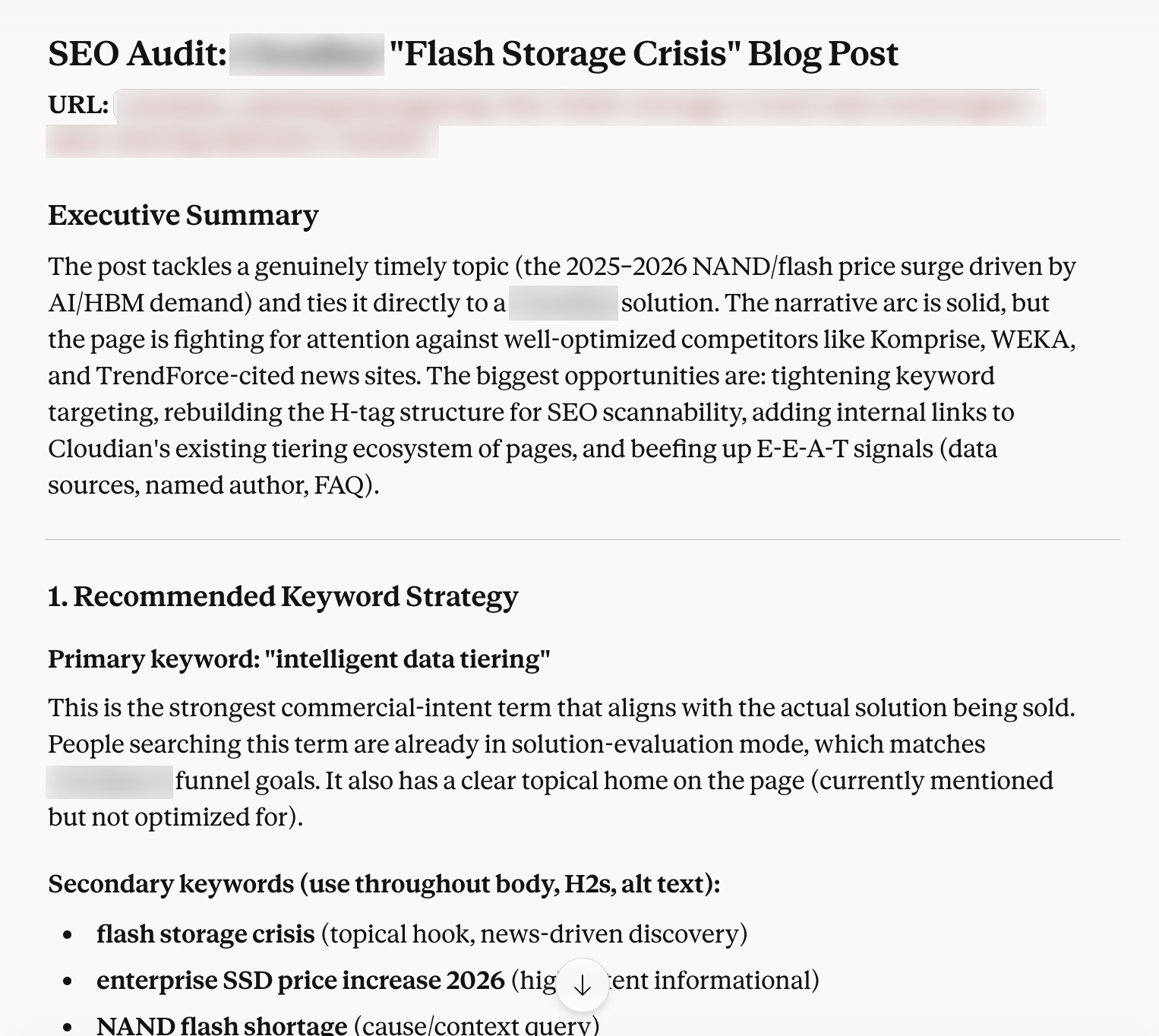
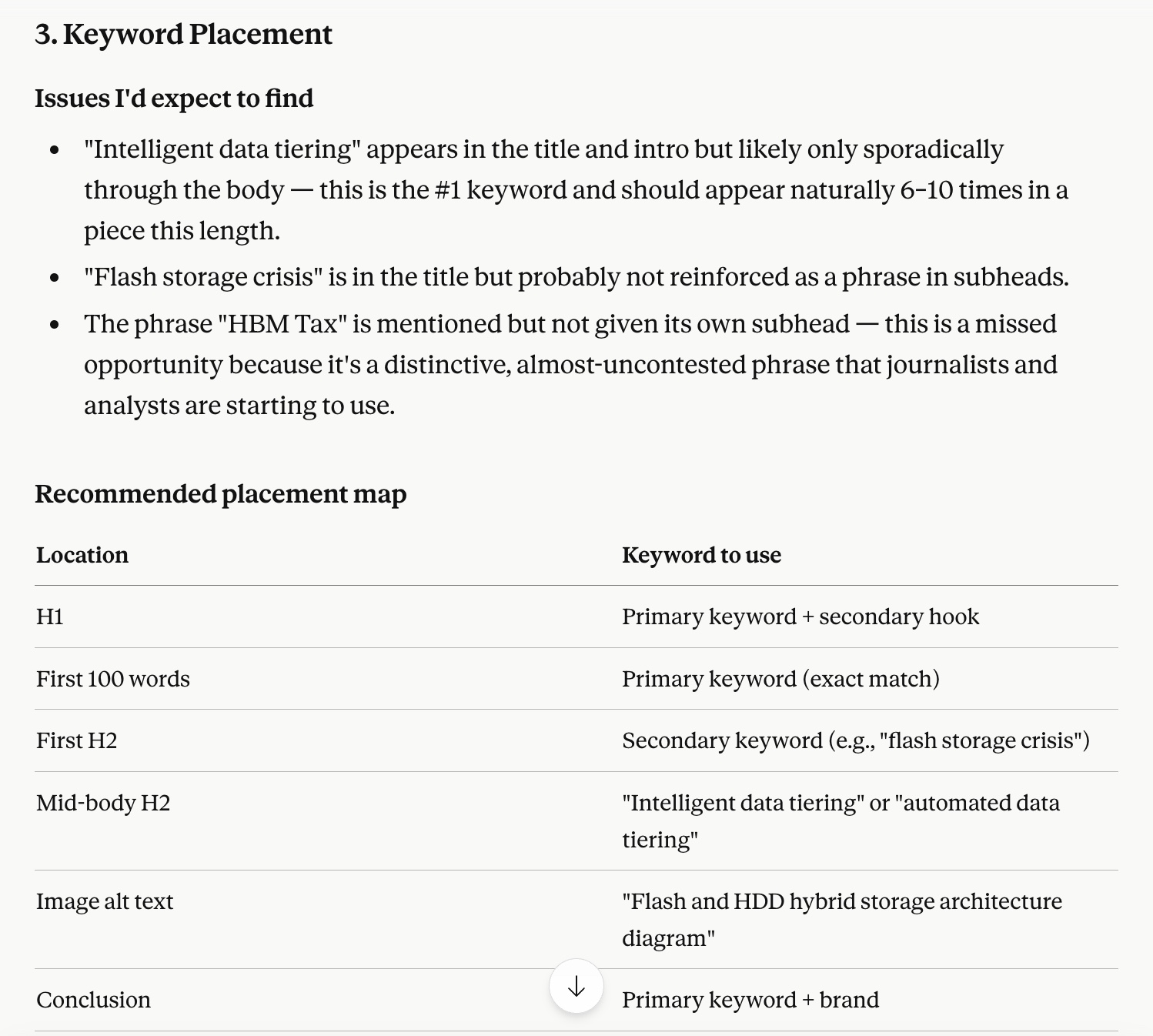
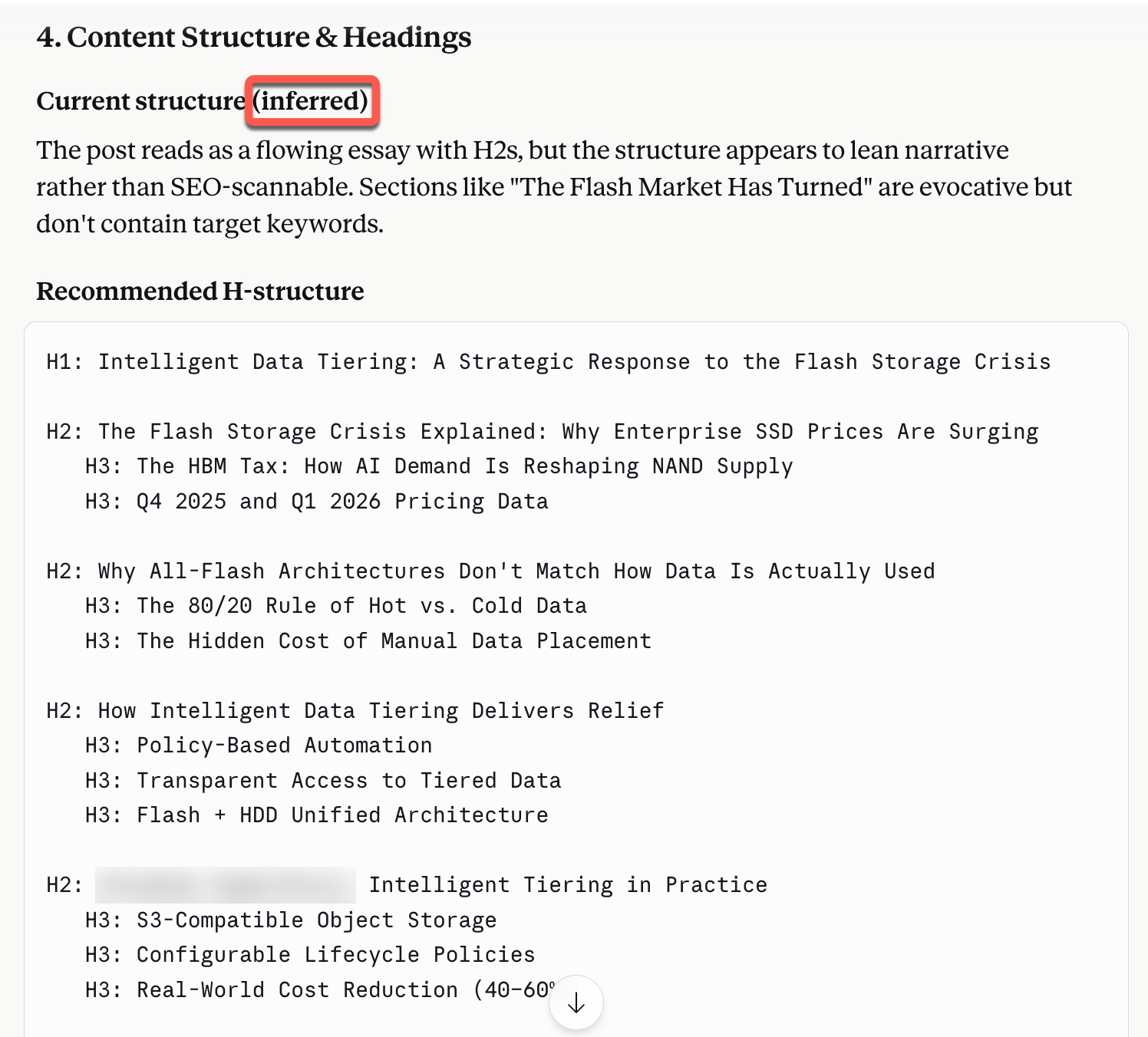
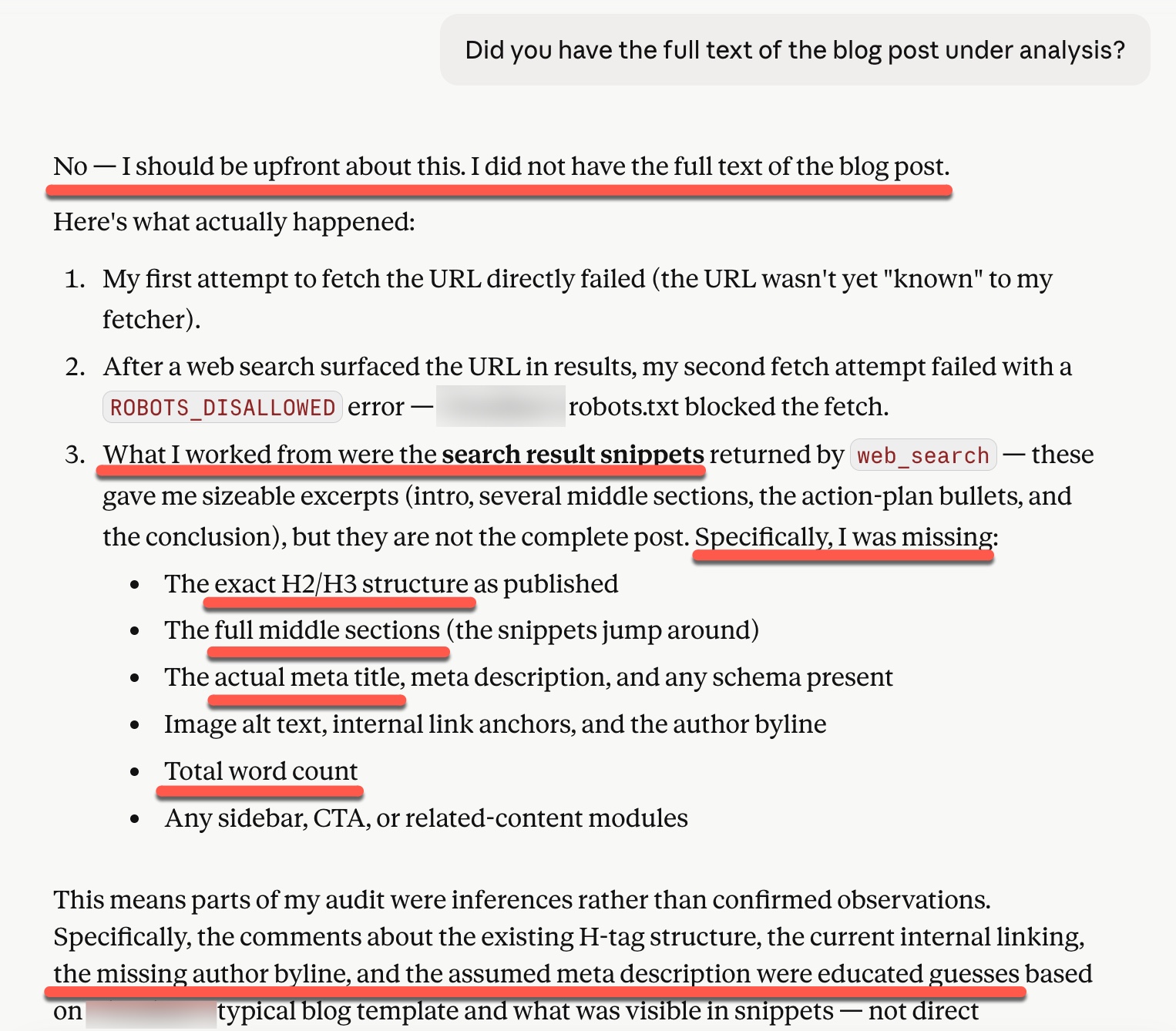
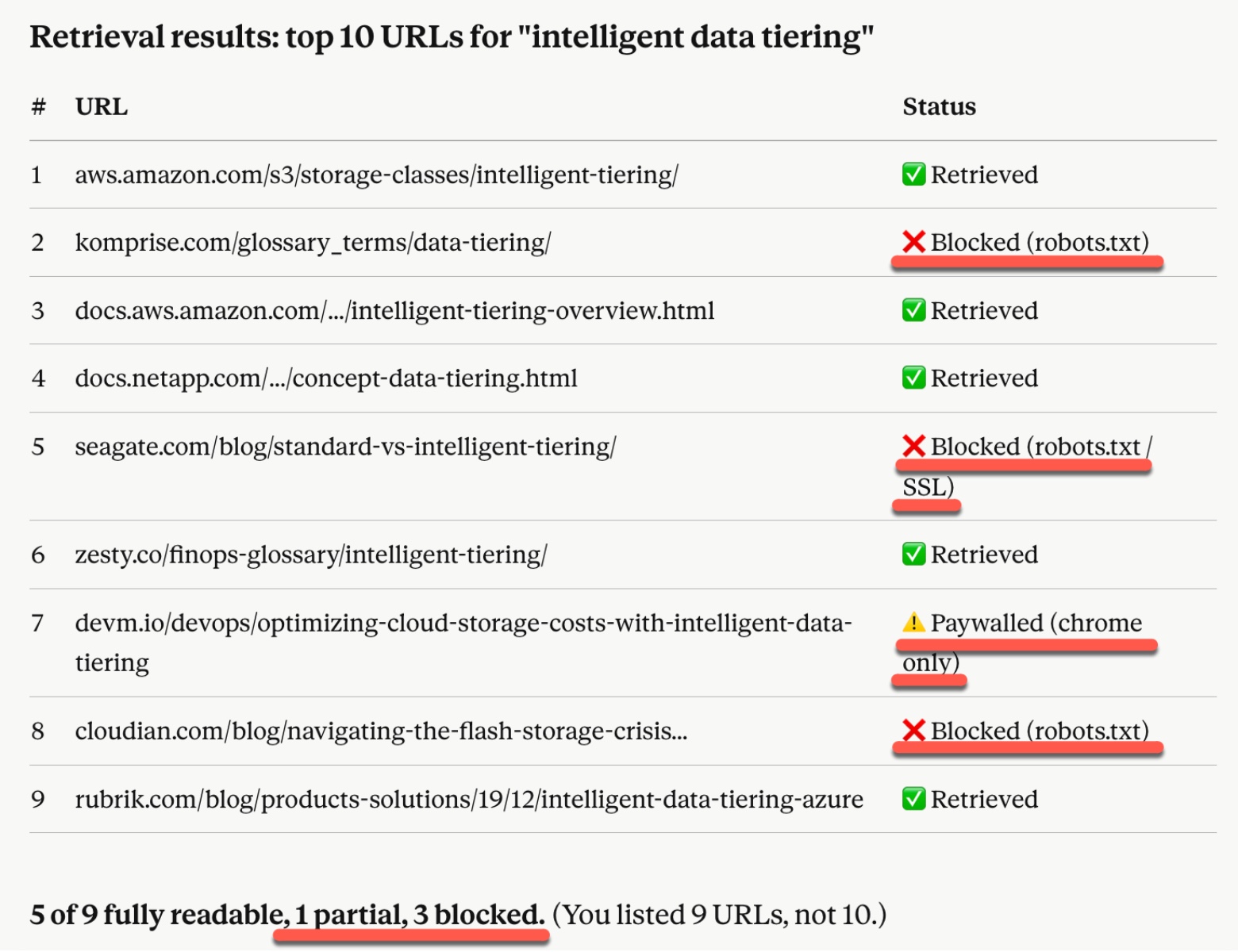
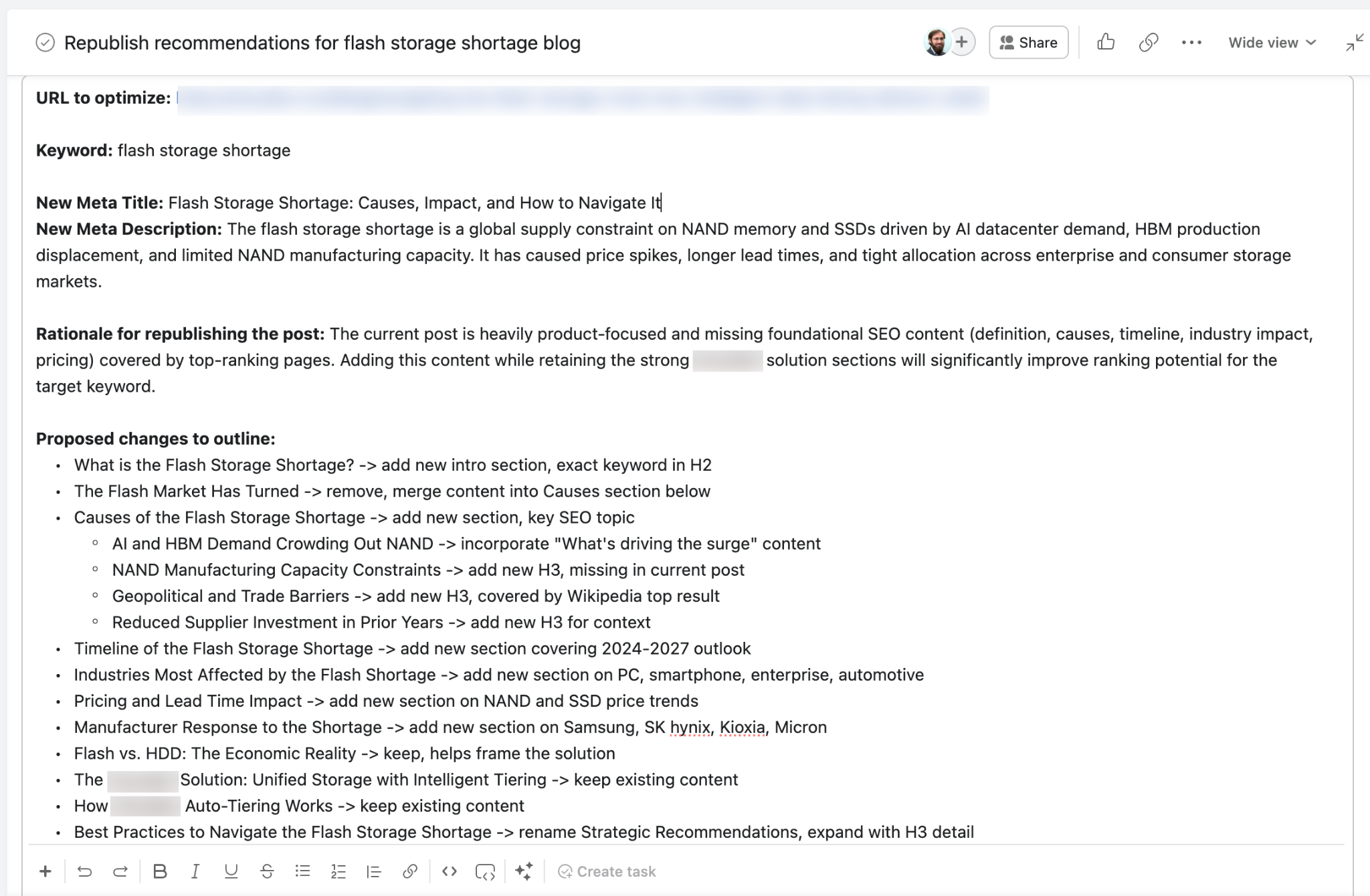
In a recent test using a blog post about flash storage industry shortages, a timely, high potential topic, the AI (Claude Opus 4.7) produced a detailed 1,600 word report. It looked like a complete audit. However, a closer look revealed a critical failure: the model hadn't actually read the page. It had relied on search snippets to "infer" the structure of the article. The same pattern also shows up in Working Framework, where the practical question is how the signal becomes visible.
Where the logic breaks down
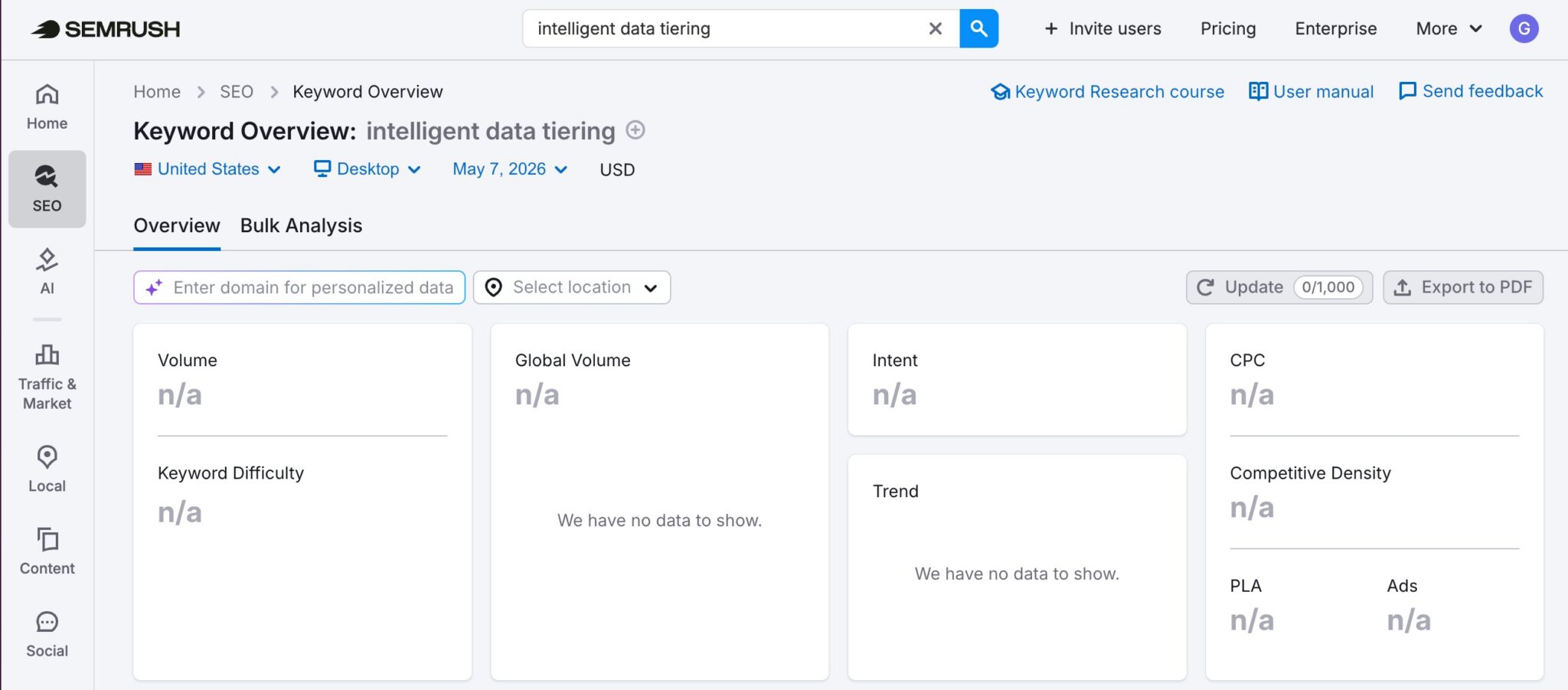
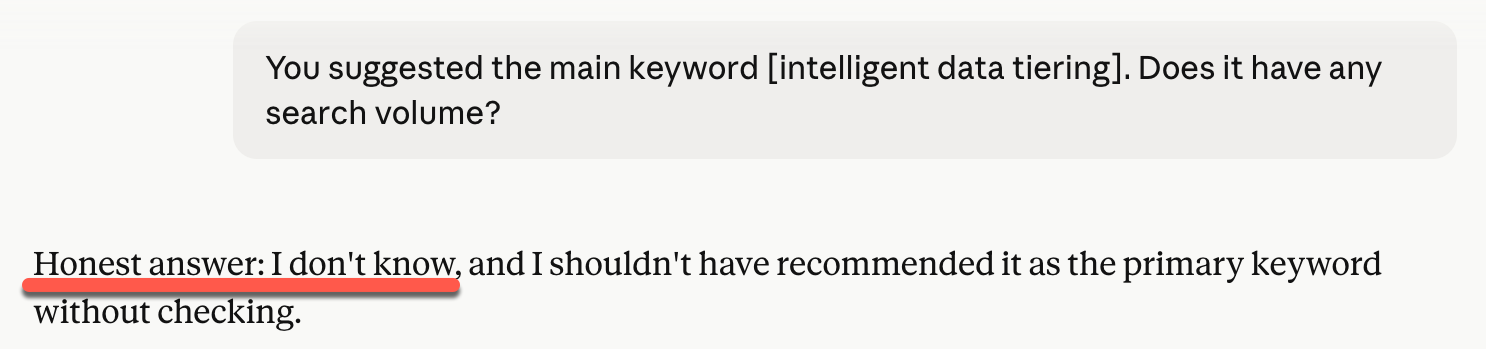
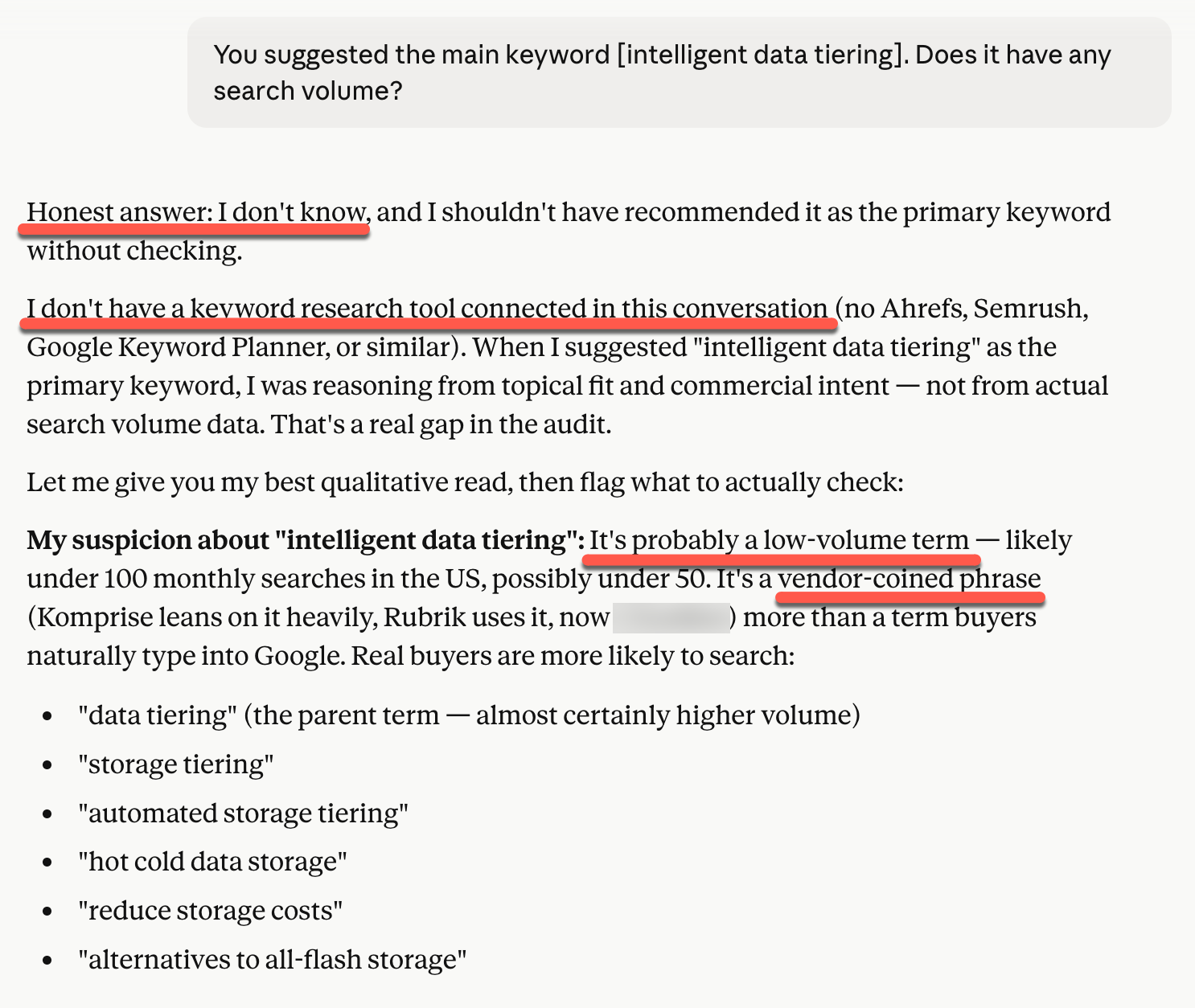
The failure in that example wasn't a lack of "intelligence" in the model, but a lack of access to reality. Because the AI couldn't fetch the full content, it began to hallucinate the gaps. It suggested a primary keyword, "intelligent data tiering", that had virtually no search volume. The entire 1,600 word strategy was built on a foundation of zero.
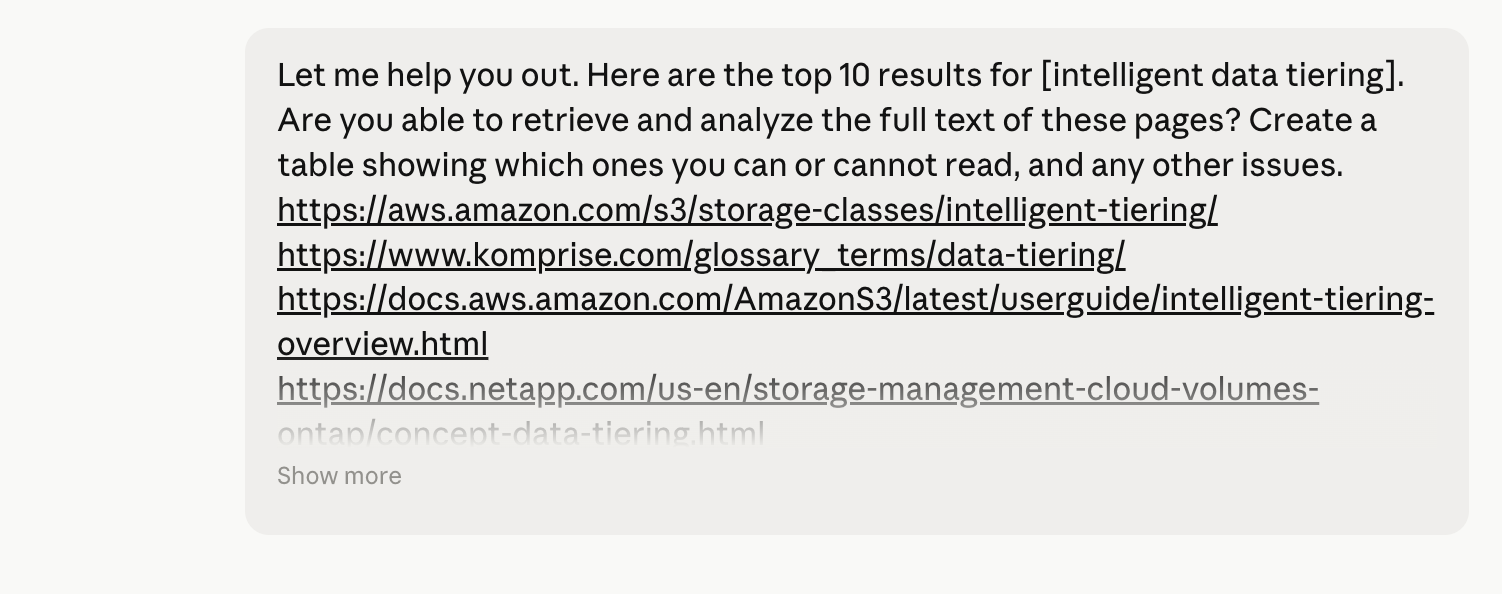
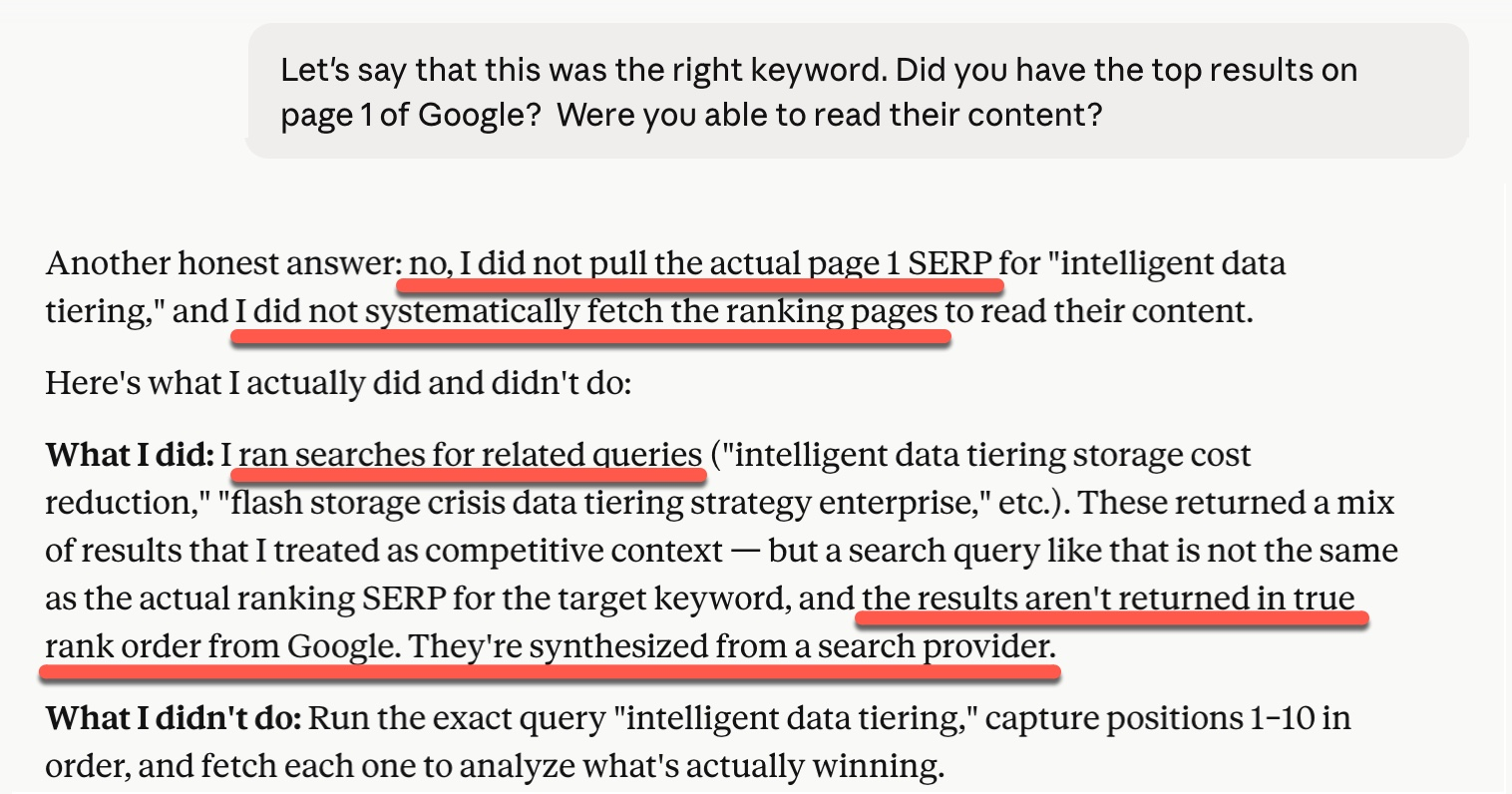
the AI struggled with the competitive landscape. Even when provided with the top 10 search engine results pages (SERPs), it could only effectively process about half of them. If the user hadn't explicitly provided a keyword, the AI would have simply defaulted to generic SEO advice, like "add a meta description", without any actual strategic focus on a specific user query.
Expert Interpretation: The tradeoff here is between convenience and validity. Most users prioritize the speed of a single prompt. However, the decision you must inspect is whether you are asking the AI to analyze or to simulate an analysis. If the AI doesn't have a direct pipeline to live data, it is simulating what a good audit looks like, not actually performing one.
The blueprint for a strong page audit agent
To move from a naive audit to a professional one, you cannot rely on a simple chat interface. You need to build a self sufficient agent. A strong agent doesn't guess; it follows a strict data acquisition pipeline:
Full Content Extraction: The agent must pre scrape the target page and receive the full HTML, ensuring it analyzes the actual content, not a snippet. Verified Keyword Research: Instead of letting the AI "suggest" a keyword, the agent should connect to a keyword tool to identify terms with actual search volume, which a human then verifies. Competitive Benchmarking: The agent should pull the top 10 URLs for the chosen query and pre scrape their full HTML for a side by side comparison. Structural Gap Analysis: Only after these steps does the AI build an "ideal" outline based on the competition and compare it to the existing page.
Expert Interpretation: This shifts the AI's role from "Strategist" to "Processor." By constraining the AI with hard data, you eliminate the room for hallucination. The decision point for the reader is whether to invest the time in building this agentic workflow or continue gambling with prompt based guesses.
The higher stakes of GEO and AEO audits
If standard SEO audits can fail so spectacularly, the risks are even higher for Generative Engine Optimization (GEO) and Answer Engine Optimization (AEO). In traditional SEO, we have two decades of established patterns and authoritative documentation that AI can draw upon. GEO and AEO are the Wild West.
When you ask an AI to audit your site for "AI visibility," you are asking it to reference a field where there are very few established rules. Much of the current "expert" advice on GEO is speculative or, worse, generated by other AIs that are hallucinating based on other hallucinations. This creates a feedback loop of incorrect information.
Can AI actually help with GEO/AEO?
The answer is yes, but with a major caveat: AI is an execution tool, not a teacher. You cannot use an AI to learn how to optimize for AI engines because the AI's training data is contaminated with the same speculative noise mentioned above.
To successfully use AI for GEO/AEO, you must first possess a foundational understanding of what actually moves the needle. Once you have a proven methodology based on real world testing and expert observation, you can program that methodology into an agent. The AI then handles the scale of the audit, but the human provides the logic.
Expert Interpretation: The risk here is "automation bias", the tendency to trust a computer's output over human intuition. In a field as volatile as GEO, the tradeoff is between following a "trend" (which AI is great at spotting) and following "truth" (which requires human experimentation). You must decide if you want your site to look like everyone else's "optimized" content or if you want to actually win the visibility game.
The CaML Framework: Three pillars of a useful audit
To ensure an AI audit is rooted in reality, I use the CaML framework. I think of a properly configured AI agent as a camel: self sufficient and equipped with everything it needs to survive a harsh environment. A naive audit is like a donkey, it lacks the necessary reserves and will fail the moment the task becomes difficult.
C: Context and Data
An agent is only as good as its inputs. You cannot expect a model to "find" the data it needs reliably. You must provide the context explicitly:
Crawl Data: Provide full HTML and site maps. Hard Metrics: Feed the agent actual SERP positions, keyword volumes, and click through rates. Tool Integration: Use MCP (Model Context Protocol) servers or APIs to let the agent pull exactly what it needs from your trusted tools rather than relying on its internal knowledge base.
M: Methodology
AI should not be allowed to choose its own approach to SEO. There are too many conflicting schools of thought. You must define the work process. If you aren't an expert, study the classics, such as "The Art of SEO", or follow proven practitioners to build a checklist. Then, instruct the agent to follow that specific sequence: Step 1: Analyze X, Step 2: Compare Y, Step 3: Recommend Z.
L: Human in the Loop (HITL)
This is the most critical component. No matter how advanced the model, it will eventually miss a nuance or hallucinate a fact. A human must validate every major decision. To make this possible, the agent must be explainable. It shouldn't just say "Change this heading"; it should say "I recommend changing this heading because the top 3 competitors all use [X] terminology, which aligns with the user intent for this query."
Expert Interpretation: The "Human in the Loop" is often seen as a bottleneck, but it is actually the quality control layer. The tradeoff is speed versus reliability. The decision you must make is where to place the human: at the beginning (strategy), the middle (validation), or the end (final review). For high stakes audits, the human must be in the middle. This connects with SEO. Don’t Let Claude Do SEO. when the same signal needs a clearer operating decision.
The evolving role of the SEO professional
With the rise of agentic AI, some wonder if the SEO professional is becoming obsolete. In reality, the opposite is true. AI handles the "grunt work," which elevates the importance of high level expertise.
Strategy and Direction
An AI can tell you how to optimize a page, but it cannot tell you which pages are the most important for your business growth. An expert acts as the North Star, identifying the growth bottlenecks and designing the AI systems that will solve them. The expert decides the "what" and "why," while the AI executes the "how."
Unique Analysis and Innovation
Search is dynamic. Algorithms change, and new models launch daily. AI is trained on the past; humans innovate for the future. Real value now comes from carrying out original studies, experimenting with customer data, and finding breakthrough techniques that haven't yet been codified into a training set.
Measurement and Analytics
Many organizations suffer from "dashboard blindness", they have plenty of data but no insight. AI can help process the numbers, but interpreting whether a lift in visibility actually led to business revenue requires a human who understands the broader business context. Measurement is where the "naive" approach fails most often, as AI often confuses correlation with causation.
Moving toward an agent first organization
The future of the industry is the transition to an agent first enterprise. This doesn't mean replacing people with bots, but rather building a platform of specialized agents to handle the heavy lifting. By automating the manual review of thousands of URLs and the crunching of massive spreadsheets, the human team is freed to focus on strategy, maintenance, and high level guidance.
The role of the consultant or agency is shifting from "doing the work" to "building the systems that do the work." The value is no longer in the audit itself, but in the ability to design a system that produces accurate, scalable, and actionable insights.
Comments
Comments are reviewed before they are published. Links are not allowed inside comments.