A practical view on The Automation Risk Behind Friendly AI Marketing, focused on the signal to inspect, the risk to avoid, and the decision it should change.
Why This Matters for SEO Professionals
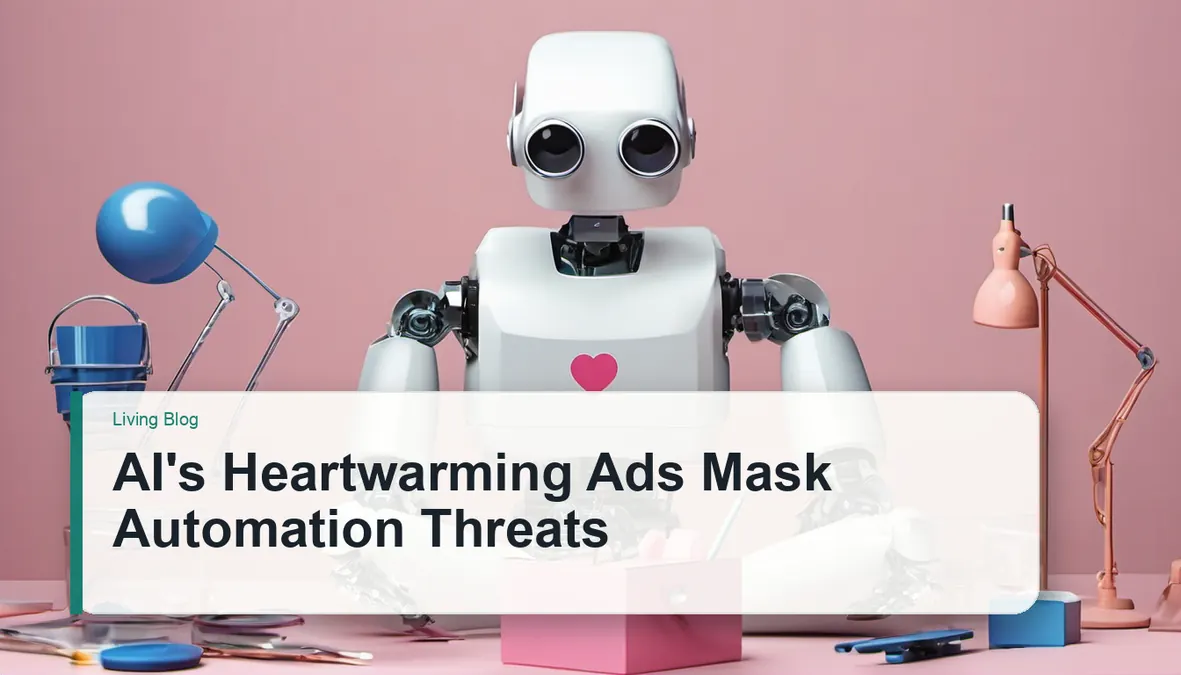
The latest wave of AI marketing isn't just about selling technology, it's about redefining what it means to be a professional in digital marketing, content creation, and SEO. Companies like OpenAI, Google, and Anthropic are running campaigns that make their AI tools feel like friendly, helpful companions. These ads show AI helping with everyday tasks like cooking dinner or guiding a family through a new home. But beneath the warm, relatable messaging lies a different reality: these companies are actively building systems that could automate complex professional workflows. For SEO specialists, this means the tools we rely on are evolving in ways that could reshape our roles, and the metrics we track.
What the Ads Are Saying
The campaigns from these AI companies are carefully crafted to build trust. They use emotionally resonant stories to position their technology as a reliable, human like assistant. OpenAI's ads show their tools helping with mundane tasks, while Google's Gemini ads focus on family moments. Anthropic's messaging emphasizes trustworthiness, positioning their AI as a clean alternative to the chaotic digital landscape. These narratives are designed to make consumers feel comfortable with the idea of AI in their lives. But for SEO professionals, the real question is: what are these companies actually building behind the scenes?
What the Products Are Actually Doing
Behind the heartwarming ads, these companies are racing to develop agentic systems capable of automating professional tasks. OpenAI's GPT-5.5 is being positioned as a project manager that can build entire lead funnels, from strategy to email deployment, without human intervention. Google's Gemini 3.1 Pro has a one million token context window designed for deep research that "humans cannot replicate." Anthropic's Claude Opus 4.7 is being marketed for legal redlining, code review, and visual verification, tasks that currently require specialized expertise. These aren't consumer tools; they're enterprise grade systems designed to replace human labor in complex workflows. The implications for SEO professionals are significant. If AI can perform tasks like content strategy, keyword research, and even technical SEO analysis, the role of the human marketer is being redefined. The traditional model of SEO, researching keywords, producing content, earning rankings, and driving clicks, is being disrupted by tools that can generate high volume content at machine speed. This shift means the competitive advantage is moving toward authority, entity recognition, and structural content quality that AI systems can parse and attribute.
Why This Is an SEO Specific Problem
The SEO industry is facing a fundamental shift in how content is created and consumed. Google's AI Overviews, which are driving 19% growth in Search revenue, are changing the click economy. Users are getting answers without visiting pages, and brands are competing for citations within AI generated summaries. This is a new frontier for SEO professionals: generative engine optimization (GEO). The tools that once made high volume content production possible are now being outpaced by AI systems that can generate even more content faster. For SEO specialists, this means the traditional volume based strategies are losing their edge. The focus is shifting toward creating content that AI can understand and attribute to specific entities. Technical SEO expertise is becoming more critical than ever, as the ability to optimize for AI driven search results will determine who wins in this new landscape. Those who mastered technical SEO before the AI revolution will recognize this dynamic as a natural evolution of the field.
The Tension Worth Watching
The most critical tension in this AI driven shift is the gap between the consumer facing narrative and the enterprise reality. Companies are simultaneously telling consumers that AI is a helpful companion and investors that it's automating professional grade work at scale. This duality creates a complex challenge for SEO professionals. While the ads paint AI as a supportive tool, the reality is that these systems are replacing human roles in ways that could erode the skills and expertise we've built over years. Anthropic's own research highlights this risk. Junior engineers relying on AI coding agents didn't complete tasks faster and showed weaker understanding of their work after testing. If this extends to content strategy and SEO analysis, the profession faces a skills erosion problem. The "AI as partner" messaging doesn't address this reality. Instead, SEO professionals must focus on measurable outcomes: tracking traffic, conversion rates, citation share of voice, and team capability development. The dream these companies are selling is appealing, but grounding your strategy in real data is the only way to stay ahead.
What SEO Professionals Should Do Next
1. **Measure What Matters**: Focus on metrics like citation share of voice, technical SEO performance, and team capability rather than relying on AI company narratives. Tools like Ahrefs, SEMrush, and Google Search Console will help you track these metrics effectively. 2. **Invest in Skill Development**: As AI automates more tasks, the value of human expertise in areas like technical SEO, content structuring, and entity recognition will grow. Consider certifications in AI ethics, SEO best practices, and content strategy to stay competitive. 3. **Adopt a Generative SEO Mindset**: The rise of AI Overviews and GEO means content must be optimized for AI driven search results. Focus on creating high quality, structured content that AI can parse and attribute to specific entities. 4. **Monitor Industry Shifts**: Stay informed about how AI is reshaping the SEO landscape. Follow developments in AI Overviews, generative engine optimization, and enterprise AI adoption to anticipate changes in your field. 5. **Balance Automation with Human Insight**: While AI can handle repetitive tasks, human creativity and strategic thinking remain irreplaceable. Use AI tools to augment your work, not replace it, and focus on building expertise in areas where human input is critical.
Conclusion
The heartwarming ads from AI companies are a clever marketing strategy, but they obscure the real impact of these technologies on professional roles. For SEO professionals, the key is to focus on measurable outcomes and adapt to the evolving landscape. By understanding the gap between consumer narratives and enterprise realities, you can position yourself to thrive in an AI driven future. The dream they're selling is appealing, but grounding your strategy in real data and expertise is the only way to stay ahead.
A practical view on Visibility Now Starts Before the Search Result, focused on the signal to inspect, the risk to avoid, and the decision it should change.
A practical view on The AEO Tool Stack I Would Actually Start With, focused on the signal to inspect, the risk to avoid, and the decision it should change.
A practical view on Understanding AI Crawlers and the Access Decisions They Force, focused on the signal to inspect, the risk to avoid, and the decision it should change.
A practical view on A Better Way to Find Where AI Search Content Breaks, focused on the signal to inspect, the risk to avoid, and the decision it should change.
Comments
Comments are reviewed before they are published. Links are not allowed inside comments.

Comments
Comments are reviewed before they are published. Links are not allowed inside comments.