Fashion AI SEO: How to Improve Your Brand’s LLM Visibility
/ 8 min read

Summary
There are three ways people will see your brand in AI search: brand mentions, citations, and recommendations. Brand mentions are. The practical question is what this changes for SEO, content quality, and AI search visibility.
Shopping for something as simple as a pair of casual leggings used to be a fragmented experience. You would start with a few keywords in a search engine, sift through pages of blue links, compare prices across three different tabs, and read a dozen conflicting reviews. It was a process of elimination that often ended in exhaustion. The same pattern also shows up in AI Recommendation Sets Leave Some Brands Out, where the practical question is how the signal becomes visible.
The reality is that too much choice often leads to no choice at all. Research from McKinsey and Business of Fashion suggests that 74% of shoppers actually abandon their purchase because they are overwhelmed by the options. This is exactly where AI chat is stepping in. Instead of a list of links, AI provides a synthesized answer, often a direct recommendation with a link to buy. For a fashion brand, this shift is seismic. You are no longer just competing for a click; you are competing to be the "single answer" the AI provides.
Understanding the three layers of AI visibility
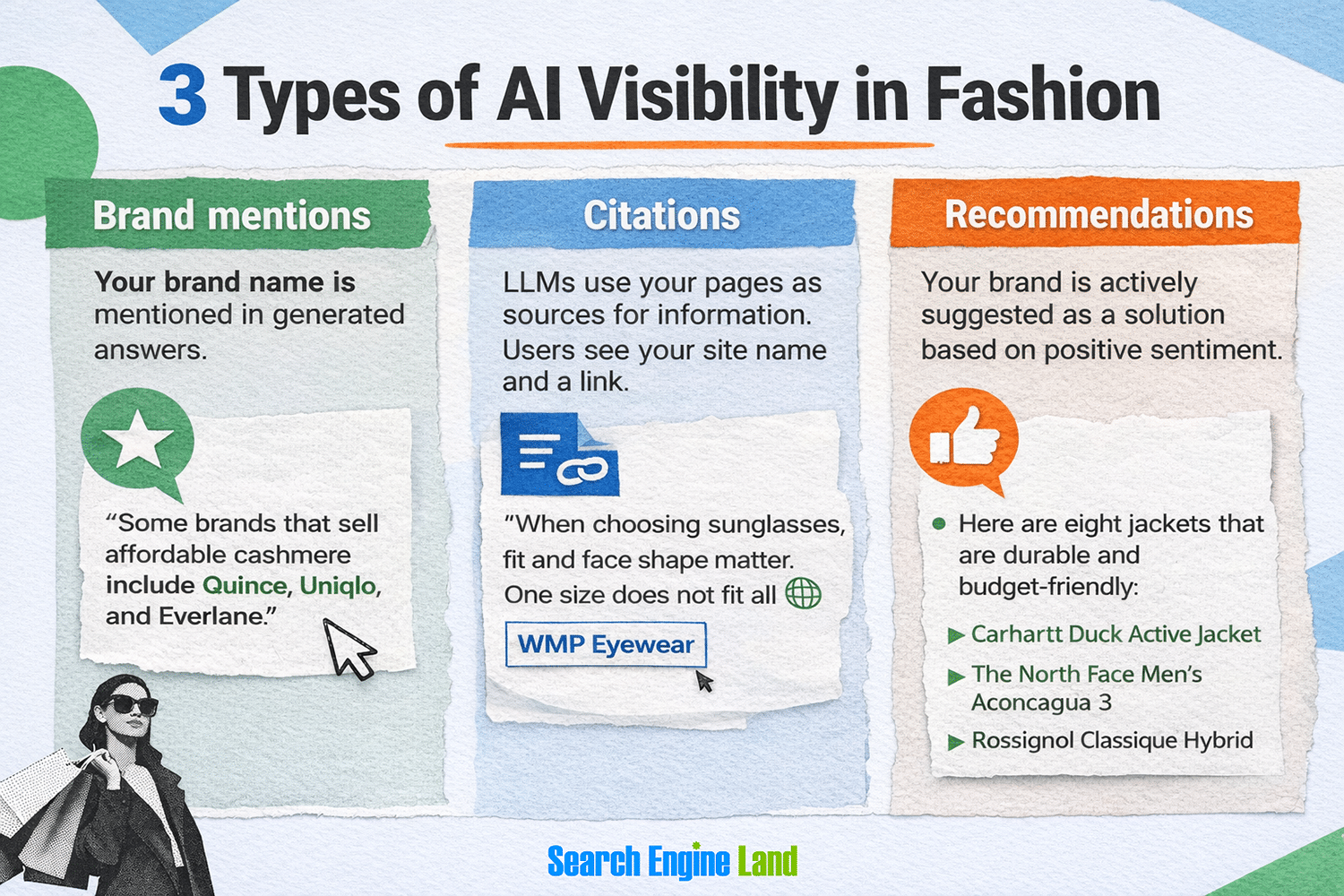
Visibility in the world of Large Language Models (LLMs) isn't a binary "yes or no." It happens in three distinct tiers, each serving a different purpose in the customer journey.
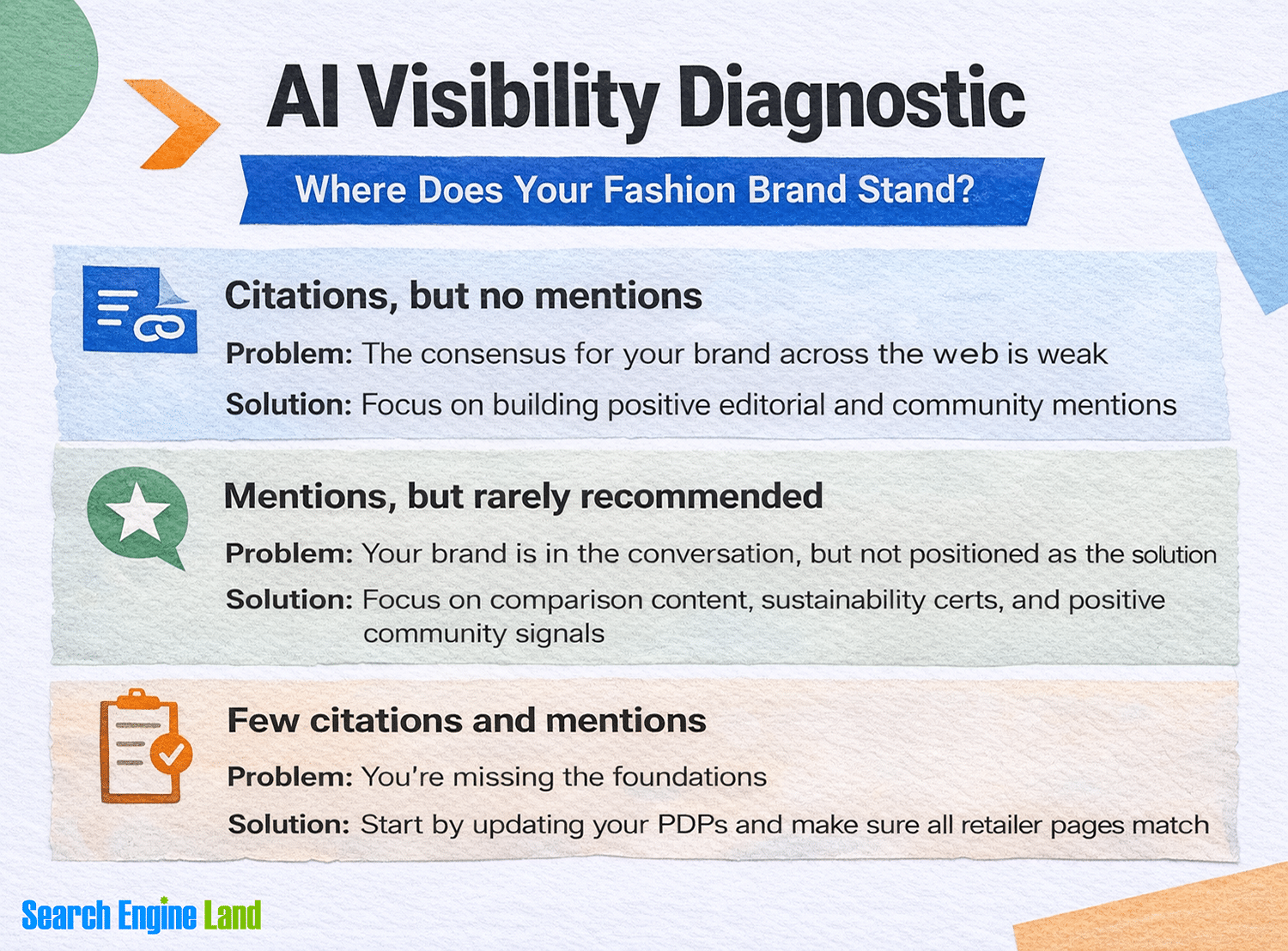
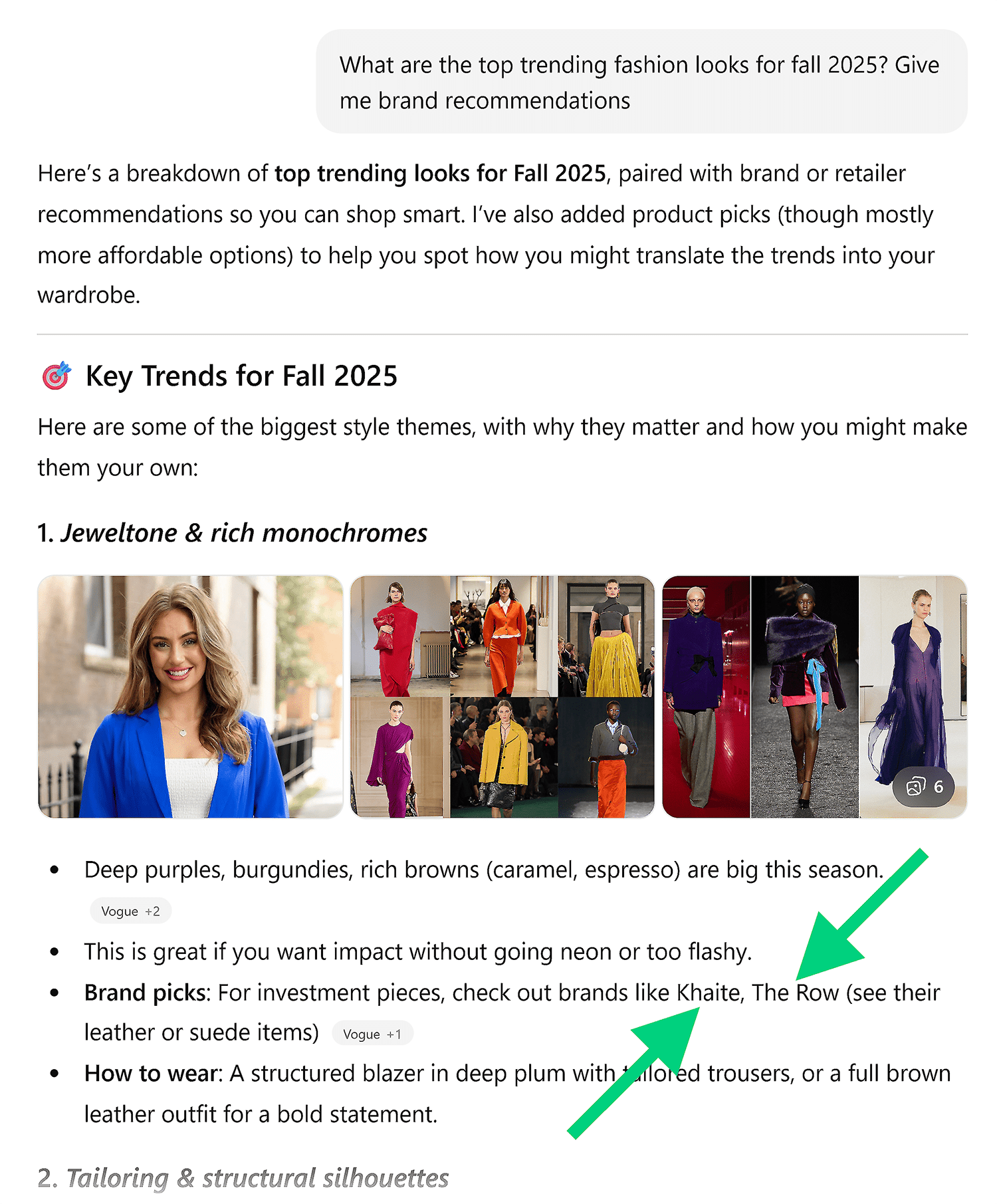
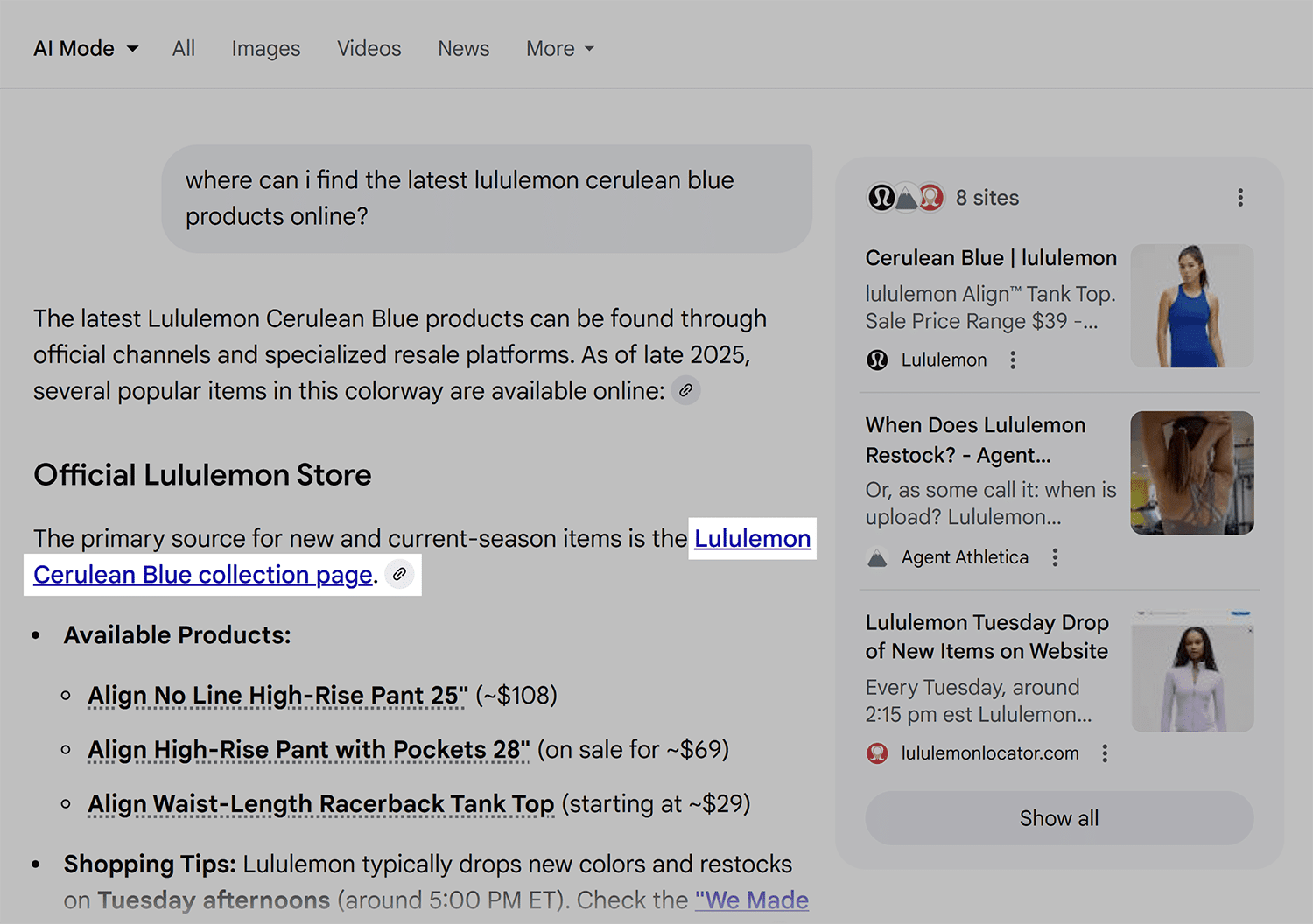
First, there are brand mentions. These are the most basic form of visibility. When a user asks about current fashion trends, the AI might mention your brand as one of several players in that space. It’s a nod of existence, placing you in the conversation, but it doesn't necessarily drive an immediate sale. This connects with search visibility when the same signal needs a clearer operating decision. A useful companion note is Home Depot Is Winning AI Search, because it looks at a nearby part of the same system.
Next are citations. This is where the AI provides proof for its claims. A citation occurs when the model links directly to a source to back up an answer. This could be a link to your official sizing guide, a care instruction page, or a third party site like Wikipedia or a major review platform. Citations transform a mention into a verified fact.
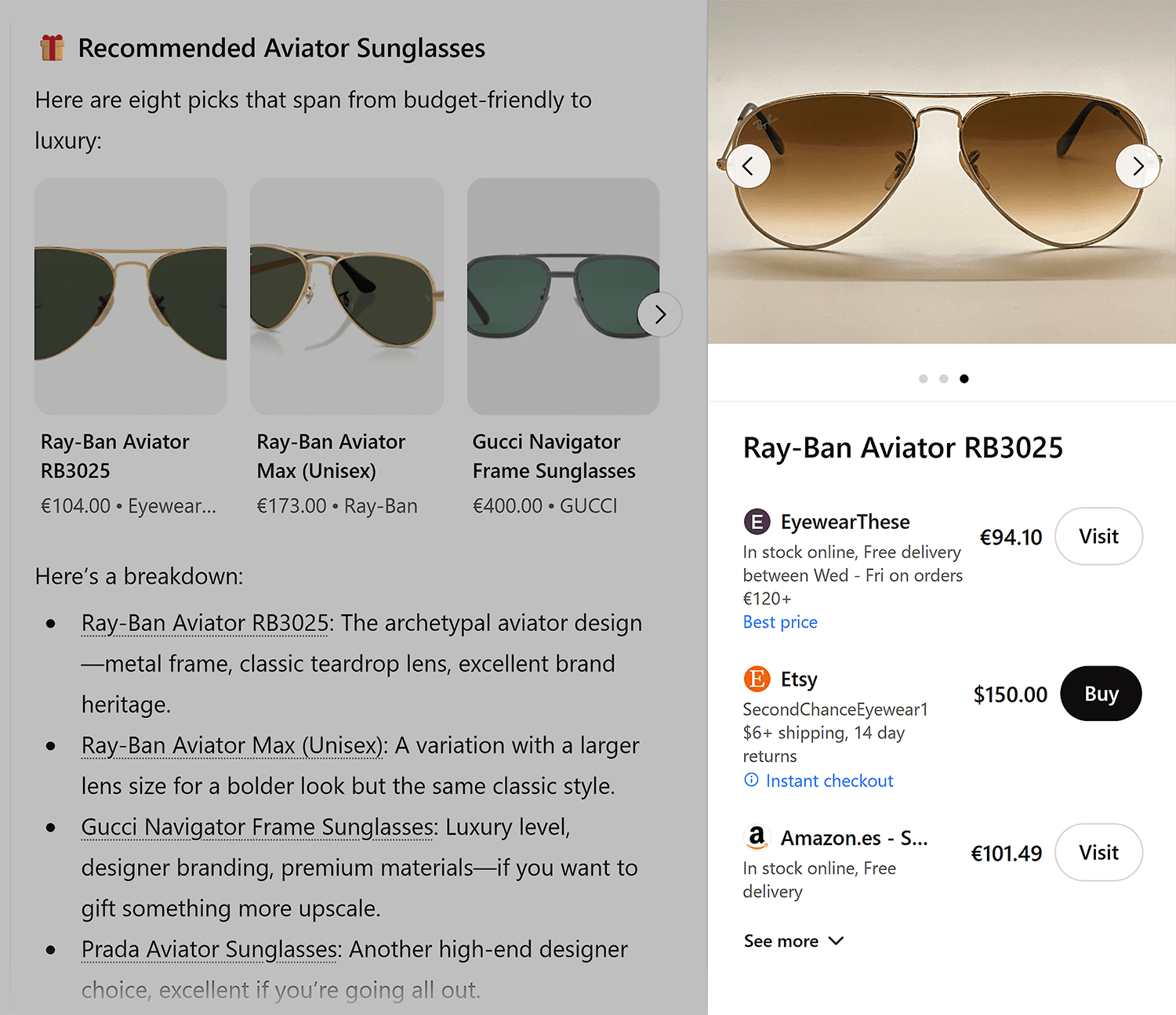
Finally, there are product recommendations. This is the gold standard of AI SEO. Here, the AI doesn't just mention you; it actively suggests your product as the solution to the user's problem. In some interfaces, this includes clickable shopping cards that allow the user to move straight to purchase.
Expert Interpretation: The tradeoff here is between reach and intent. Mentions provide broad awareness, but recommendations capture high intent buyers. The decision for a brand manager is where to allocate resources: do you want to be "known" by the AI (mentions) or "trusted" by the AI (recommendations)? To move from a mention to a recommendation, you must move from being a "topic" to being a "solution."
How AI models decide which brands to surface
AI models don't have "opinions" on fashion; they have data patterns. They generally use two primary mechanisms to decide which brands deserve a spot in the answer: consensus and consistency.
The role of consensus
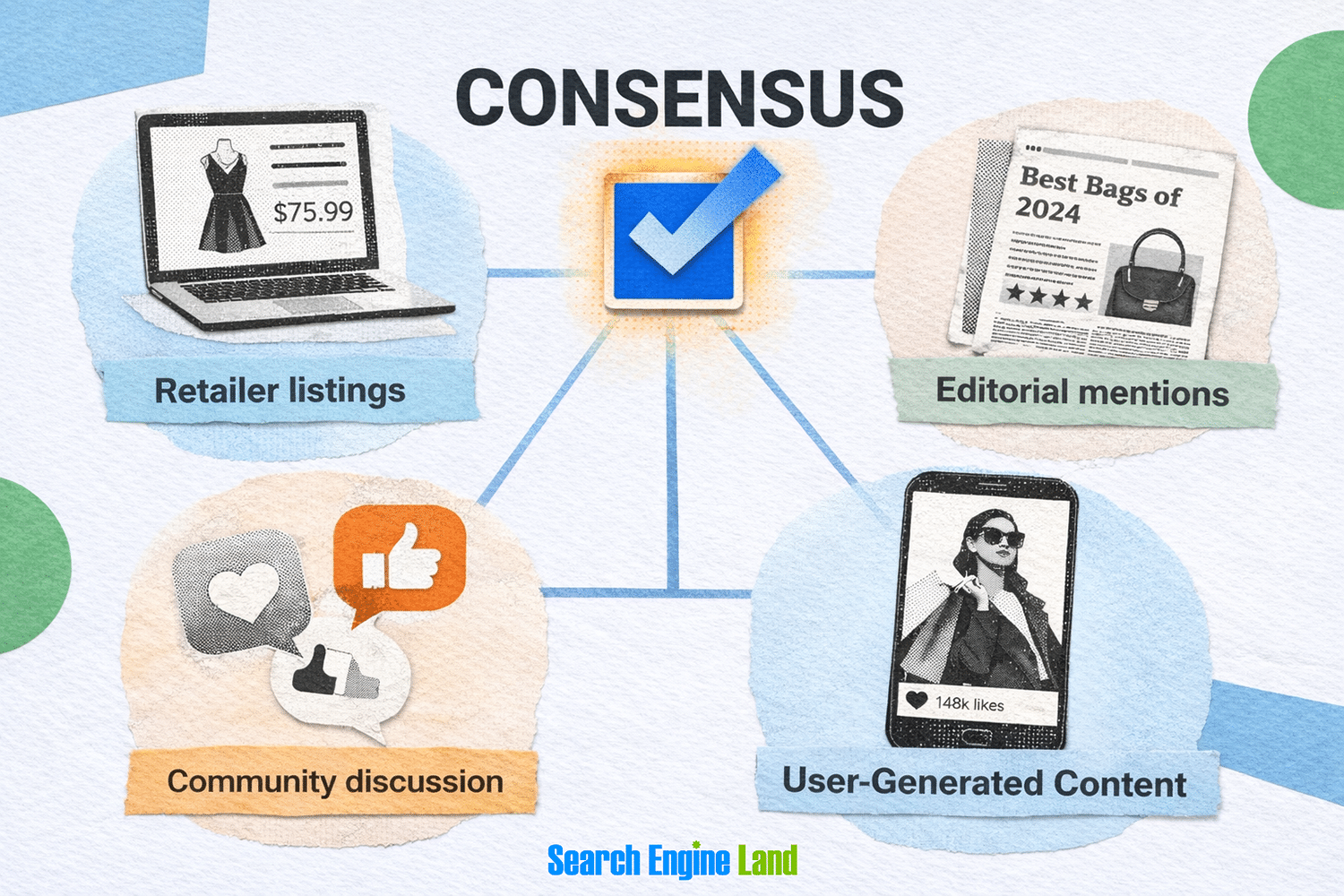
Think of consensus as a digital version of asking a group of friends for a restaurant recommendation. If one person suggests a place, it's a tip. If ten people suggest the same place, it's a certainty. AI operates on this same principle of corroboration.
The model scans a variety of sources to see if there is a general agreement that your brand is a leader in a specific category. It looks at:
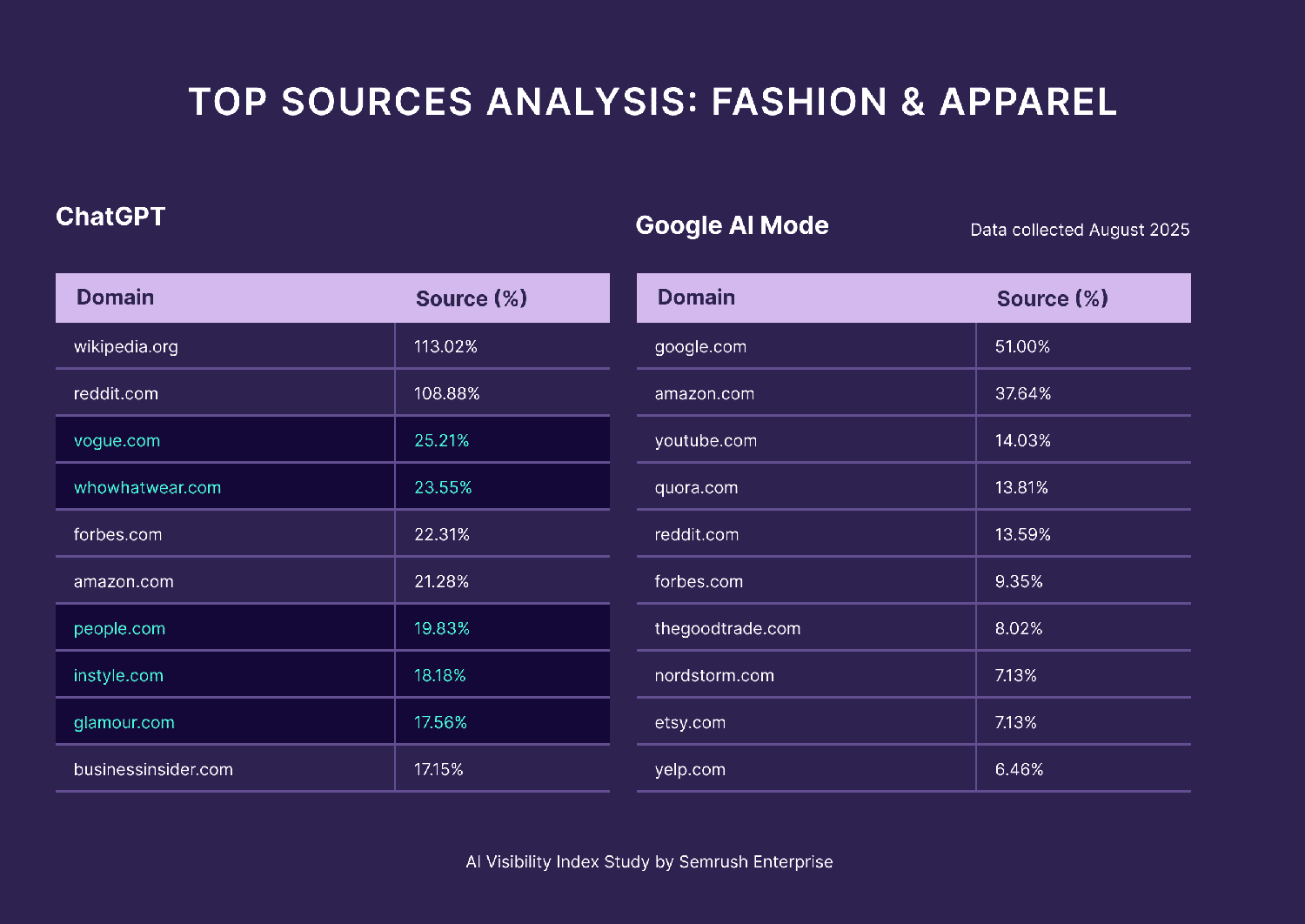
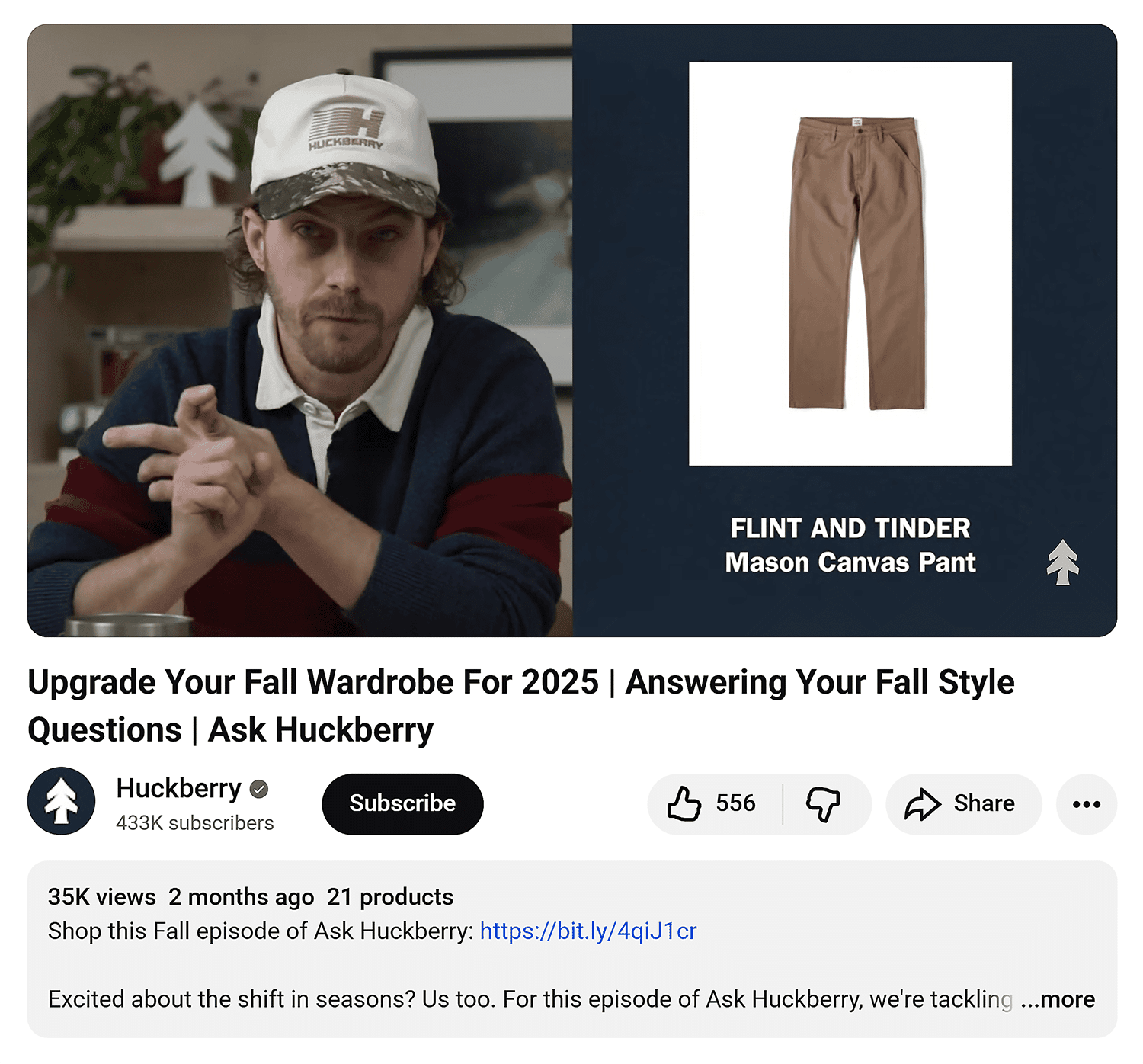
Editorial authority: High tier publications like InStyle, Vogue, and Who What Wear. Community signals: YouTube roundups, TikTok "try on" hauls, and Reddit discussions. Retailer data: Customer ratings and reviews on platforms like Zalando, Nordstrom, or Amazon. Third party verification: Certifications from organizations like OEKO TEX or B Corp.
Expert Interpretation: The danger here is relying on a single channel. If you have great TikTok visibility but zero editorial presence or poor retailer reviews, the AI may perceive your brand as a "fad" rather than a stable recommendation. The goal is to create a "cluster of agreement" across different types of media.
The importance of consistency
While consensus is about what others say, consistency is about what you say. AI models value factual reliability. If your data is contradictory, the model may view the information as untrustworthy and skip you entirely.
Consistency applies to several critical data points:
Naming and Colors: Using the exact same color codes and product names across your site and all retail partners. Sizing Data: Maintaining standardized size charts and model measurements across all touchpoints. Materials: Ensuring the fabric composition and care instructions are identical everywhere. Visual Parity: Using the same SKU imagery (360 views, hero shots) on your site and third party stores. Availability: Syncing price and stock levels in real time to avoid providing the AI with stale data.
Lululemon is a strong example of this. By keeping their product availability and data tightly synced, they ensure that when an AI directs a user to their site, the information is accurate and current.
Expert Interpretation: This is essentially a data hygiene problem. The tradeoff is the effort required to maintain a perfectly synced product feed versus the risk of "hallucinations" where the AI tells a customer a product is in stock when it isn't. Brands should inspect their product feed architecture to ensure there is a single source of truth that pushes data to all channels simultaneously.
Content types that drive AI visibility
To win in AI search, you need a mix of content that satisfies the three visibility types: mentions, citations, and recommendations.
Editorial guides and roundups
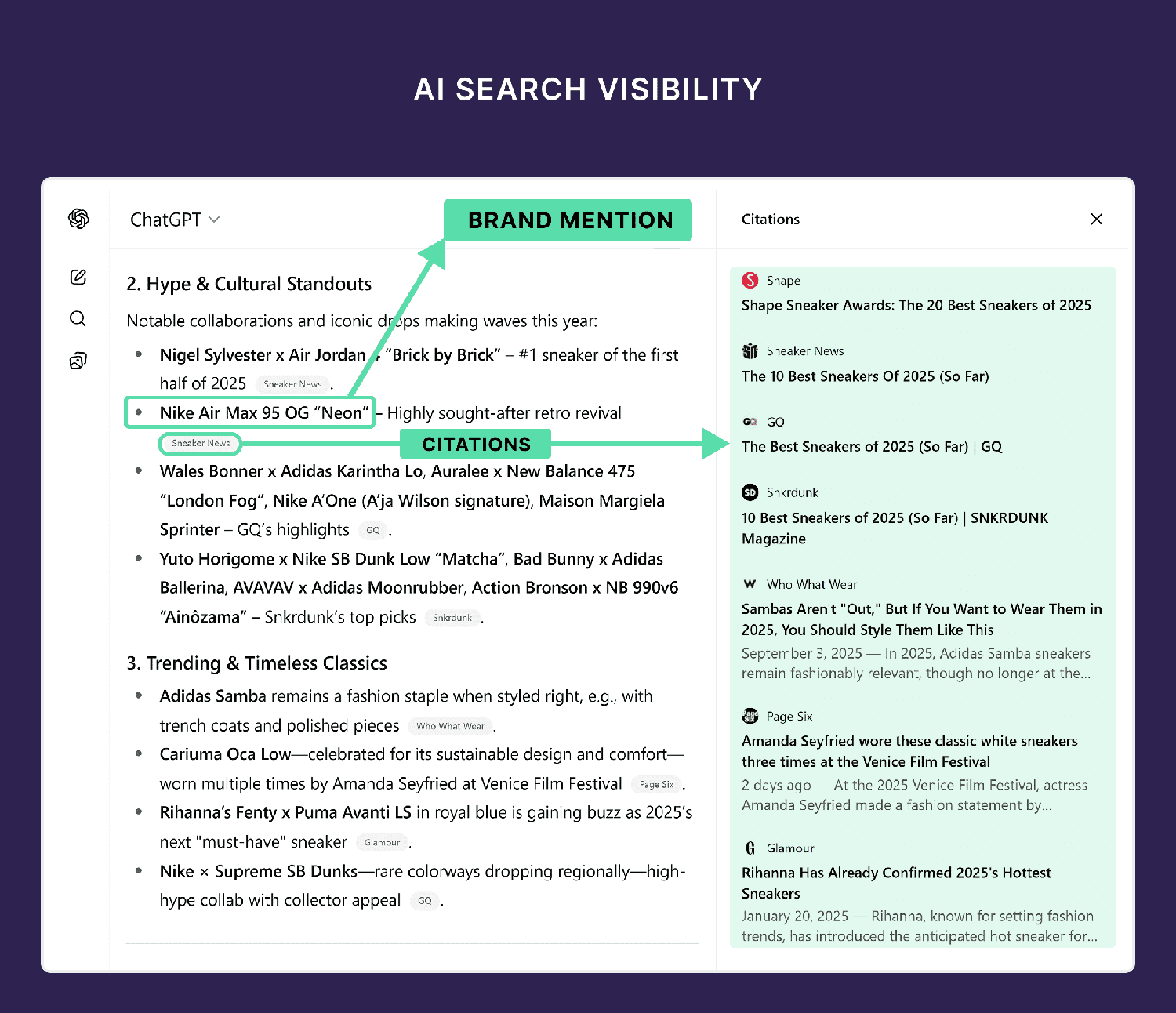
Editorial content provides the context that AI loves. When a publication like Vogue frames a product within a specific trend or occasion, it gives the LLM a "reason" to recommend that product. To improve this, research which publications are featuring your competitors and reach out to those editors or creators to build a relationship.
Product Detail Pages (PDPs) as the source of truth
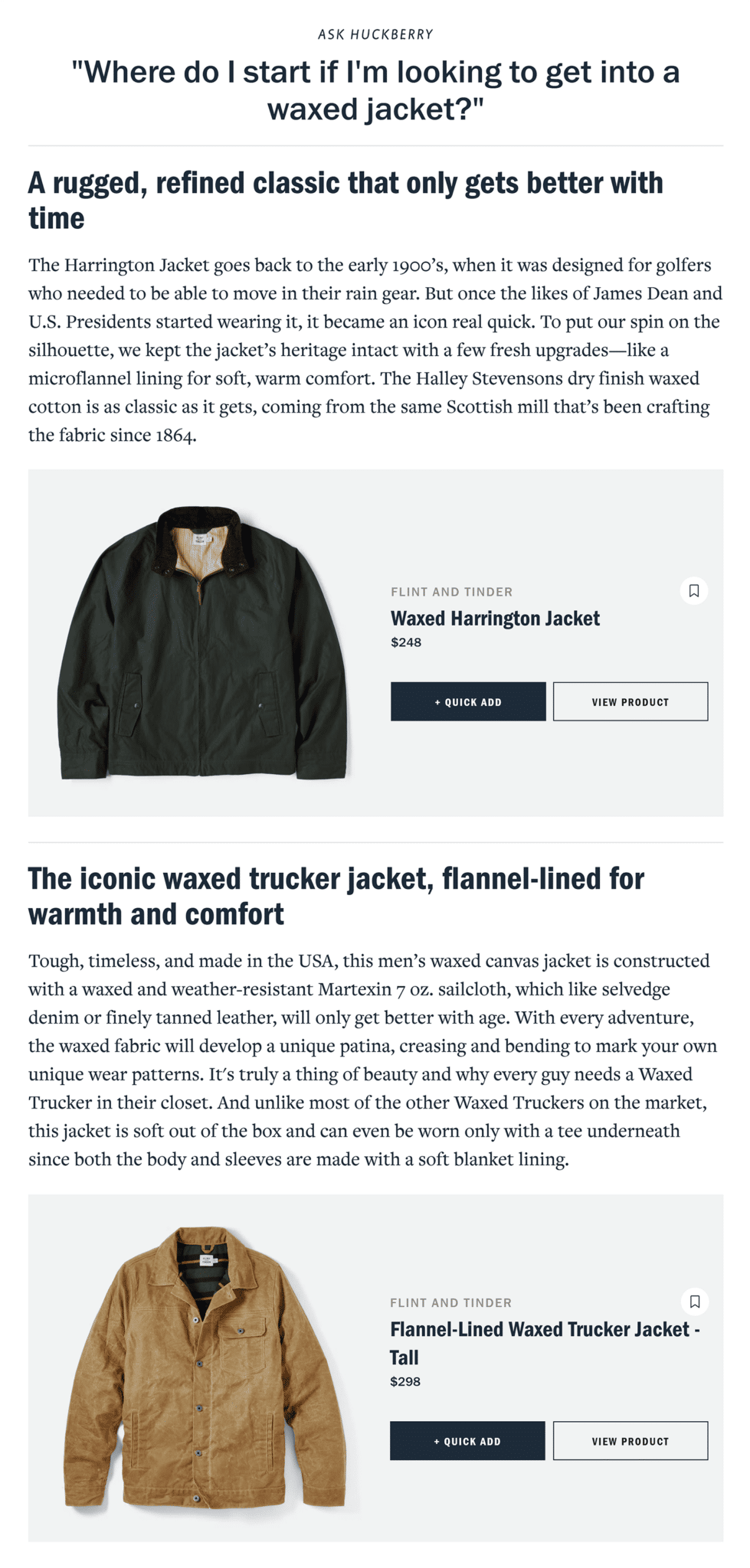
Your PDP is the primary anchor for AI. If the information is missing from your page, the AI will fill in the gaps using other sources, which may be incorrect. High performing PDPs include rich, structured data. Everlane, for instance, doesn't just provide a size chart; they provide detailed guides on how a piece is intended to fit the body, which gives the AI more granular data to cite.
User generated video content
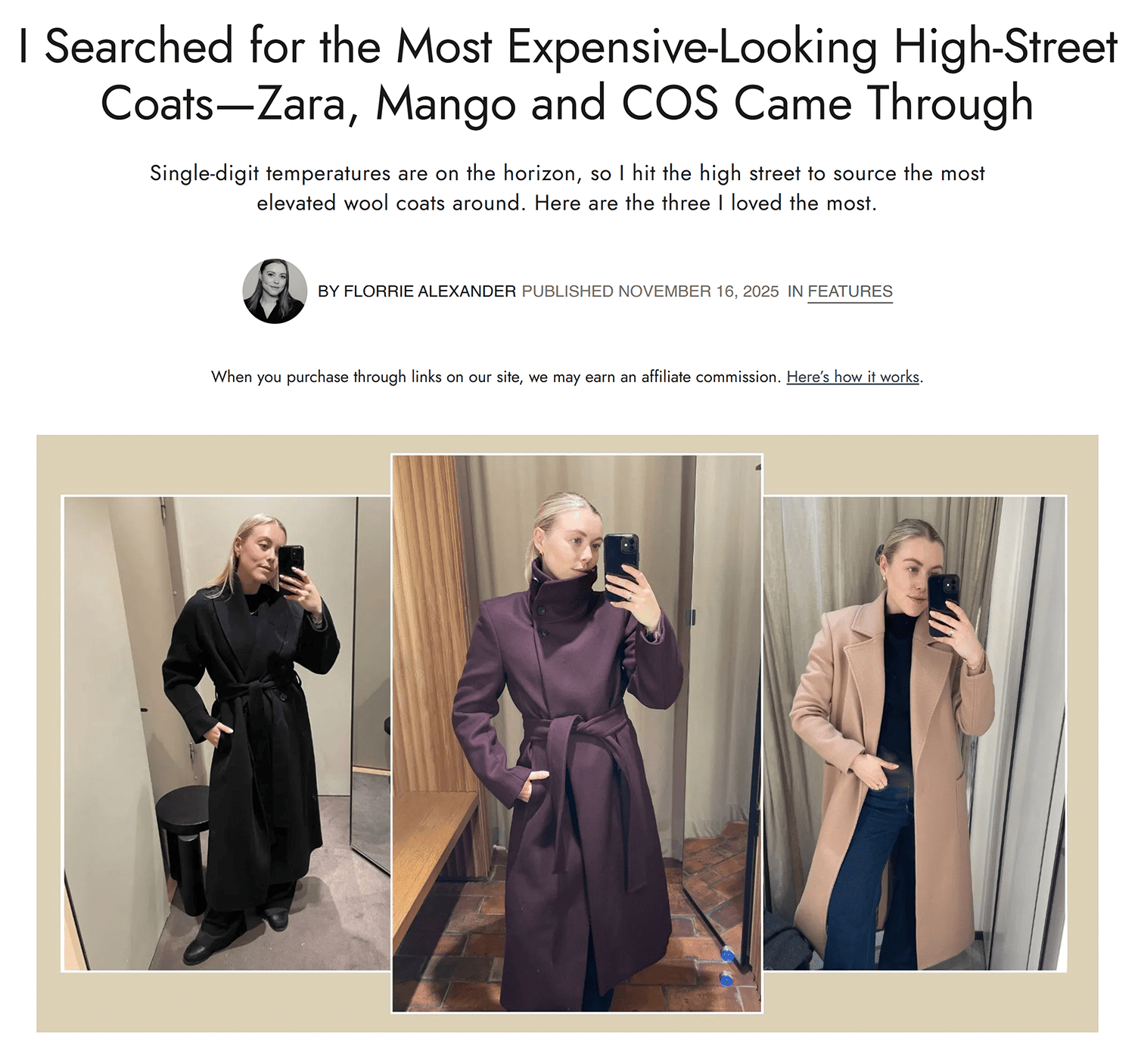
While you cannot control what users post, you can influence the sentiment. AI picks up on the positive or negative tone of TikTok and Instagram content. Building proactive connections with creators who genuinely align with your brand helps seed the positive sentiment that LLMs eventually synthesize into a recommendation.
Community threads and Reddit
Reddit is a powerhouse for AI citations because it provides "real world" data on durability, comfort, and return experiences. Uniqlo frequently appears in AI results because of the sheer volume of organic discussions on Reddit regarding their style and quality. The key here is product quality; you cannot "SEO" your way into a positive Reddit community if the product fails in real life.
Technical explainers and lab tests
Measurable benchmarks are highly citable. Content that explains fabric science or shows the results of pilling and color fastness tests gives the AI a factual benchmark to quote. Quince uses dedicated pages to explain the specifics of their cashmere, which has become a top cited source for the brand. Similarly, Vibram uses product testing content to maintain visibility.
Comparison and alternative content
AI is frequently used to find "alternatives" (e.g., "a cheaper version of X"). This is known as LLM seeding. By creating content that explicitly compares your products to others, you position yourself as a viable alternative. Quince does this effectively with their "Beyond Compare" sections on PDPs, which helps them appear as a top recommendation for affordable luxury.
Expert Interpretation: Many brands make the mistake of only focusing on their own "perfection." However, the "alternative" strategy is often more effective for smaller brands. The decision here is whether to compete head on with a giant or to strategically position yourself as the "better value" or "more sustainable" alternative to that giant.
Strategic implications for the modern fashion brand
The shift toward AI search means the path to purchase has collapsed from several steps into one. This requires a change in how you view your digital footprint.
The divergence of AI models
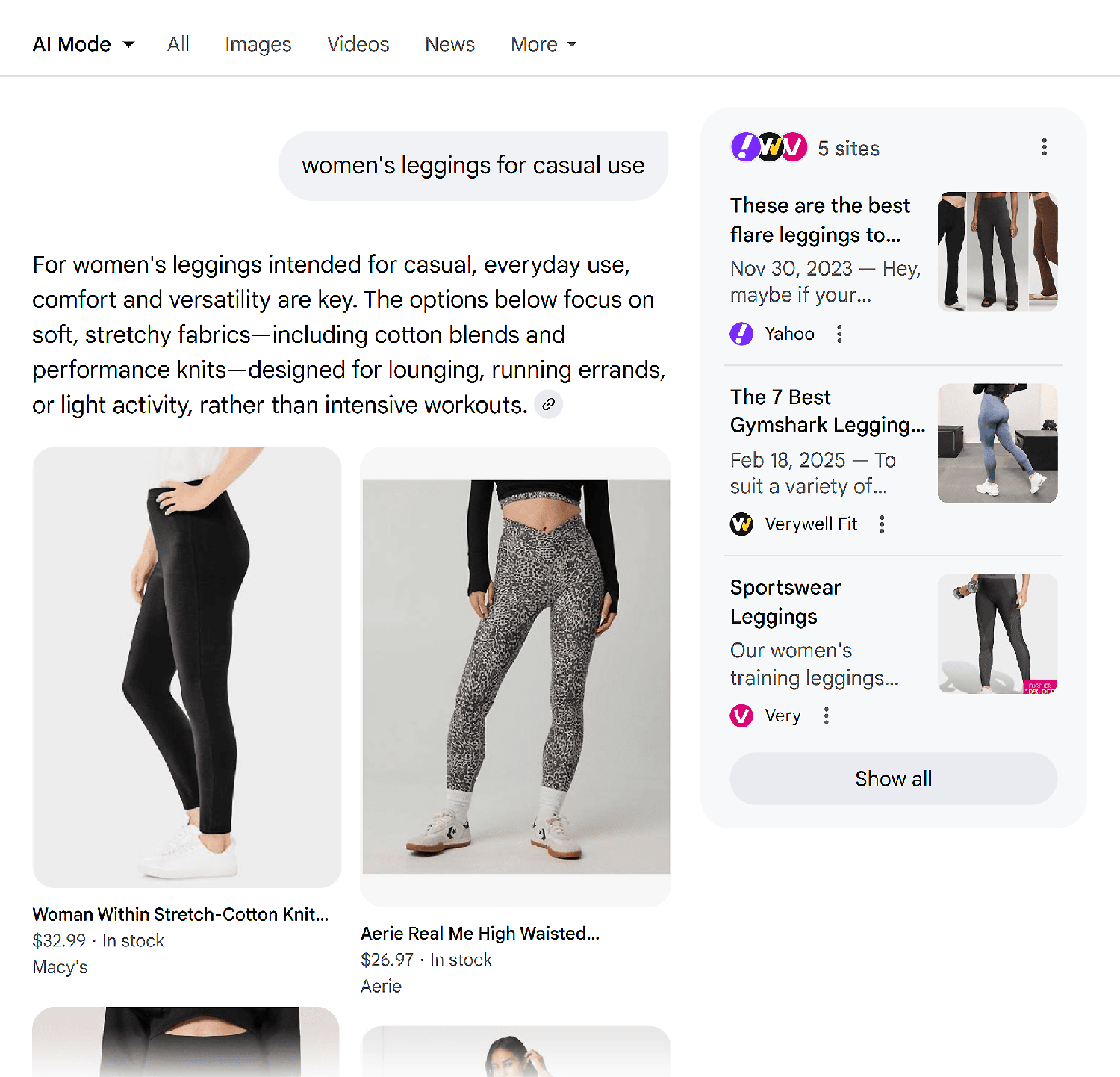
Not all AI is the same. ChatGPT tends to prioritize cultural traction, what people are talking about and loving, meaning it leans heavily on editorial and community signals. Conversely, Google’s AI and Perplexity lean toward structured data, such as price, availability, and fit guides found on PDPs. To be truly visible, you must satisfy both the "cultural" requirements of one and the "technical" requirements of the other.
Managing trend volatility
Fashion is prone to "trend shocks." Micro trends can cause a brand to spike in AI visibility and then vanish overnight. To combat this, brands need a proactive trend calendar that aligns content production with seasonal shifts, ensuring the AI has fresh data to pull from as trends evolve.
Proof over claims in sustainability
Vague terms like "eco friendly" are ignored by LLMs. AI rewards verifiable proof, certifications, third party documentation, and entries in databases like Wikipedia. To win here, centralize your sustainability data into structured, brief, and verifiable pages that include specific sourcing and repair/resale information.
Expert Interpretation: The biggest risk here is "greenwashing" in the AI era. Because LLMs cross reference third party databases, any gap between a brand's claims and its actual certifications will be highlighted. The decision for brands is to move away from marketing adjectives and toward verifiable data points.
Comments
Comments are reviewed before they are published. Links are not allowed inside comments.