How Ecommerce Brands Actually Get Discovered in AI Search
/ 9 min read

Summary
If you're familiar with SEO, getting AI visibility is similar. It starts with how search systems decide what to display. But for. The practical question is what this changes for SEO, content quality, and AI search visibility.
Introduction
The key issue here is AI search is reshaping how ecommerce brands get discovered. One week, your products show up in ChatGPT. The next week, they're replaced by competitors. For many brands, this uncertainty can feel overwhelming. Organic visibility now depends less on rankings. My read is to treat it as a decision point: what signal needs to become clearer, what part of the system is currently weak, and what evidence would show that the work is improving visibility rather than only adding activity. This connects with to Improve Your Brand’s LLM Visibility when the same signal needs a clearer operating decision. A useful companion note is How Travel Brands Can Earn AI Recommendations, because it looks at a nearby part of the same system.
That is the difference between reacting to a trend and building a useful search system. Connect this point back to the page template, internal linking, entity signals, content depth, crawl accessibility, and the way the brand is represented across the wider web before deciding what to change first.
There is a specific kind of anxiety that comes with the current state of AI search. You might spend a morning chatting with ChatGPT or Perplexity and see your product recommended as the top choice for a specific need. You feel a sense of victory. Then, a week later, you run the same prompt, and your brand has vanished, replaced by a competitor you hadn't even considered.
For most ecommerce founders and marketers, this volatility feels like a black box. For years, we were taught that organic visibility was a linear equation: if you optimized for the right keywords and built enough backlinks, you climbed the rankings and captured the traffic. But AI search has broken that linearity. Visibility is no longer about where you rank on a page of links; it is about how a Large Language Model (LLM) perceives your brand's place in the broader digital ecosystem.
To survive this shift, we have to stop thinking about "SEO" in the traditional sense and start thinking about "AI visibility." This means understanding the signals LLMs prioritize and the platforms they trust to validate your claims.
The three layers of AI visibility
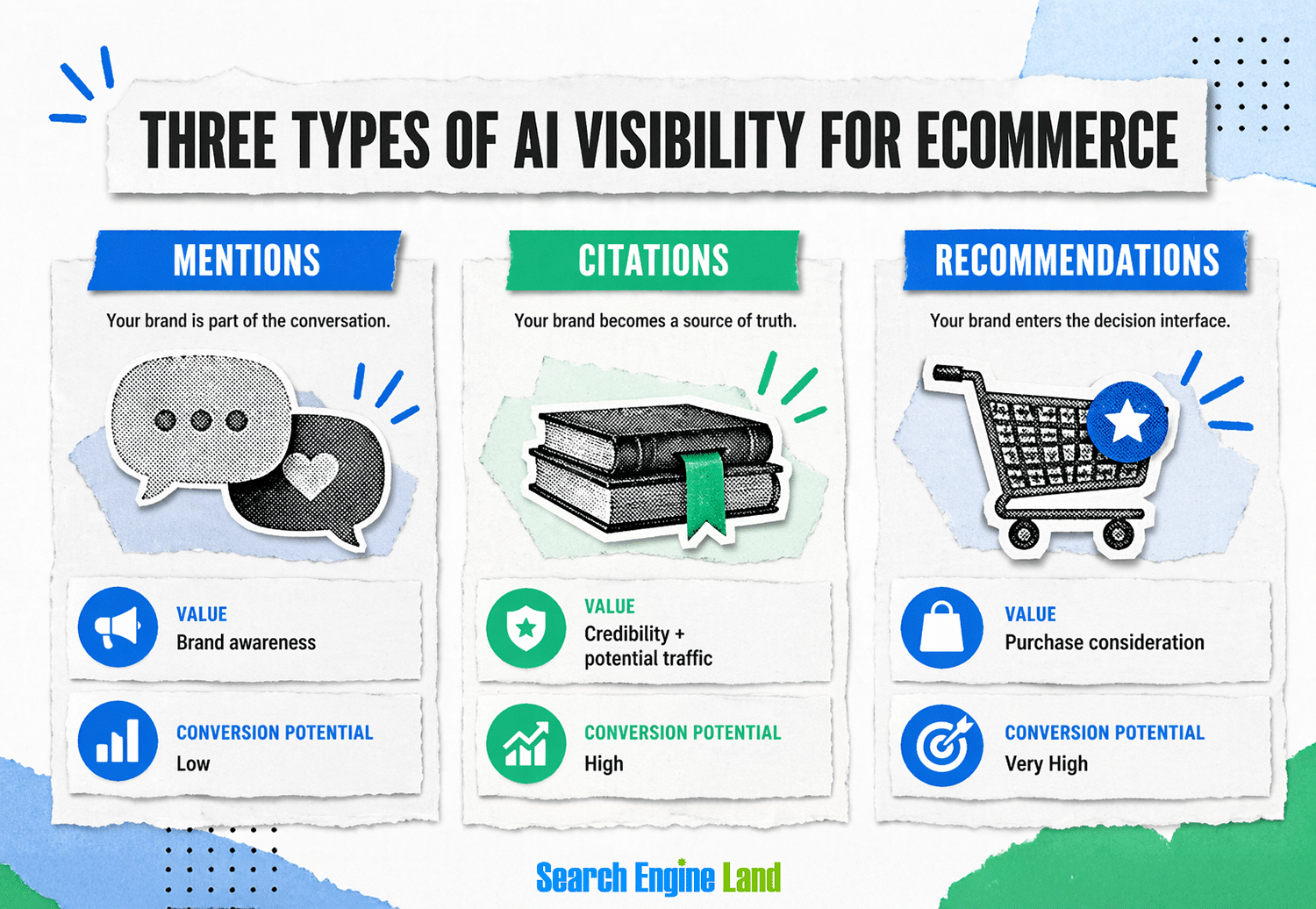
In traditional search, the goal was almost always the click. In AI search, the interaction is more complex. Your brand doesn't just "appear"; it manifests in three distinct ways, each serving a different purpose in the customer's mind.
Brand mentions
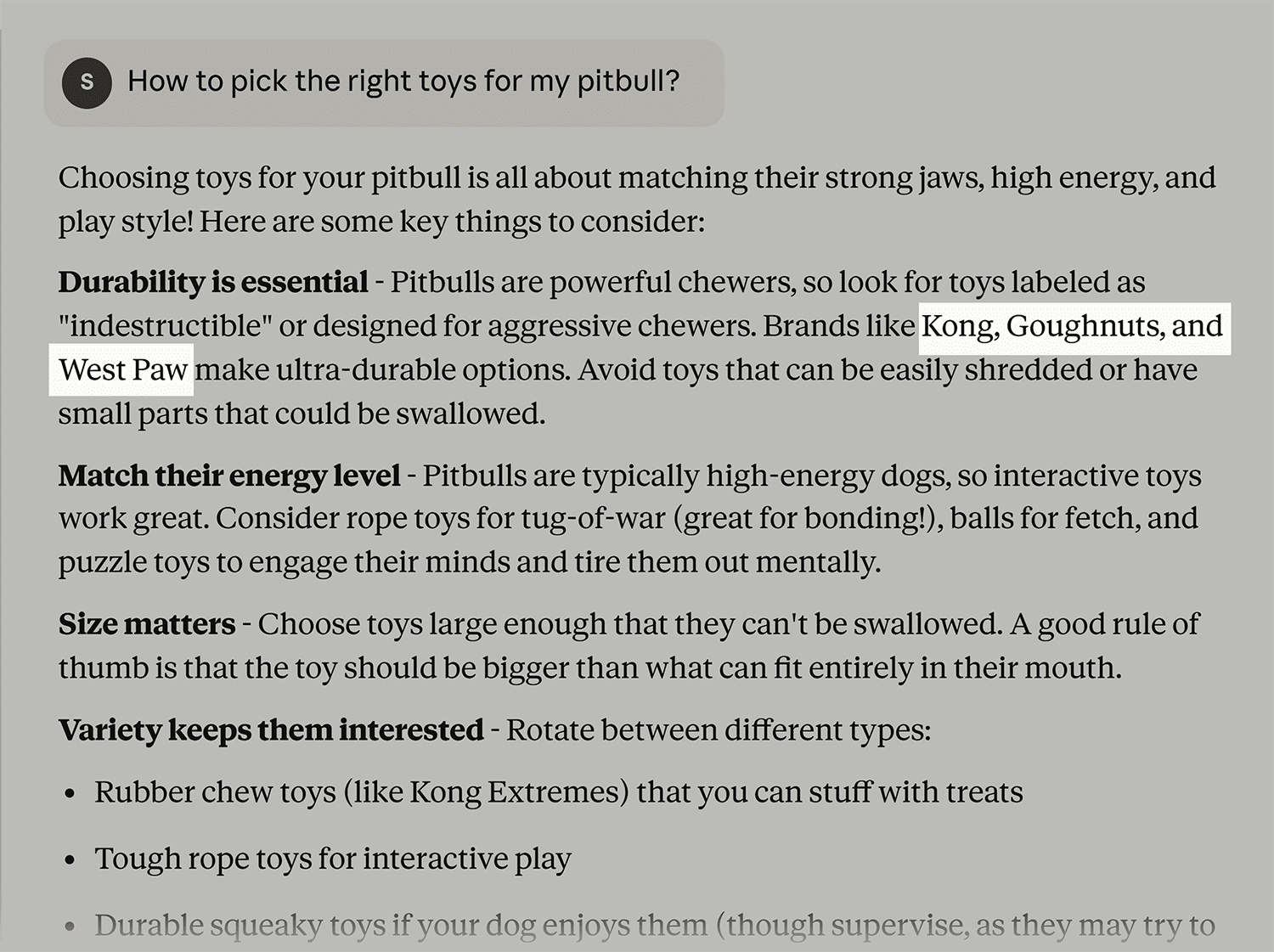
The most basic form of visibility is the mention. This is when an AI mentions your brand name within a response, but doesn't necessarily provide a link to your store. These mentions are usually driven by general reputation signals. You aren't being cited as a technical source; you are simply being recognized as a participant in the category conversation. It is the digital equivalent of someone saying, "I've heard of that brand," without knowing exactly where to buy the product. The same pattern also shows up in We Earned 1, where the practical question is how the signal becomes visible.
Citations
Citations are more powerful because they act as footnotes. When an LLM provides a link or a direct reference to your page to support a specific claim or data point, you become a "source of truth." This does more than just drive potential traffic; it lends you authority. More importantly, citations allow you to control the narrative. When the AI pulls your specific framing or product story into the answer, it is using your voice rather than a third party's interpretation of your brand.
Product recommendations
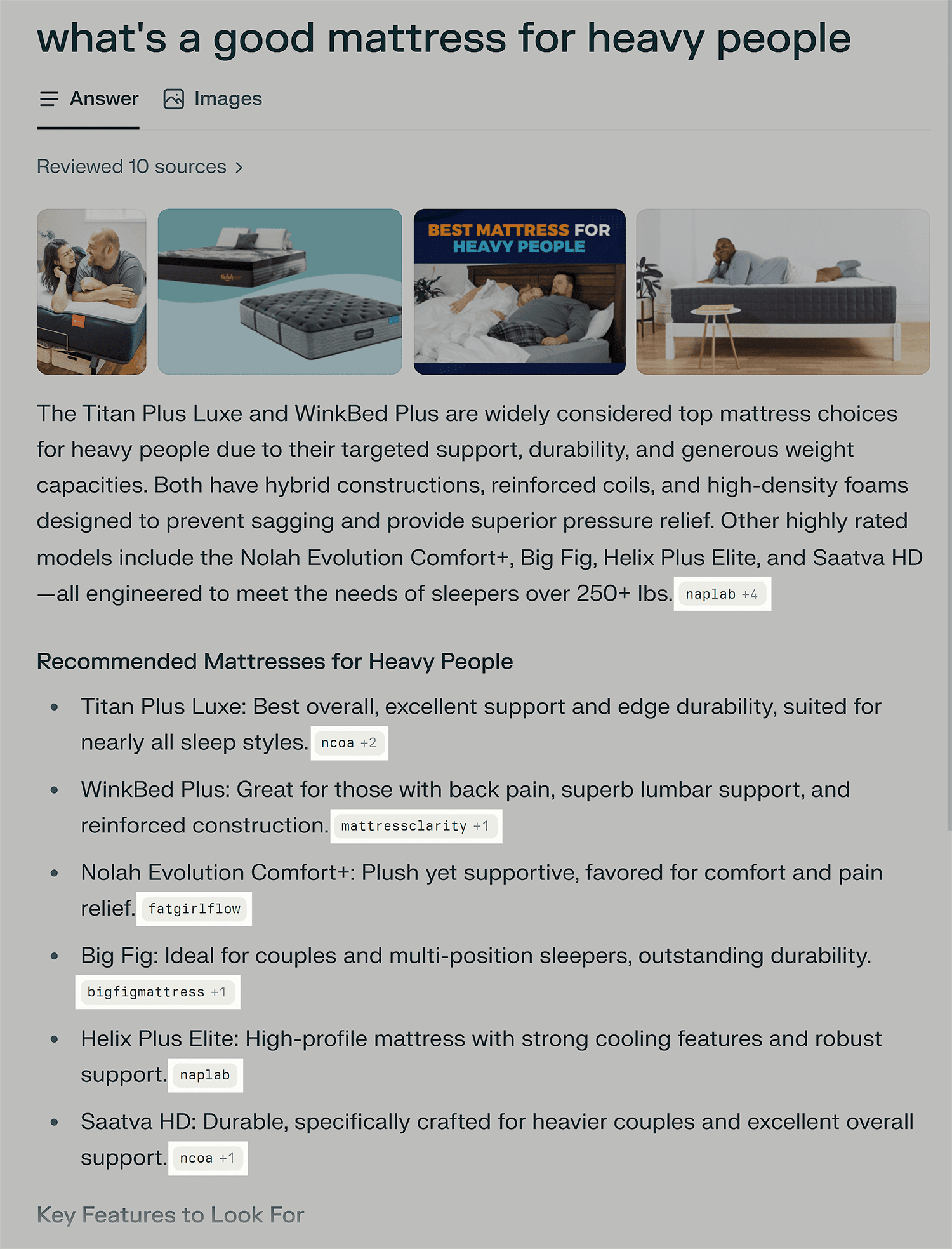
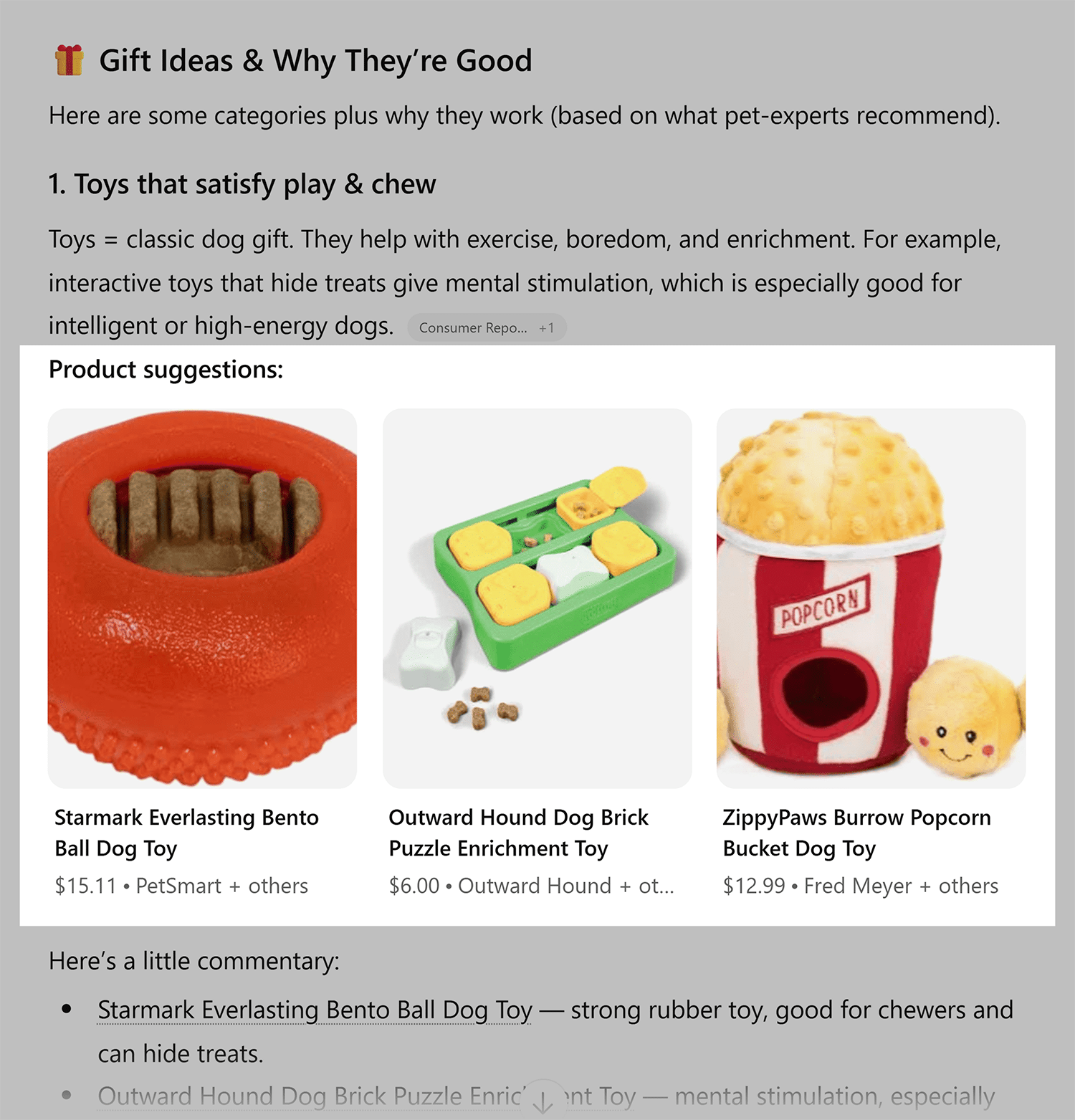
This is the "holy grail" for ecommerce. This happens when the AI doesn't just mention you, but actively suggests your product as the best solution for a user's specific problem. These recommendations often include pricing, ratings, and key specs, effectively merging the discovery and decision phases into a single interface. The shopper can compare your product against alternatives and, in some cases, move toward a purchase without ever leaving the chat environment.
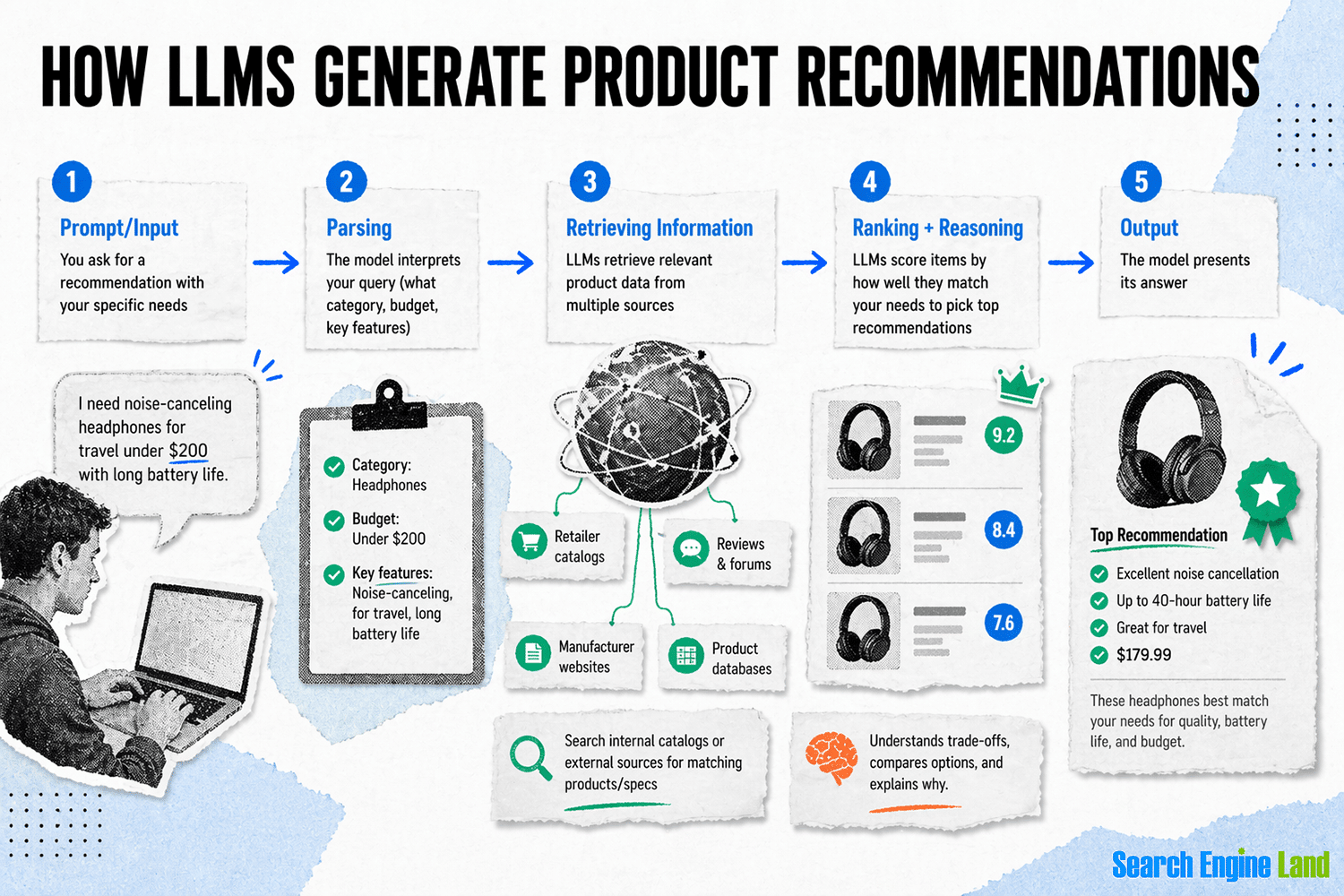
Expert Interpretation: The shift here is from traffic acquisition to decision influence. The tradeoff is that you may see a drop in traditional "top of funnel" site traffic because the AI is answering the user's question for them. The decision you need to inspect is your primary KPI: are you still measuring success by sessions, or are you moving toward measuring "share of model" (how often you are recommended vs. competitors)?
The mechanics of AI selection: Consensus and Consistency
If you aren't appearing in these recommendations, it's usually not because of a lack of keywords. AI models use two primary filters to decide who gets surfaced: consensus and consistency.
The power of consensus
Traditional SEO focused on domain authority, essentially, how "strong" your own website was. LLMs, however, don't look at your site in a vacuum. They look for consensus across the web. An LLM asks: "Do the most credible sources agree that this product is high quality?"
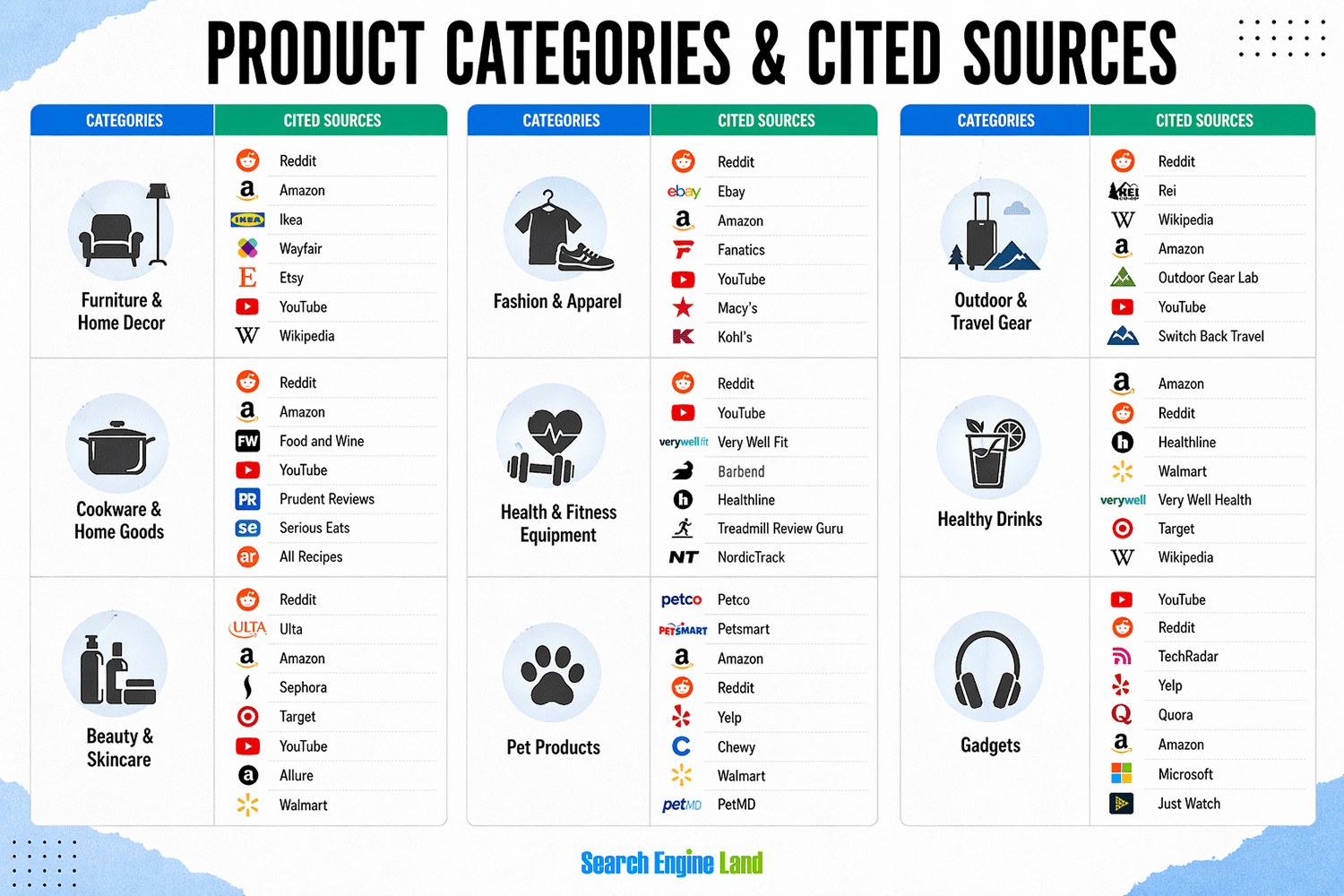
This means a perfect product page on your own site is almost irrelevant if the rest of the web disagrees. If your PDP (Product Detail Page) claims your product is the best, but Amazon reviews are mediocre and Reddit threads are calling out a specific flaw, the AI will prioritize the consensus of the crowd over the claims of the brand. Authority is now a distributed asset; it lives in the agreement between third party sources.
The necessity of consistency
While consensus is about what is being said, consistency is about how the data is presented. LLMs gather information from fragmented sources, your Shopify store, Google Merchant Center, Amazon, and Walmart. If your product is listed as "Stainless Steel Pro" on one platform and "Brushed Metal Edition" on another, the model may encounter a conflict. When an AI cannot reconcile conflicting data, it is less likely to recommend the product, or worse, it may provide the user with incorrect information.
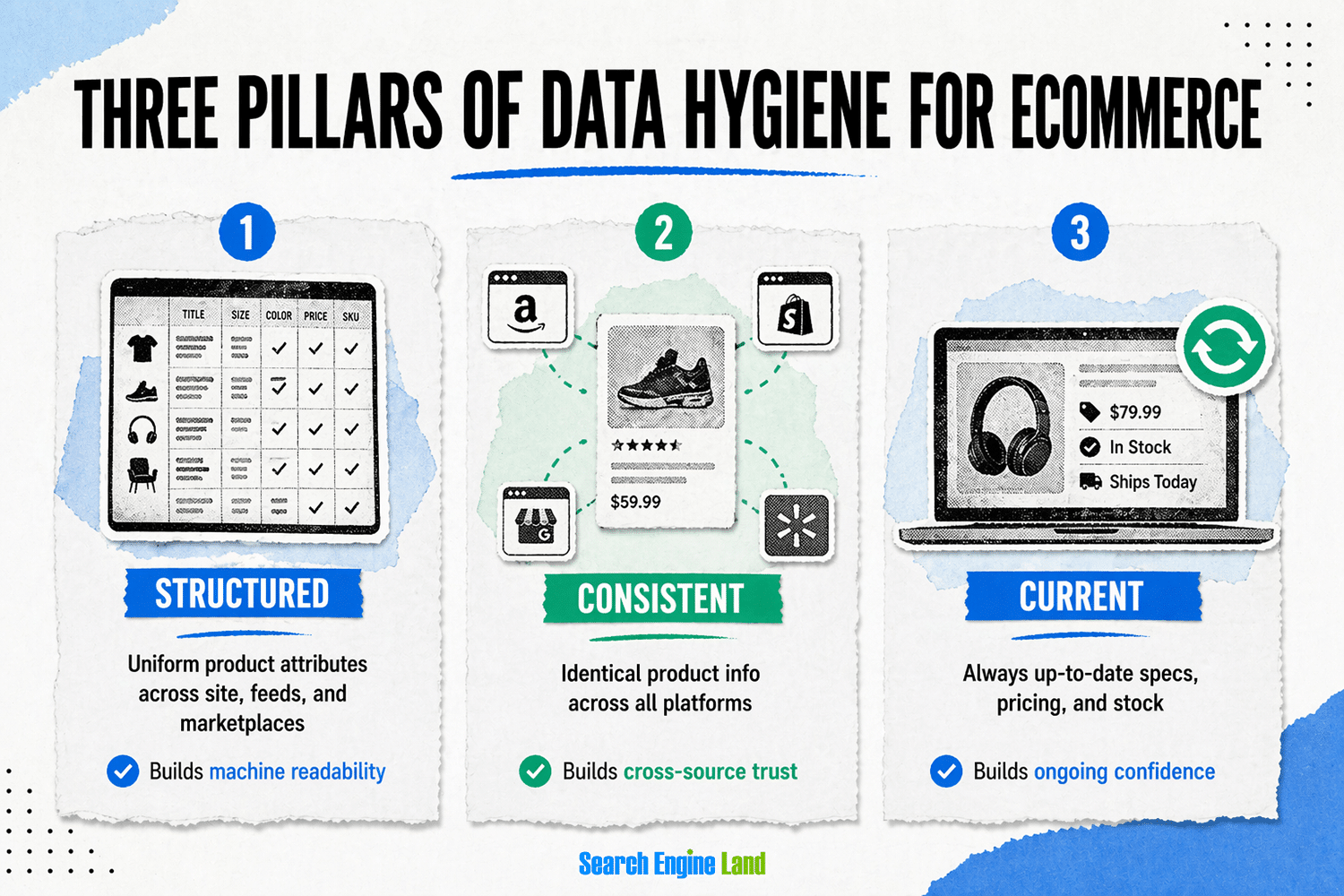
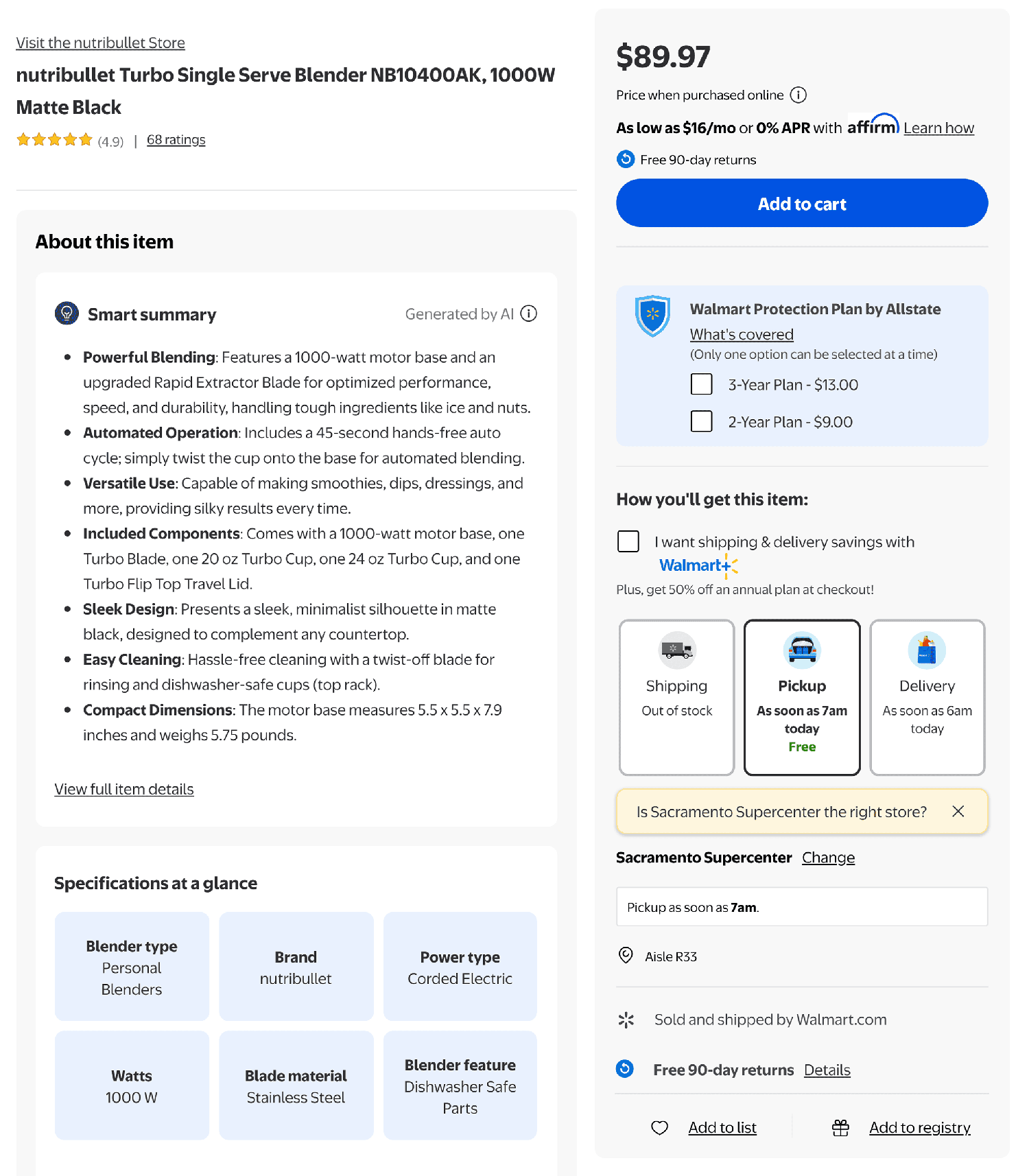
Data hygiene is no longer just an operational preference; it is a visibility requirement. A synchronized identity across every single sales channel is the only way to ensure the AI feels confident in its recommendation.
Expert Interpretation: This removes the "silver bullet" approach to SEO. You cannot simply hire an agency to build links to one page and expect a result. The tradeoff is a significantly higher operational burden on your product data management. The decision to inspect here is your data pipeline: do you have a single source of truth for product titles and specs that pushes to all channels simultaneously?
Content types that dominate AI search
Not all content is created equal in the eyes of an LLM. Certain formats provide the structured, empirical, or social evidence that AI models crave.
Publisher listicles and buying guides
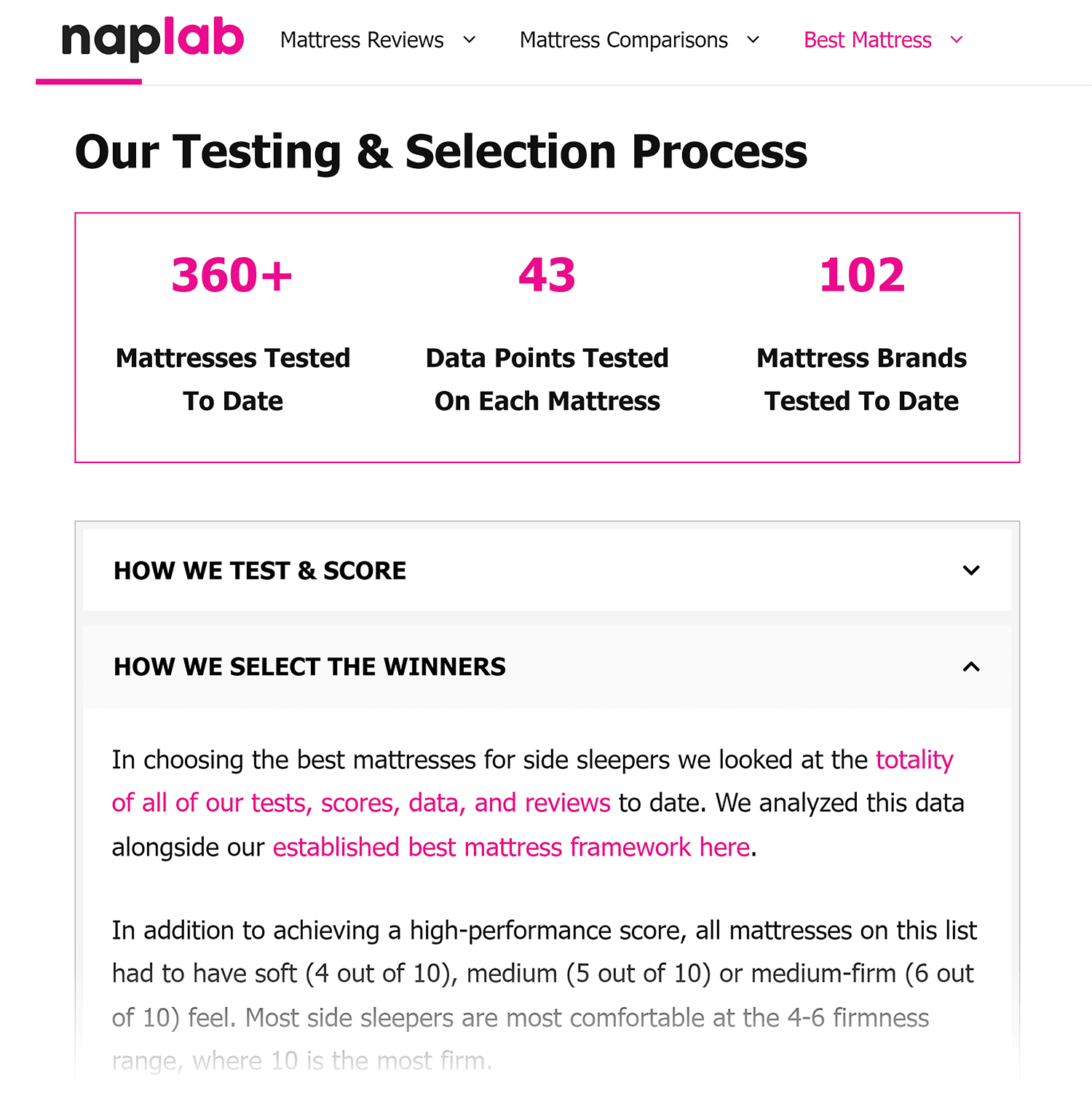
AI models love "Best of" lists from established media outlets. These guides are highly efficient for LLMs because they compare multiple products in one place, provide recency signals through regular updates, and offer standardized pros and cons. Being featured in a high authority listicle is essentially providing the AI with a pre digested summary of why you are a top choice.
Retailer product pages
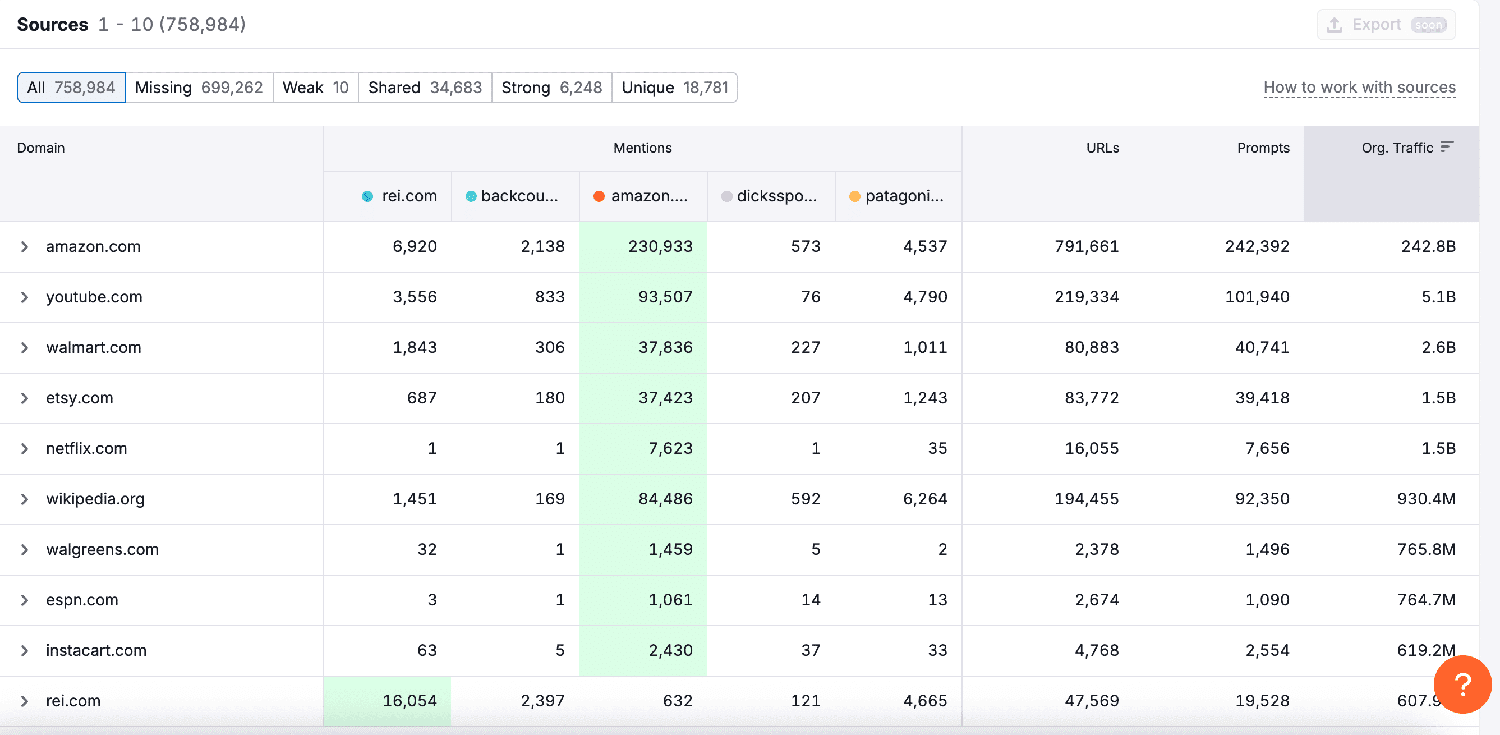
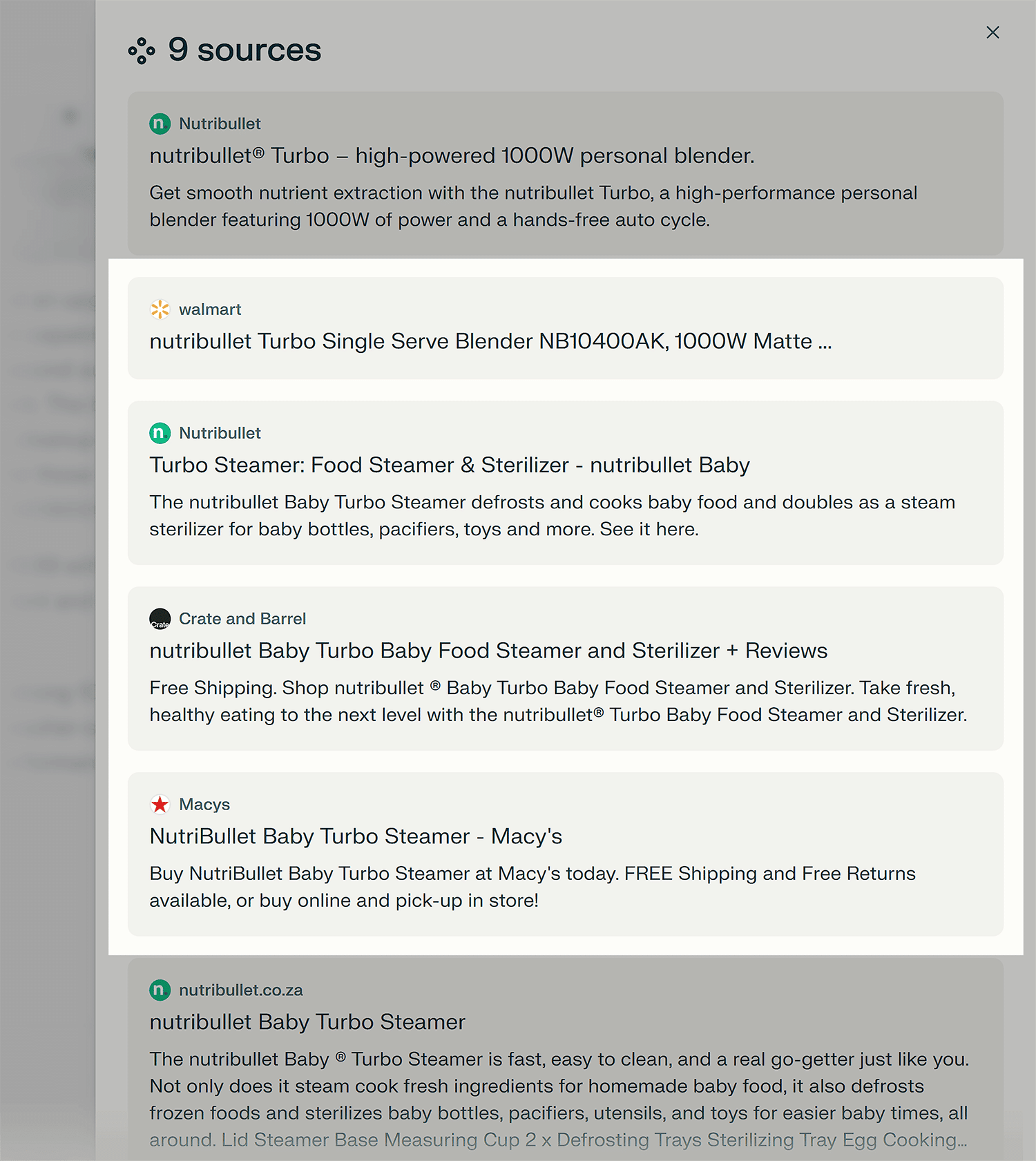
Platforms like Amazon, Target, and Walmart are primary data sources. This is because they provide structured, machine readable data (specs, dimensions, materials) and aggregate massive amounts of social proof via reviews. The AI uses these pages to verify the "real world" viability of a product.
Lab tests and expert reviews
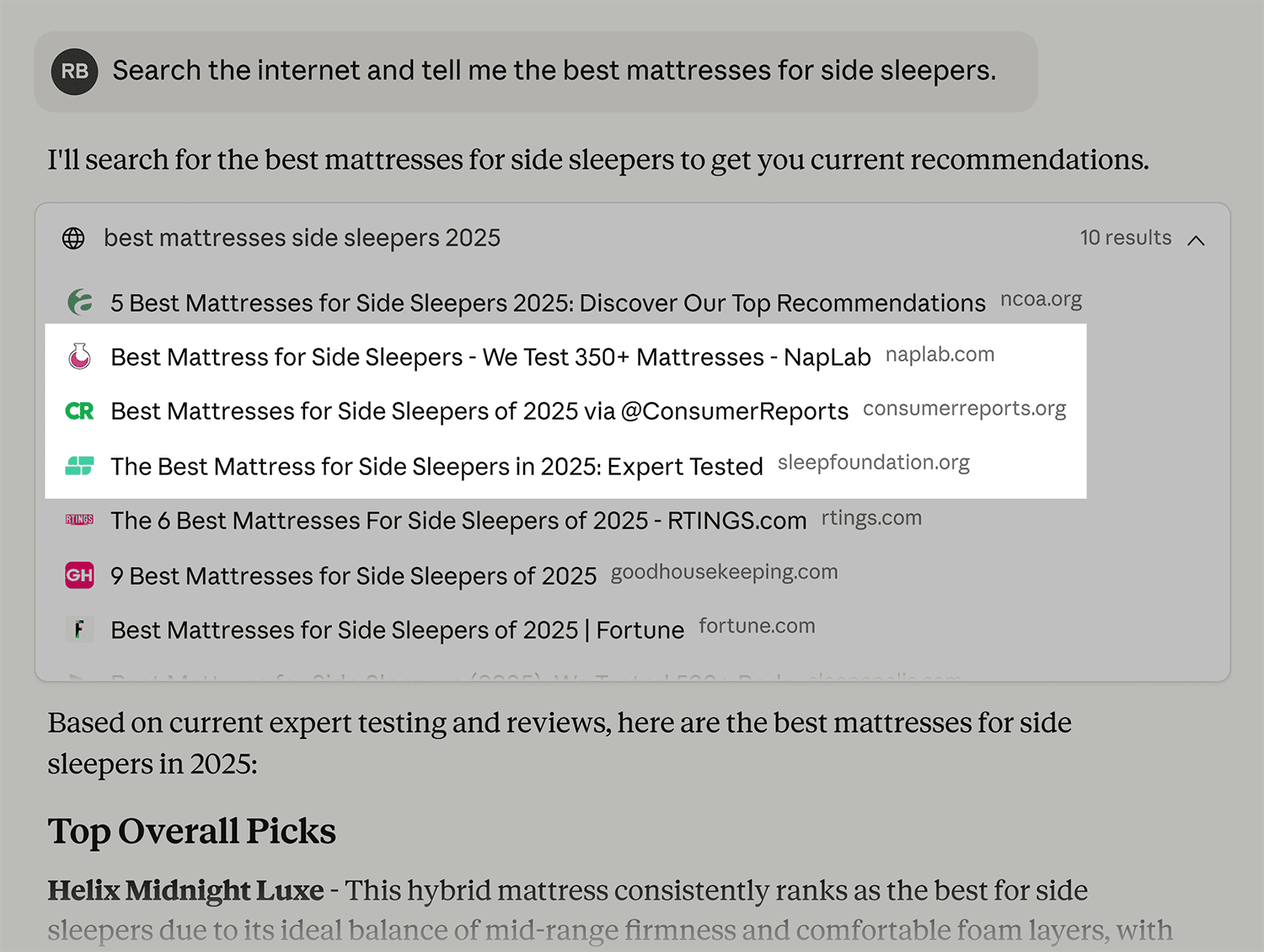
For high consideration purchases, AI models lean on empirical data. Sites that use systematic testing and consistent benchmarks (like Consumer Reports or specialized lab sites) provide the "hard evidence" an LLM needs to make a confident recommendation. This is where technical superiority is validated.
Community discussions (Reddit and YouTube)
When a user asks a subjective question, like "Is this actually worth the money?", the AI turns to community hubs. Reddit threads and YouTube comments provide "cultural proof." These organic conversations feed directly into the training data and real time search results, often outweighing polished marketing copy.
Comparison posts
Content that explicitly pits "Brand A vs. Brand B" is incredibly useful for AI. These posts focus on the decision making process, helping the LLM understand the specific nuances and trade offs between competing products. Even if you aren't the "winner" of every comparison, being part of the comparison helps the AI categorize you correctly within the market.
Expert Interpretation: This reveals that your brand's visibility is largely dependent on content you do not own. The tradeoff is a loss of control over the narrative. The decision you must make is where to allocate your PR budget: do you spend it on your own blog, or do you pivot toward "ecosystem seeding", getting into the listicles, forums, and comparison sites where the AI actually looks?
The business impact of the AI shift
This change in discovery doesn't just affect your traffic; it changes the fundamental economics of your ecommerce business.
First, we are seeing a compressed buyer journey. The gap between "I have a problem" and "I know which product to buy" is shrinking. Because the AI handles the research, comparison, and validation in one chat, the traditional multi touch funnel is collapsing.
Second, there is a visibility paradox. You may be highly visible in AI answers, but your direct site traffic might actually decrease. This is because the AI is providing the value (the answer) on its own platform, reducing the need for the user to click through to your site for information.
Finally, attribution becomes murky. When a customer discovers you via a ChatGPT recommendation but eventually purchases through a direct URL or a different channel, traditional attribution models fail. The "dark" influence of AI search is becoming a significant part of the conversion path, yet it remains nearly invisible in standard analytics.
Expert Interpretation: We are moving toward a world where "brand equity" is measured by AI sentiment rather than just search volume. The tradeoff is that your traditional marketing dashboards will look like they are failing even while sales increase. The decision to inspect is your attribution model: are you relying on last click, or are you incorporating qualitative surveys (e.g., "How did you hear about us?") to capture AI driven discovery?
Learning from the winners: The Caraway approach
Looking at brands that are winning in this environment, such as Caraway, we see a blueprint for AI relevance. They don't just optimize for a search engine; they optimize for the ecosystem.
They ensure they are present exactly where LLMs look. This means maintaining a strong presence in high authority publisher listicles and ensuring their affiliate network is strong. By being a staple in the "best cookware" conversations across the web, they create the consensus that AI models require to recommend them.
they use retailer evidence. By maintaining high ratings and detailed data on major retail platforms, they provide the machine readable proof that AI uses to validate their claims. They have effectively integrated themselves into the "category narrative", they aren't just selling a pan; they are positioned as the definitive answer to a specific set of consumer needs (e.g., non toxic, aesthetic cookware).
To make AI work for your brand, you must stop treating your website as the center of your universe. Instead, treat your website as the destination, and treat the rest of the web, the reviews, the forums, the retailers, and the publishers, as the engine that drives the AI to send people there.
Comments
Comments are reviewed before they are published. Links are not allowed inside comments.