Audience Targeting Needs a New Signal Strategy
/ 8 min read

Summary
Even if we still had the data we had before, would it even be enough? I don't think so, because it assumes user behavior is. The practical question is what this changes for SEO, content quality, and AI search visibility.

For a long time, many of us in the digital space operated under a comfortable illusion: that if we had enough data, we could perfectly predict and influence human behavior. We treated our dashboards as the ultimate source of truth, believing that a collection of cookies and tracking pixels could tell us exactly who our audience was and what they wanted.
But the landscape has shifted. Between the decline of third party cookies, the rise of privacy centric browsing, and the shift toward data sampling in analytics, we have entered what is known as the "signal loss era." The superpowers we thought we had, the ability to track a user across the web with surgical precision, are disappearing. This connects with Working Framework when the same signal needs a clearer operating decision. A useful companion note is What AI Says About Your Locations, because it looks at a nearby part of the same system.
To make matters more complex, we've leaned heavily on "black box" algorithms. We hand over our budgets to platforms that promise hyper personalized targeting, but we rarely understand the actual mechanics of how those audiences are being found. In the process of optimizing for the algorithm, I believe we've lost sight of the actual human being on the other side of the screen.
We became "data informed" at the expense of being "user informed." We focused so much on the outcome, the conversion, the click, the lead, that we forgot how to build a genuine connection. While this loss of signal feels like a constraint, I see it as a necessary correction. It is an invitation to return to the fundamentals of marketing: understanding people as humans, not as fragments of data in a spreadsheet. The same pattern also shows up in AI Is Merging Paid and Organic Visibility, where the practical question is how the signal becomes visible.
The Opportunity: Understanding Users And How We Reach Them
Even if we could magically restore all the tracking data we had a decade ago, I suspect it still wouldn't be enough. The fundamental flaw in a data only approach is the assumption that user behavior is limited to what is observable. We track the click, the scroll, and the purchase, but we miss the vast majority of the process.
Human behavior is driven by a series of small, automatic decisions that happen beneath the surface. These subconscious triggers often determine the outcome long before a user ever interacts with a website or triggers a tracking event. If we only look at the data, we are seeing the result of the decision, not the decision making process itself.
Too often, "understanding the user" is reduced to a set of demographics or a list of basic needs. But people are more complex than a persona document. They have unique thought patterns and emotional states that shift at every stage of their journey. To truly reach them, we have to ask deeper questions:
What specific triggers make them choose us over a competitor? Which channels are they actually using to find information, and why? What emotional drivers are actually relevant to their current situation? What does "value" look like to them at the awareness stage versus the decision stage?
I've often thought about how human decision making is inherently imperfect. We don't analyze every single option with cold logic; instead, we rely on cognitive biases and heuristics to navigate a complex world. If we only optimize for the "what" (the data), we miss the "how" (the psychology). When we shift our focus to how people actually make decisions, we can shape our strategies to align with human nature rather than just chasing a metric.
A Practical Alternative To Cookie Based Strategies: The R.E.M. Framework
When tracking becomes unreliable and data is scarce, we need a strategy that doesn't rely on a pixel to tell us who to talk to. We need a way to ensure our messaging lands effectively regardless of the platform. To solve this, I use a simple approach called the R.E.M. Framework.
The goal of R.E.M. is to ensure that your brand is Relevant, Everywhere, and Memorable. This isn't about a specific ad setting in a dashboard; it's a holistic approach to your creative, your messaging, and your choice of channels.
1. Be Relevant (And Relatable)
Relevance is the primary filter the human brain uses to decide what deserves attention. We live in an era of extreme stimulus saturation; our brains have evolved to ignore almost everything unless it is personally significant.
A great example of this is the "cocktail party effect." You can be in a loud room, engaged in a conversation with one person, and completely tune out the noise of twenty other people talking around you. However, if someone across the room mentions your name, you will likely snap your attention to that conversation instantly. Your brain flagged that specific stimulus as highly relevant to your identity and goals, overriding your current focus.
In marketing, attention is the most valuable currency we have. We only have a few seconds to pique a user's interest before they move on. If our content doesn't create an immediate sense of relevance, the user scrolls past. Worse, the algorithms, which prioritize early engagement, will see that lack of interest and stop serving the content to others.
To be relevant, we have to stop talking about our features and start talking about the user's specific context. Relatability comes from demonstrating that you understand the user's current struggle or aspiration so well that they feel "seen." When a user feels that a piece of content was made specifically for their current situation, the "cocktail party effect" kicks in, and you've won the battle for attention.
2. Be Everywhere (Your Audience Is)
While relevance opens the door, you cannot be relevant to everyone. The key is to deeply understand the motivations of your specific target audience so you can capture existing demand. But once you know who they are, you have to be present where they are looking for answers.
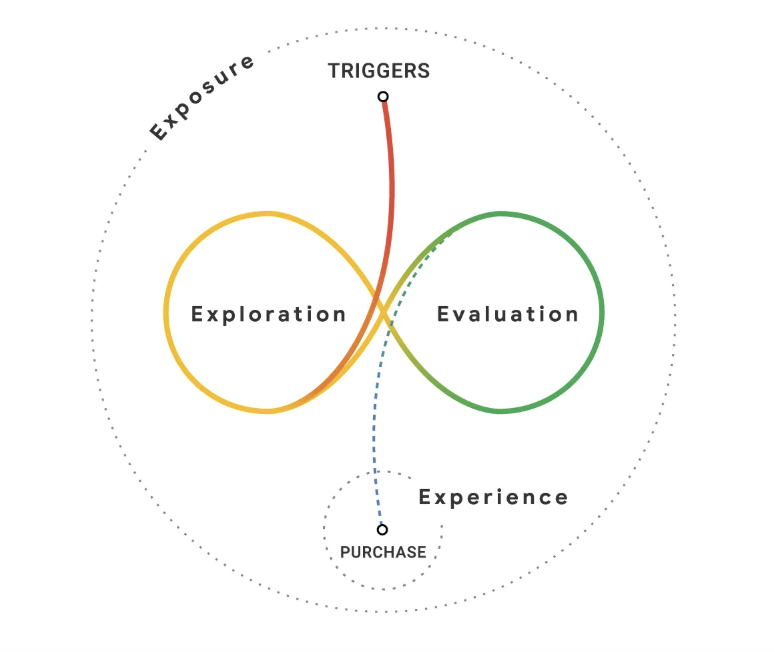
This is increasingly difficult because the modern customer journey is fragmented. It is no longer a linear path from a Google search to a landing page. A user might discover a problem through a social media post, research a solution via an LLM query, and then finally search for your brand on Google to find your pricing page.
Because these journeys are so scattered across different platforms and search experiences, it is virtually impossible to track exactly where a journey begins. We can't rely on a single "top of funnel" channel. Instead, we have to accept that our audience is interacting with us across a variety of touchpoints simultaneously.
Being "everywhere" doesn't mean wasting budget on every available platform. It means identifying the specific ecosystem your audience inhabits and ensuring that your message is consistent and available at every point of their consideration journey. If you are only present in one channel, you are betting your entire growth strategy on a single algorithm's whim.
3. Be Memorable
Of the three pillars, being memorable is the most difficult to achieve, yet it carries the most weight. Memory is what keeps you top of mind when the user is finally ready to make a purchase decision.
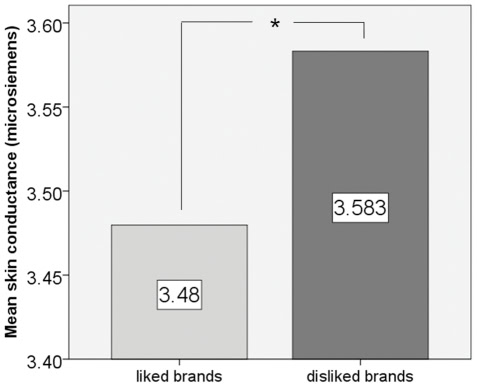
Creating a memorable brand requires a meaningful emotional connection. For a long time, marketing playbooks relied on the idea that humans share a universal set of basic reactions, often citing Paul Ekman’s research on the six basic emotions (fear, anger, happiness, surprise, disgust, and sadness). While these are foundational, the reality of human emotion is far more nuanced.
True memorability doesn't come from triggering a generic emotion; it comes from creating a connection that feels authentic to the individual. This happens when a brand moves beyond the "what" and the "how" and establishes a clear "why." When you align your brand values with the values of your audience, you move from being a commodity to being a preference.
The goal is to create a mental shortcut. When the user thinks of the problem they are trying to solve, your brand should be the first thing that comes to mind, not because you had the highest ad spend, but because you created a lasting impression through a combination of relevance and emotional resonance.
Takeaways
In an era of signal loss and hyper personalization, simply capturing attention is not enough. Success now requires a strategy that ensures you stay top of mind throughout a fragmented journey. To move from a data dependent strategy to a user informed one, I suggest starting with these practical steps:
Expand your data sources: Stop relying solely on search and web analytics. Look at customer service logs, conduct direct user interviews, and perform social scraping. Look at not only your own brand's mentions but also those of your competitors to find the gaps in the market. Map the emotional journey: Identify the emotional state of your user at each stage. Are they anxious during the research phase? Relieved during the onboarding phase? Tailor your messaging to meet those specific emotions. Audit your presence: Ensure you aren't over indexed on a single channel. Diversify your touchpoints so that you are present where your users are naturally spending their time, whether that's in AI driven search, social communities, or traditional search. Focus on the "Human" signal: Instead of asking "how do I optimize this for the algorithm," ask "why would a human being care about this?" If you solve for the human, the algorithm usually follows.
By focusing on being Relevant, Everywhere, and Memorable, we can build a resilient marketing strategy that doesn't break every time a browser updates its privacy settings or a platform changes its API. The signal may be lost, but the human connection remains.
Comments
Comments are reviewed before they are published. Links are not allowed inside comments.